Planning a catamaran cruise from Grand Baie? Compare routes, ticket prices and sailing options, with pier directions and booking tips.
What Are Catamaran Cruises from Grand Baie?
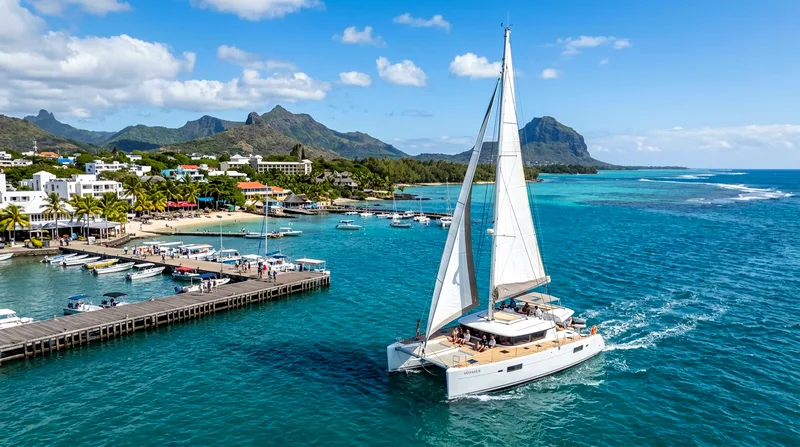
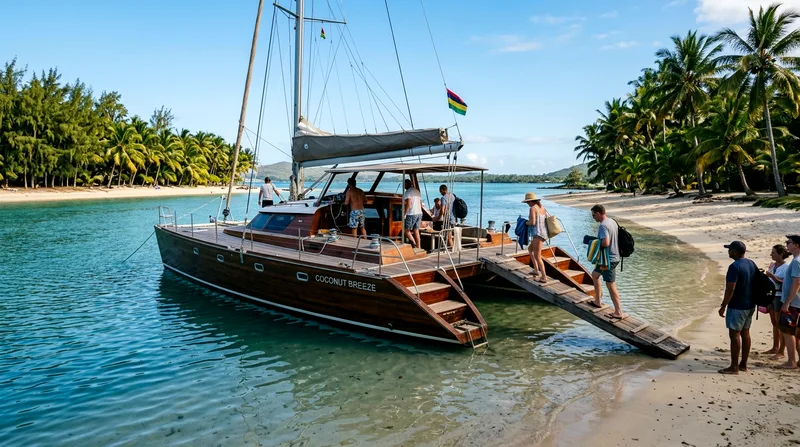
Grand Baie, on the northwest coast of Mauritius, is the main launch point for catamaran cruises on the island — more boats leave from here than any other harbor, including Black River in the south. A catamaran cruise from Grand Baie is a half-day or full-day sailing trip, usually combining time under sail or motor with stops for swimming, snorkeling, and lunch, often finishing with a sunset leg back to the bay.
The boats themselves are typically 40 to 60 feet, twin-hulled for stability, and carry anywhere from 15 to 80 passengers depending on whether you've booked a shared group tour or something smaller. That range matters: a 15-person boat feels like an outing, an 80-person boat feels like a cruise ship on a short leash. Ask about passenger capacity before booking if crowding bothers you.
Why choose a catamaran cruise
Compared to a speedboat transfer or a glass-bottom boat trip, a catamaran gives you more deck space, shade, and usually a toilet on board — not trivial on a four-to-eight hour trip with kids or older relatives. The twin-hull design also means less rocking than a monohull sailboat, which matters in the choppier months between June and September. If you've done boat excursions in Zanzibar or Phuket, the Grand Baie product will feel familiar: organized, a bit touristic, but efficient and generally safe.
What to expect on the water
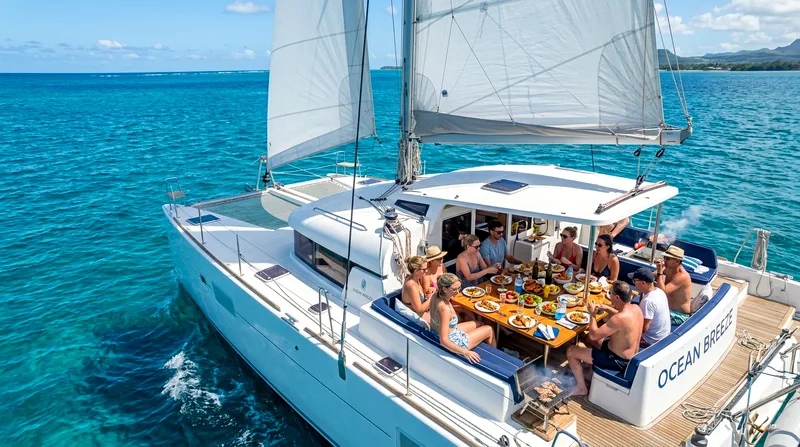
Expect a briefing at the pier, a 20 to 40 minute sail or motor-sail to the first stop, then one to three hours of swimming and snorkeling time before lunch is served on board — usually a barbecue of chicken, fish, and salads, with rum punch poured a little too early for some tastes. Music on the sound system is common; if you want a quiet, contemplative sail, say so when booking, because most Grand Baie trips are run as sociable group outings, not silent charters.
Popular Routes and Destinations
Three route families dominate out of Grand Baie, and they're genuinely different experiences, not just marketing variations on the same loop.
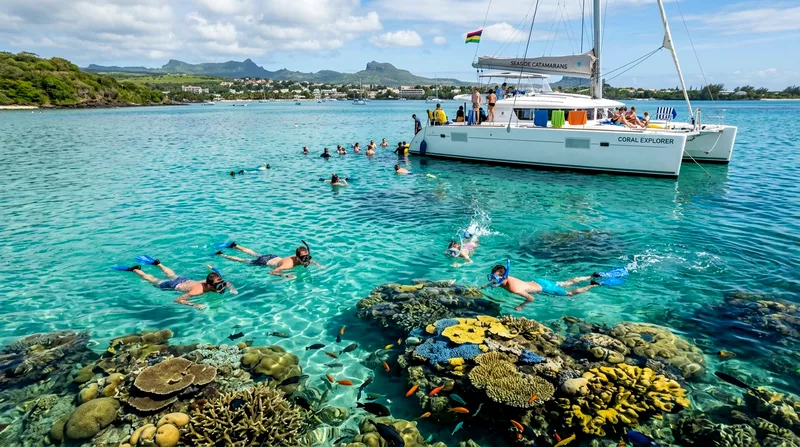
The north island route heads to Gunner's Quoin (Coin de Mire), an uninhabited volcanic islet about 20 minutes offshore, sometimes paired with Flat Island (Île Plate) for a full-day trip. This route has the best snorkeling of the three — clearer water, more reef structure, fewer boats competing for the same patch of sea. The Île aux Cerfs route, by contrast, runs south along the east coast and is really about the island itself — its long sandbar beach, the Grand River South East waterfall stop, and beach-club style lunch — rather than reef snorkeling, since the lagoon there is calmer but less rich in coral.
Sunset cruises are shorter, two to three hours, hugging the coast near Pereybere Beach and Grand Baie's own bay, with no snorkeling stop — just drinks, music, and the light show over the Indian Ocean as the catamaran turns back toward the pier.
The route you pick matters more than the operator — northern island trips suit snorkelers, Île aux Cerfs suits beach-and-scenery days, and sunset cruises suit couples on a short visit.
Catamaran cruise routes from Grand Baie compared by duration, price and best use
| Route | Duration | Typical Price (per adult) | Snorkeling Quality | Best For |
|---|---|---|---|---|
| Gunner's Quoin / Flat Island | Full day (approx. 8 hrs) | €60-90 | High | Snorkeling fanatics, families |
| Île aux Cerfs | Full day (approx. 7-8 hrs) | €55-85 | Moderate | Beach lovers, couples |
| Northern islands half-day | Approx. 4 hrs | €35-55 | High | Solo travelers, budget-conscious |
| Sunset cruise | 2-3 hrs | €25-40 | None | Couples, photographers |
Prices are typical ranges and vary by operator, season and inclusions — check current rates before booking.
Reef and snorkeling routes
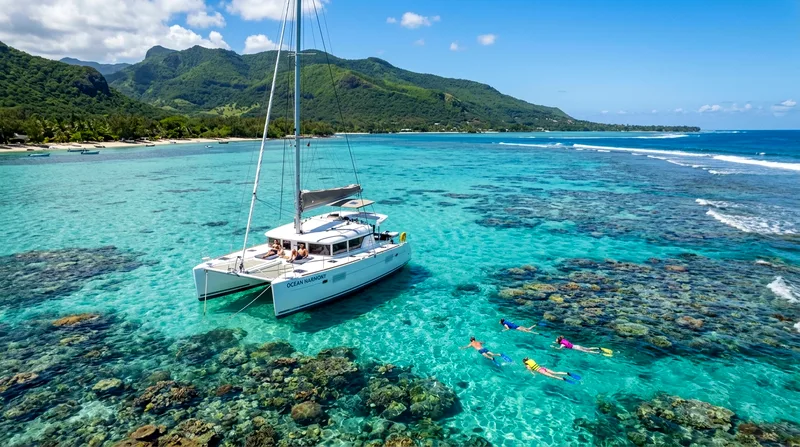
If snorkeling is the priority, choose the Gunner's Quoin or northern islands route over Île aux Cerfs — the coral cover around the northern islets is noticeably better, and operators typically anchor at two separate snorkeling sites rather than one. Visibility runs 8 to 15 meters in calm conditions. Bring your own mask if you're fussy about fit; most boats supply gear, but it's shared equipment and sizing is hit or miss, particularly for children's faces.
Island-hopping itineraries
Full-day itineraries combining Gunner's Quoin and Flat Island run roughly eight hours door to door and suit travelers who want value over pace — you're paying for distance covered and variety, not luxury. These are a reasonable match for the kind of island-hopping day you'd get in the Whitsundays, minus the sailing-school vibe; Mauritius trips are more structured, less "learn to sail," more "be shown a good time efficiently."
How to Book and Visit
You don't need a tour operator physically present in Grand Baie to get on a boat — but you do need to decide how much flexibility and English-language support you want versus price.
Independent booking vs. guided tours
Booking independently — walking into a kiosk along the Grand Baie waterfront or arranging through your hotel desk — can be cheaper, sometimes by 10 to 20%, because you're cutting out a middleman's commission. The trade-off is less certainty about group size, lunch quality, and cancellation policy, and you'll likely be negotiating in person rather than seeing fixed terms. Booking through an established online platform gives you confirmed pricing, English-language instructions, and a cancellation window, usually 24 to 48 hours before departure — worth the small premium if this is your only boat day in Mauritius and you can't afford a no-show. For comparison, independent reef trips in Zanzibar or small-boat charters in Bali often work the same way: cheaper off the street, safer online.
Getting to Grand Baie pier
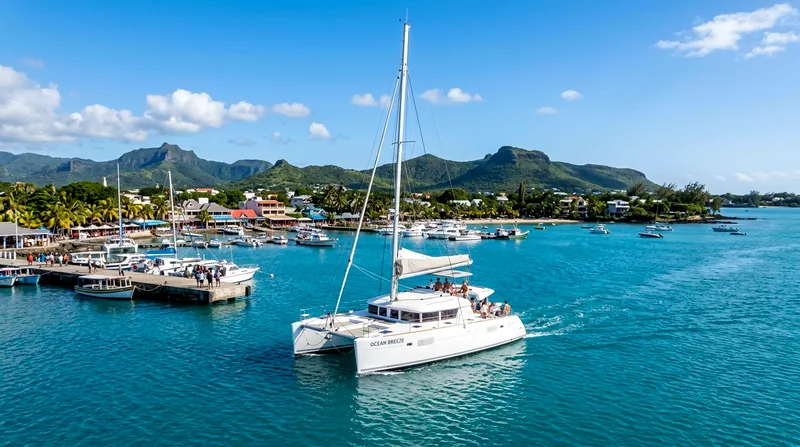
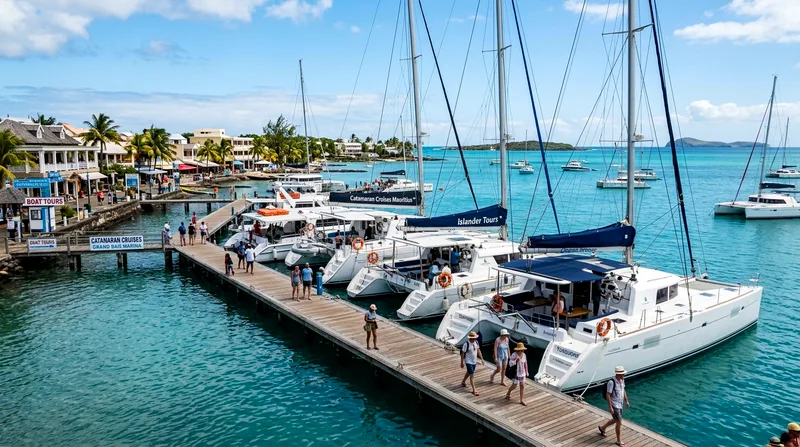
Most catamarans leave from the public jetty area near Grand Baie's main waterfront, close to the market and the La Croisette shopping center — a five-minute walk from most Grand Baie hotels. If you're staying elsewhere on the island — Flic en Flac, Belle Mare, or Le Morne — expect a 30 to 60 minute taxi or shuttle transfer, which some packages include and others charge separately, typically 600 to 1,200 MUR each way by taxi. Arrive at least 20 minutes before departure; boats here do leave on schedule, unlike the more elastic timings you might be used to in parts of Zanzibar or Bali.
Tickets, Pricing and What's Included
Pricing in Grand Baie is fairly standardized across operators because they're all competing for the same walk-up and online traffic, which keeps things transparent compared to, say, boat excursions in Santorini where tourist-season pricing swings harder.
Typical ticket costs and packages
A half-day cruise (around four hours) with snorkeling and a light lunch typically runs from €35 to €55 per adult; full-day trips to Gunner's Quoin and Flat Island with a full barbecue lunch and drinks usually land between €60 and €90. Sunset cruises, shorter and without snorkeling, are generally the cheapest option at €25 to €40. Children under 2 often go free, and ages 2 to 12 are commonly charged 50% of the adult rate — but confirm this at booking, since policies vary operator to operator. These are indicative ranges; always check current prices and availability before you book, since fuel surcharges and seasonal adjustments do shift them.
Inclusions and add-on options
Standard inclusions are snorkeling gear, soft drinks and water, and a barbecue-style lunch; rum punch or local beer is often included on full-day trips, sometimes capped to one or two drinks before it becomes a paid extra. Towels and hotel transfers are sometimes bundled, sometimes not — don't assume. Underwater photography packages, where crew shoot photos of you snorkeling and sell them afterward, are a common upsell; they're optional and, frankly, skippable unless you really want proof of the fish.
Best Time to Go
Timing affects sea state more than it affects temperature in Mauritius — the water is warm enough to swim year-round, generally 24 to 28°C.
Seasonal weather and sea conditions
The calmest sailing months are typically October through December and April to May, with lighter winds and better visibility for snorkeling. June through September brings stronger southeast trade winds, which can make the crossing to Gunner's Quoin choppier — still safe, operators cancel in genuinely rough conditions, but less comfortable if you're prone to seasickness. January to March is cyclone season; trips can be cancelled or rerouted with little notice, which is worth knowing if your travel dates are fixed and inflexible.
Peak vs. quiet seasons
July and August, plus the December holiday fortnight, are peak season — boats fill up, and popular operators' daily departures sell out a few days ahead. Shoulder months like May, June, September, and October offer a reasonable trade: decent weather, fewer boats jostling for the same snorkeling spot, and marginally better rates. If you're comparing Mauritius timing to somewhere like the Maldives or Seychelles, the logic is similar — avoid the exact peak weeks if crowding bothers you more than price.
Nearby Attractions and Add-Ons
Grand Baie works well as a base precisely because the catamaran pier sits inside a town that already has things to do before and after a cruise, unlike more isolated departure points on the island.
Beach clubs and water sports
Pereybere Beach, a 10-minute drive or a long walk north of the main pier, is a public beach with calmer water than Grand Baie itself, good for an easy swim the morning before an afternoon cruise. Parasailing, jet-ski rental, and kitesurfing operators cluster along the bay — fine add-ons, but note that combining heavy water sports with a full-day boat trip in the same day is a lot for most people, children especially.
Coastal dining and shopping
Grand Baie's waterfront has a reasonable spread of seafood restaurants and casual cafés for a pre-cruise breakfast, plus the La Croisette and Sunset Boulevard shopping areas for last-minute reef-safe sunscreen or a hat — worth buying locally rather than relying on what's sold on board, which is pricier and limited in stock.
Frequently asked questions
What is included in a catamaran cruise from Grand Baie?
Most cruises include snorkeling gear, soft drinks or water, and a lunch — often a barbecue of chicken and fish on full-day trips. Rum punch or beer is commonly included on longer cruises, sometimes limited to one or two servings. Hotel transfers, towels, and underwater photos are frequently extra — confirm inclusions line by line when booking, since this varies between operators.
How long does a typical catamaran cruise last?
Half-day cruises run about four hours, full-day island trips to Gunner's Quoin or Île aux Cerfs run seven to eight hours including transfers, and sunset cruises last two to three hours. Factor in pier arrival time of 20 minutes before departure and, if you're staying outside Grand Baie, a 30 to 60 minute transfer each way.
Can I book a catamaran cruise independently or only with a tour operator?
Both work. Walking up to a kiosk in Grand Baie or booking through your hotel can be slightly cheaper, but gives less certainty on cancellation terms. Booking online through an established platform costs a bit more but comes with confirmed pricing, English support, and a defined cancellation window, usually 24 to 48 hours ahead.
What is the best time of year for a catamaran cruise?
October to December and April to May generally offer the calmest seas and clearest water for snorkeling. June to September brings stronger winds and choppier crossings to the northern islands. January to March is cyclone season, with higher risk of last-minute cancellations — build flexibility into your itinerary if traveling then.
Are catamaran cruises suitable for families with children?
Yes, generally — catamarans are more stable than monohull sailboats, most have onboard toilets, and crews are used to young swimmers in life jackets near the boat. Check the minimum age policy before booking, as some full-day island routes with longer open-water crossings aren't ideal for toddlers, and shorter half-day or sunset cruises suit young children better.