Planning a catamaran cruise Trou d'Eau Douce departure? Compare tickets, inclusions, pickup options and what to expect on Île aux Cerfs boat tours.
What Is a Trou d'Eau Douce Catamaran Cruise?
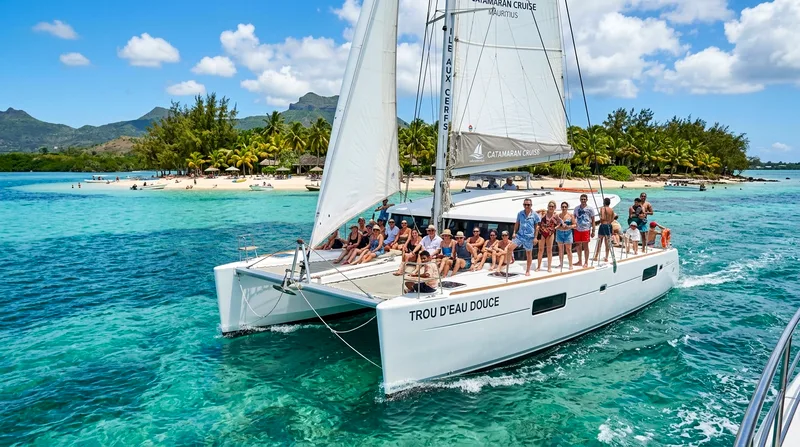
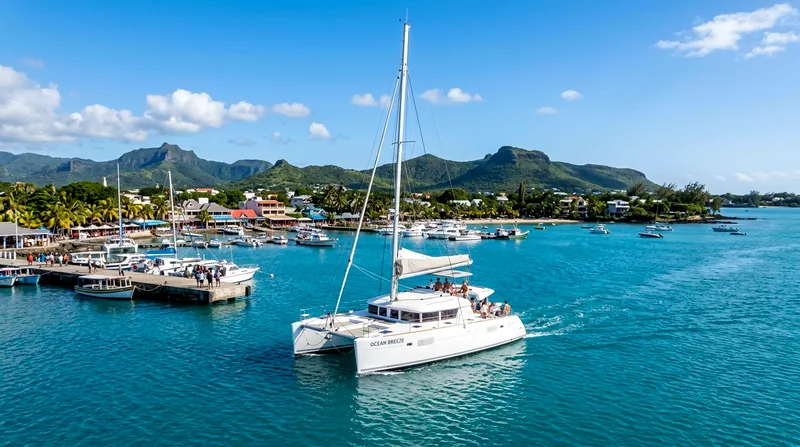
A catamaran cruise from Trou d'Eau Douce is a half-day or full-day boat trip along the east coast of Mauritius, almost always built around a sail out to Île aux Cerfs, a small island sitting inside the lagoon off the Grand Port District. The boats are twin-hulled sailing or motor catamarans, typically carrying anywhere from 20 to 80 passengers depending on the operator, and the format has become the default way visitors see this stretch of coast without renting a car or hiring a private skipper.
Trou d'Eau Douce itself is a modest fishing village, not a resort town, and that's part of its appeal. It sits roughly 45 minutes to an hour from the airport and about the same from Port Louis, making it a natural departure point rather than a destination people fly in specifically to see. The village has a public jetty, a handful of tour operator kiosks, small eateries, and not much else — you're not missing a beach resort experience by basing your trip around the boat rather than the town.
What differentiates this cruise from, say, a Zanzibar dhow trip or a Phuket longtail boat tour is the lagoon itself. The water between Trou d'Eau Douce and Île aux Cerfs is shallow and reef-protected for most of the crossing, which keeps things calmer than open-ocean alternatives and makes it genuinely comfortable for older travelers or anyone nervous about boats. It's a gentler ride than most Whitsundays sailing trips, which cross more open water, though it lacks the dramatic scale of that archipelago.
Why visit Trou d'Eau Douce
The honest reason to visit is logistics, not the village. It's the main embarkation point for Île aux Cerfs cruises and sits closer to several east coast hotels than the alternative departure points further south. If you're staying in Belle Mare, Trou aux Biches, or around Flacq, this is your nearest jetty. Don't expect a charming old town — expect a working departure point with boat operators calling out packages, which some travelers find a bit much on arrival. Go early, pick your boat, and you'll avoid most of the hassle.
Typical cruise experience
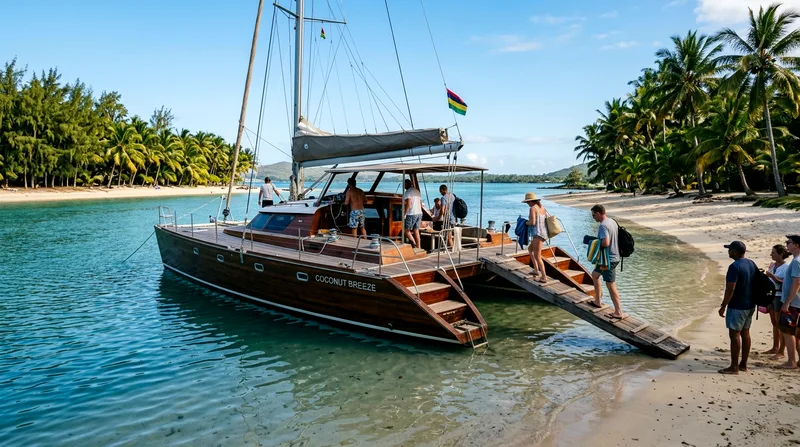
Most itineraries follow a similar shape: boarding around 9:30 or 10am, a 20-30 minute sail to Île aux Cerfs or a nearby snorkeling spot first, an hour or two of free time on the island, then lunch either on board or at a beach barbecue, followed by a slower return sail. Some operators tack on a stop at the GRSE waterfalls (viewed from the boat, not landed) or a sandbank stop. Full-day trips run 9am to 4 or 5pm; half-day versions can be as short as three hours and skip lunch. If you want more than a quick look at Île aux Cerfs, pick the longer option — the shorter cruises genuinely don't give you much beach time.
How to Book and Get There
Getting to Trou d'Eau Douce is straightforward if unglamorous. There's no train network in Mauritius, so you're choosing between a rental car (around 45 minutes from the airport via the M2 and A7), a pre-arranged taxi, or hotel transfer. Public buses do run from Port Louis and Flacq, but schedules are infrequent and not really practical if your boat departs at a fixed time. If you're not renting a car for the whole trip, a taxi booked the night before is the simplest option — agree the fare upfront, since meters aren't standard practice outside the capital.
Once you're booking the cruise itself, you'll notice two broad categories: catamarans run by larger, established operators with multiple daily departures, and smaller independent boats, sometimes just a skipper and one or two crew, working directly with hotels or walk-up customers at the jetty. Both are legitimate; the difference is mostly about group size, polish, and price.
Independent booking vs. guided tours
Booking independently — turning up at Trou d'Eau Douce and negotiating with a boat captain directly — can save money, sometimes 15-20% off the advertised rate for larger groups, and gives you more flexibility on departure time. The trade-off is inconsistency: you can't verify safety equipment, insurance, or itinerary details in advance, and you're relying on the captain's word for what's included. I wouldn't recommend this approach for families with small children or anyone who wants lunch and snorkeling gear guaranteed rather than improvised.
Booking ahead through a tour platform or your hotel gets you a fixed itinerary, confirmed inclusions, and — usually — a larger, more stable catamaran rather than a small motorboat. For solo travelers and couples who want predictability, or for anyone visiting during peak months (July-August, December-January) when good boats fill up, booking a few days ahead is the safer call. Compare current boat tours and prices before you book, since rates and departure times shift with season and fuel costs.
Pickup and transport options
Many operators offer hotel pickup as part of the package, particularly for guests staying along the east coast between Belle Mare and Trou d'Eau Douce itself — this usually adds no extra cost if you're within a reasonable radius, maybe 20-30 minutes' drive. If you're staying further away, on the west coast near Flic en Flac or in Grand Baie, you'll either pay a transfer supplement or need to arrange your own transport to the jetty, which can add an hour or more each way. Factor that into how early you need to leave — a 9:30am boarding time can mean a 7:30am start from the north coast.
Tickets, Pricing and What's Included
Pricing for a Trou d'Eau Douce catamaran cruise varies by boat size, trip length, and what's bundled in, so treat any figure here as a general guide rather than a quote. Half-day trips without lunch tend to sit at the lower end; full-day trips with a barbecue lunch, open bar, and multiple stops cost more — often close to double. Children usually get a discounted rate, roughly half price, and some operators don't charge for toddlers under two or three years old. Always check current prices when booking, since they shift with fuel costs and season.
Full-day catamaran tours cost more but include lunch and more island time, while half-day trips suit travelers short on time or budget.
Trou d'Eau Douce catamaran cruise options compared
| Trip Type | Typical Duration | Lunch Included | Best For |
|---|---|---|---|
| Half-day cruise (no lunch) | 3-4 hours | No | Short on time, tight budget |
| Full-day cruise with BBQ lunch | 6-7 hours | Yes | Families, full island day |
| Independent/local boat charter | Flexible | Negotiable | Small groups, flexible plans |
| Private catamaran charter | 4-8 hours | Often yes | Couples, special occasions |
| Music/party catamaran | 5-6 hours | Usually yes | Groups, younger travelers |
Durations and inclusions vary by operator and season; confirm specifics before booking.
Ticket types and inclusions
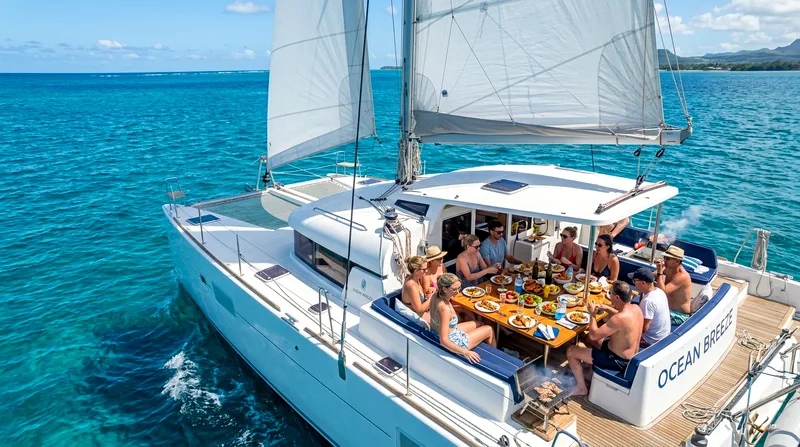
Standard inclusions on most full-day tickets: return transport from the jetty (or hotel pickup), snorkeling gear, a stop at Île aux Cerfs with free beach time, lunch (usually a grilled fish or chicken barbecue), and soft drinks or local rum punch. Some boats include an open bar for the full duration; others charge extra for alcohol beyond a welcome drink. Towels and sun loungers on the island are sometimes included, sometimes a small rental fee. What's rarely included: entrance to the Île aux Cerfs golf course, jet-ski or parasailing add-ons on the island, and gratuities for crew. Read the inclusion list carefully — "lunch included" can mean a sit-down meal or a packed sandwich, and the difference matters if you're planning your day around it.
What to expect on board
Expect a shaded saloon area, an open deck with netting (the trampoline-style front of the catamaran, popular with kids and a genuine highlight), and basic toilet facilities. Life jackets are standard safety kit and should be offered without you asking — if a boat doesn't have visible life jackets for every passenger, that's a reason to walk away and pick another operator. Music is common, and on some of the larger party-style catamarans, it's loud and constant from departure to return. If you want a quieter trip, ask directly when booking whether the boat does a "music cruise" format — operators are generally upfront about this since it's a selling point for some travelers and a dealbreaker for others.
Best Time to Visit
Mauritius sits in the southern Indian Ocean, so its seasons run opposite to Europe's — warm and humid from November to April, cooler and drier from May to October. For a catamaran cruise, this matters more than people expect, because sea conditions on the east coast change noticeably between seasons.
Seasonal weather and conditions
May through October brings the trade winds, which keep temperatures around 20-25°C and skies generally clear, but it also means choppier water on the east coast compared to the sheltered west. If you're prone to seasickness, mention it when booking — some operators route differently or recommend the morning departure, when winds are typically lighter. November to April is hotter and more humid, with calmer mornings but a real risk of afternoon thundershowers and, between January and March, the chance of a cyclone warning that can cancel sailings entirely with little notice. That's the trade-off versus somewhere like the Maldives, where atoll lagoons offer more consistent year-round calm — Mauritius's east coast is more weather-dependent. July and August are the most reliably comfortable months for a cruise, with moderate temperatures and low humidity.
Crowd levels and booking tips
Île aux Cerfs gets busy. School holiday periods in Mauritius, plus European summer (July-August) and the Christmas-New Year stretch, bring the most boats and the most people on the island's main beach at once. If crowds bother you, book a morning departure — the earliest boats reach the island before the bulk of traffic — or ask whether the operator stops at a quieter beach on the island rather than the main one. Booking three to five days ahead is usually enough outside peak season; during August or late December, a week or more is safer, since the better-reviewed boats do sell out.
Nearby Activities and Add-Ons
The cruise itself is only part of the day — what you do once you're on Île aux Cerfs, and what else you build around the trip, shapes whether it feels like a full day out or a rushed box-ticking exercise.
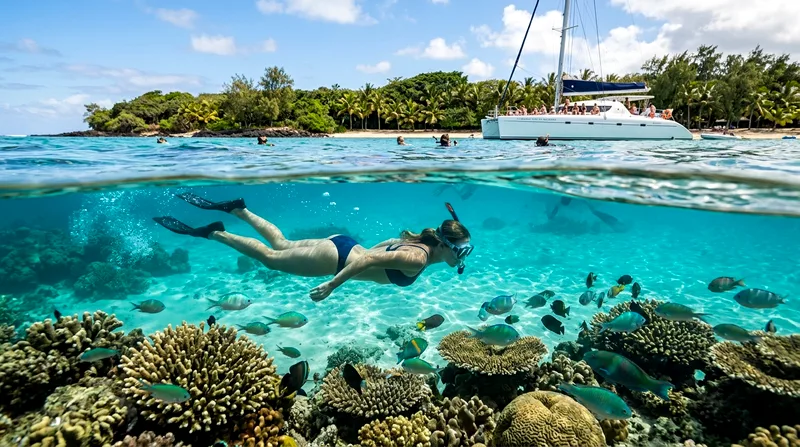
Île aux Cerfs attractions
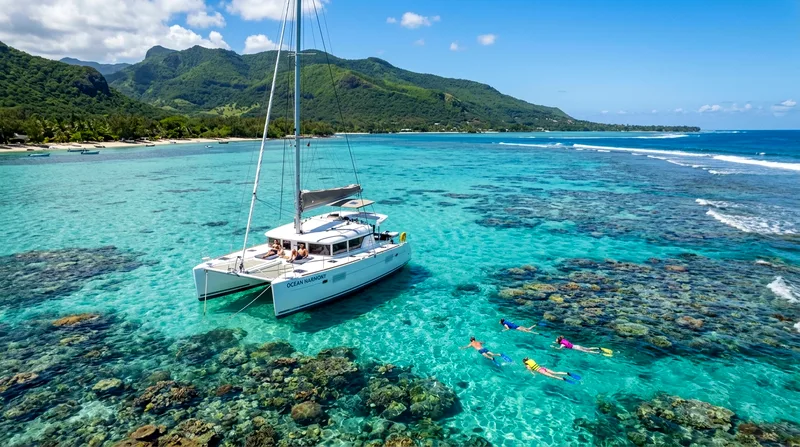
Île aux Cerfs has a genuinely good beach on its east-facing side, a golf course designed by Bernhard Langer (separate green fees apply, not part of boat packages), a handful of restaurants and snack bars, and operators renting jet-skis, parasailing, and glass-bottom kayak trips. The snorkeling directly off the main beach is mediocre — coral is sparse close to shore — but most catamaran cruises include a stop at a better reef site en route, often near Ilot Mangenie or a patch reef closer to the mainland, where visibility and fish life are noticeably better. Don't expect Maldives-level reef health; cyclone damage and boat traffic have worn down shallow coral in places, but you'll still see parrotfish, small reef sharks occasionally, and colorful reef fish in the clearer spots.
Other east coast experiences
Beyond the boat trip, the east coast around Trou d'Eau Douce and Belle Mare has little in the way of standalone attractions — this isn't a region built for land-based sightseeing the way the south's Chamarel or Black River Gorges are. Most visitors pair the catamaran day with beach time at their hotel the following day, or combine it with a visit to the GRSE waterfall viewpoint, which some cruises pass on the river stretch. If you want more boat time beyond this one cruise, deep-sea fishing charters also depart from Trou d'Eau Douce and nearby Grand River South East, targeting marlin and tuna — a different activity from the lagoon cruise, worth considering separately if fishing is your main interest.
Frequently asked questions
What is included in a catamaran cruise from Trou d'Eau Douce?
Most full-day tickets include return boat transport, snorkeling equipment, a stop at Île aux Cerfs with free time on the beach, a barbecue-style lunch, and soft drinks or a welcome rum punch. Open bar, hotel pickup, and towels vary by operator — check the specific inclusion list before paying, since "lunch included" can mean very different things between boats.
How do I get to Trou d'Eau Douce?
By car, it's roughly 45 minutes from the airport and a similar drive from Port Louis via the M2 motorway and A7 road. There's no rail option in Mauritius, so most visitors use a rental car, pre-booked taxi, or hotel transfer. Public buses run but with infrequent schedules, making them impractical if your cruise has a fixed departure time.
Can I book a catamaran cruise independently or only with a tour operator?
Both are possible. You can negotiate directly with a boat captain at the Trou d'Eau Douce jetty, often at a lower price, or book ahead through a tour operator for a confirmed itinerary and verified inclusions. Independent booking suits flexible travelers comfortable with less certainty; booking ahead suits families and anyone visiting during peak months.
What is the best time to take a catamaran cruise on the east coast?
July and August typically offer the calmest, most comfortable conditions, with moderate temperatures and lower humidity. Avoid January to March if possible, since cyclone warnings during this window can cancel sailings with little notice. Morning departures generally have calmer water and smaller crowds than afternoon trips year-round.
What activities are available on Île aux Cerfs?
The island has a sandy east-facing beach, a golf course with separate green fees, several restaurants, and rentals for jet-skis, parasailing, and glass-bottom kayaks. Snorkeling right off the main beach is unremarkable; better reef snorkeling usually happens at a stop en route, which most catamaran cruises include as part of the itinerary.