Plan a Mauritius whale watching boat tour: peak sperm whale season, ethical operators, realistic success rates, and how to pair it with dolphin trips.
What Is Whale Watching in Mauritius
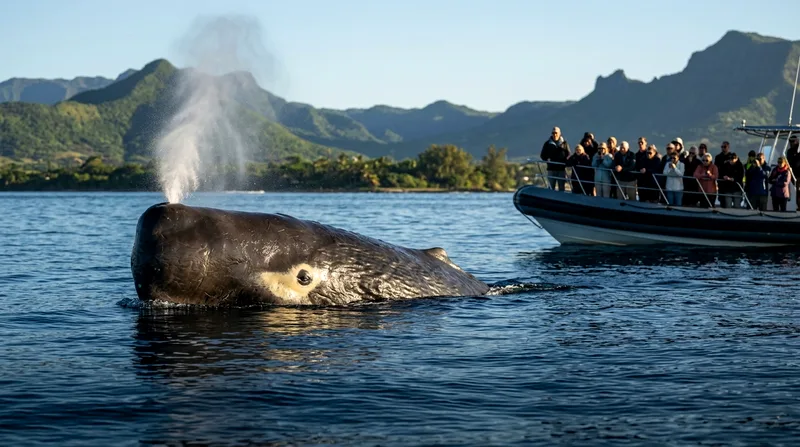
A Mauritius whale watching boat tour typically means heading out from the west coast — Tamarin Bay or Black River — in search of sperm whales that live in the deep water trenches just offshore. This isn't a seasonal migration stop like humpback whale watching in parts of Australia or Réunion Island; Mauritius has a resident pod of sperm whales that stays in the area for much of the year, which is unusual and part of why the island has built a modest reputation for this activity. Humpbacks do pass through between July and September, but sperm whales are the main draw and the more reliable sighting.
Boats leave early, usually between 6:30am and 8am, because the sea is calmer and whales tend to surface more in the morning before boat traffic picks up. Trips run anywhere from 2 to 4 hours depending on the operator and whether dolphins are bundled into the same outing.
Why Sperm Whales Visit Mauritian Waters
The west coast of Mauritius drops into deep underwater canyons close to shore — in places the seabed falls away to over 1,000 metres within a few kilometres of the coastline. Sperm whales hunt squid in these depths, diving for 45 minutes to an hour at a time before resurfacing to breathe for several minutes. That proximity of deep water to the coast is the real reason boats can reach whale territory in 15-20 minutes rather than the hours-long transits needed in other whale-watching destinations. It's a geographical quirk, not a managed wildlife park, so sightings still depend on where the pod happens to be that morning.
What to Expect on a Typical Tour
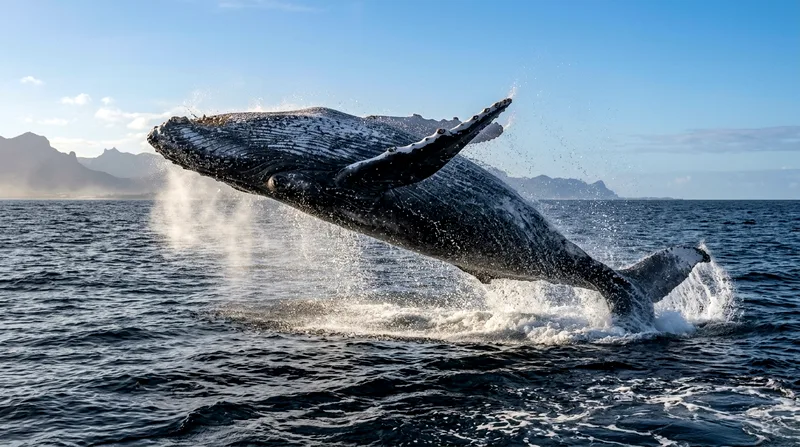
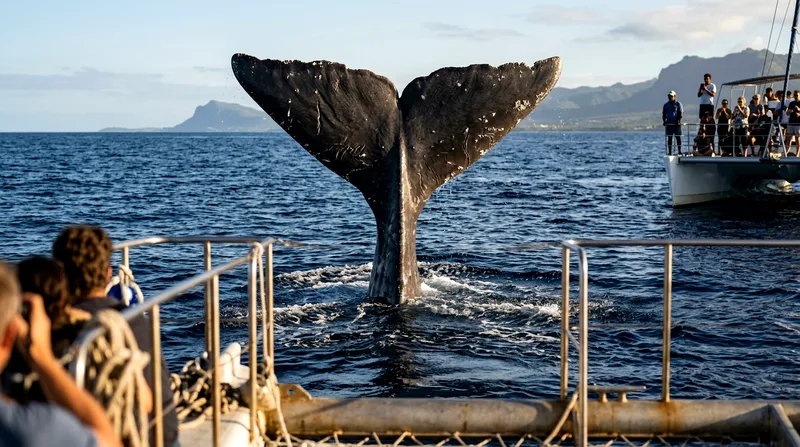
Expect a small to mid-sized boat — usually a speedboat or a semi-rigid inflatable rather than a large catamaran, since smaller craft can approach and reposition more quietly. A skipper and guide will scan for blows (the exhale spray) and listen via hydrophone in some cases. When a whale is spotted, boats typically cut engines and approach at an angle, staying a recommended 100 metres away minimum. You might see a fluke-up dive, a resting pod at the surface, or — if you're fortunate — a calf. Don't expect dramatic breaching like you'd see with humpbacks; sperm whale encounters are quieter and more about patience than spectacle.
Best Season for Sperm Whale Sightings
Unlike Seychelles or the Maldives, where whale shark and manta encounters are tightly seasonal, Mauritius markets its sperm whales as a year-round sighting opportunity — and that's broadly true, though not evenly distributed. The resident pod stays in the deep canyons off Black River most months, but sea conditions and tourist demand both shift noticeably with the seasons.
July to November offers the calmest seas and the best combined chance of sperm whales and passing humpbacks.
Mauritius whale watching season compared by month, conditions and what you'll likely see
| Period | Sea Conditions | Likely Sightings | Booking Risk |
|---|---|---|---|
| July-September | Calm, dry season | Sperm whales + possible humpbacks | Low cancellation risk |
| October-November | Calm, warming | Sperm whales, dolphins | Low risk |
| December-March | Rough, cyclone season | Sperm whales less consistent | High cancellation risk |
| April-June | Variable, transitional | Sperm whales, dolphins | Moderate risk |
Conditions are typical patterns, not guarantees; always check the marine forecast and operator status before departure.
Peak Months and Weather Conditions
The window from July to November is generally considered the best combination of calm seas and good sighting conditions, falling within the Mauritian dry season when the southeast trade winds are less aggressive on the west coast (which is sheltered anyway, but swell still affects comfort). This period also overlaps with humpback whale passage from July to September, so there's a chance — not a guarantee — of seeing two species in one season. The cyclone season, roughly December to March, brings rougher seas and more cancellations; operators will postpone or refund if conditions are unsafe, and you should expect that possibility if booking in this window.
Success Rates by Season
No official, audited sighting statistics are published for Mauritius the way they are for some Australian whale-watching regions, so be skeptical of any operator citing a precise success percentage. Anecdotally and from diver/operator community reporting, sightings during the July-November window are reported more consistently than during the hot, humid months of January to March, when rough water also makes spotting blows harder. A realistic expectation: most well-reviewed operators report sighting whales or dolphins on a solid majority of outings across the year, but sperm whales alone — without dolphins as a backup — are less consistent in poor-weather months. If seeing a sperm whale specifically is your priority, book during the dry season and ask the operator directly how recent their last few sightings were.
How to Book a Whale-Watching Tour
You cannot do this one independently in any meaningful way — chartering your own boat without local knowledge of whale behaviour and canyon locations is a waste of money and likely a waste of a morning. This is one activity on this site where a guided tour isn't just more convenient, it's close to the only sensible option.
Independent Booking vs. Guided Tours
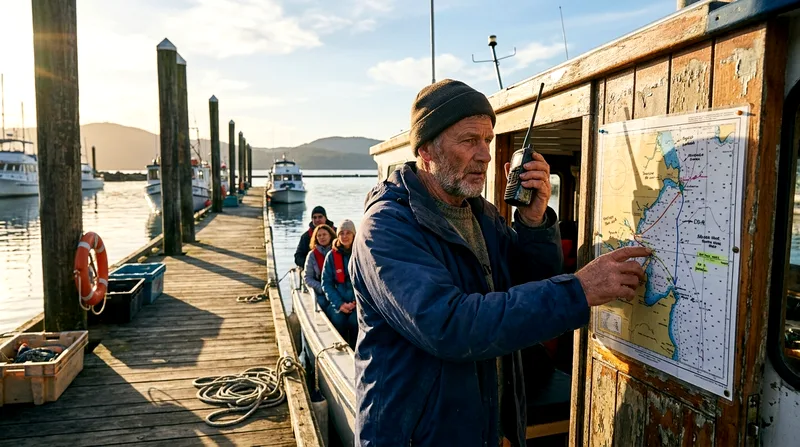
Technically you could hire a private skipper in Tamarin or Black River and ask them to look for whales, but without a dedicated spotter network or recent sighting intel, you're relying on luck alone. Established operators communicate with each other and with local fishermen about recent sightings, which meaningfully improves your odds. The trade-off: guided group tours mean sharing the boat with 6-15 other passengers, and you don't control the route. If you want a private, flexible outing, some operators offer private charters at a higher price — worth it for photographers who need to dictate positioning, less so for casual visitors.
Tour Duration and Departure Points
Most tours depart from Black River (Rivière Noire) or Tamarin Bay on the west coast, both roughly 35-45 minutes by car from Port Louis. Standard tours run 2-3 hours; combo tours with dolphin watching or snorkeling extend to 4-5 hours. Morning departures around 6:30-7:30am are standard and preferable — afternoon slots exist but see more boat traffic and choppier conditions as trade winds build through the day. Confirm the exact meeting point when booking, since some operators use jetties slightly outside the main villages.
Choosing Ethical Whale-Watching Operators
This is the section I'd read twice before booking anything. Mauritius has had documented problems with boats crowding sperm whale pods, and swim-with-whale activities — while thrilling in photos — have drawn criticism from marine biologists for stressing animals that need undisturbed surface time to breathe and rest between deep dives.
Certification and Responsible Practices
Look for operators who follow, or at minimum state they follow, a code of conduct limiting the number of boats near a single pod at once, capping time spent with any group of whales (commonly 20-30 minutes), and maintaining a minimum approach distance before cutting engines. Some operators work alongside marine conservation organizations active on the island, contributing sighting data or supporting research — that's a reasonable positive signal, though it's not independently audited the way, say, Australian whale-watching permits are. Avoid any operator advertising guaranteed swims with whales as a headline feature; that's often a sign they prioritize client demand over animal welfare. Ethical operators will tell you upfront that swimming alongside whales isn't always possible or appropriate on a given day.
Operator Reputation and Guest Reviews
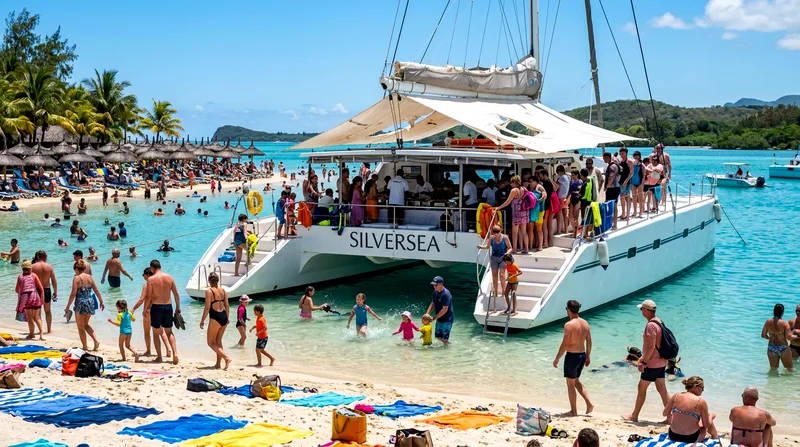
Read recent reviews specifically for mentions of how close boats got to whales and whether guides discouraged chasing or crowding. A pattern of complaints about overcrowded boats, aggressive repositioning, or rushed swim attempts is a red flag regardless of how good the photos look. Catamaran operators running combined snorkeling-and-whale trips sometimes treat the whale segment as secondary to the day's main snorkeling itinerary, which can mean less patience and shorter observation windows — fine if whales are a bonus for you, frustrating if they're the main reason you booked.
Combining Whale Watching With Other Boat Activities
Whale watching rarely stands alone as a full-day booking in Mauritius — most operators build it into a broader west-coast boat itinerary, partly because sperm whale encounters can be brief and partly because dolphins are a far more reliable backup sighting.
Dolphin Spotting and Snorkeling Combos
Spinner dolphins are resident in Tamarin Bay and sighted far more consistently than sperm whales — on many mornings you'll see dolphins even if the whales don't show. Combo tours typically spend the first hour with dolphins, move offshore toward deeper water for whales, then return for a snorkeling stop over a reef or shipwreck closer to shore. This structure works well because it manages expectations: you're not paying purely for a whale sighting that might not happen. If snorkeling is included, water visibility off Black River is generally decent but not exceptional compared to Mauritius's lagoon snorkeling spots — don't expect Maldives-level clarity.
Multi-Activity Boat Tour Packages
Full-day packages sometimes combine whale and dolphin watching with a sandbank stop, lunch on board, and snorkeling, running 5-7 hours total. These suit families and travelers who want value from a full day on the water rather than a focused 2-3 hour whale trip. The downside: longer days mean more sun exposure and more time for seasickness to set in if conditions are choppy, so factor that in if you or your travel companions get queasy easily. Compare current boat tours and prices before you book, since package inclusions vary a lot between operators.
Practical Tips for Your Whale-Watching Experience
A few overlooked details make a real difference to how much you enjoy the morning, separate from whether whales appear at all.
What to Bring and Wear
Bring reef-safe sunscreen, a hat with a strap (wind off the water is stronger than it looks from shore), and a light waterproof jacket — spray from the bow can soak you even on calm mornings. Take seasickness tablets the night before if you're prone to motion sickness; the swell picks up noticeably once you're past the reef into open water. Closed shoes with grip are more practical than flip-flops on a moving boat deck. If the tour includes snorkeling, wear swimwear under your clothes to avoid an awkward mid-trip change.
Photography and Wildlife Etiquette
A zoom lens in the 200-400mm range is genuinely useful here since boats keep a respectful distance; phone cameras will leave you with disappointing, distant specks. Burst mode helps for catching a fluke-up dive, which lasts only a couple of seconds. Resist asking the skipper to get closer than the guide's stated limit — a good operator will say no, and that's the correct answer, not poor service. Flash photography isn't an issue in daylight, but drones are restricted around marine wildlife in many areas, so check with the operator before bringing one.
Frequently asked questions
What is the best time to see whales in Mauritius?
July through November gives the calmest seas and the most consistent sperm whale sightings, with a chance of also seeing humpback whales between July and September. December to March brings cyclone-season swell that increases cancellations and makes spotting blows harder.
How long does a typical whale-watching boat tour last?
Standalone whale-watching trips usually run 2-3 hours, departing around 6:30-7:30am from Black River or Tamarin Bay. Combo tours adding dolphin watching or snorkeling typically extend to 4-5 hours, and full-day multi-activity packages can run 5-7 hours.
What is the success rate for spotting sperm whales?
There's no official published statistic, so treat any operator's exact percentage claim with caution. Reports from operators and divers suggest sightings of whales or dolphins happen on most outings during the July-November dry season, with sperm whales specifically less reliable in rough, wet-season months.
Are whale-watching tours suitable for children?
Older children who can sit through an open-water boat trip and handle swell generally do fine, especially on combo tours that include dolphins and snorkeling to keep interest up. Toddlers and younger kids struggle more with the early departure times and potential choppy conditions on longer offshore legs.
Can I combine whale watching with snorkeling or dolphin tours?
Yes — most Mauritius operators build whale watching into a wider itinerary with Tamarin Bay dolphin spotting and a snorkeling stop over a nearby reef, since dolphins are sighted far more reliably than sperm whales. These combo trips typically run 4-5 hours and are the most common booking format on the west coast.