Mauritius sunrise boat tour guide: why calm seas, dolphin odds, and golden light make early departures worth it. Compare tour types before booking.
Who sunrise boat tours suit best
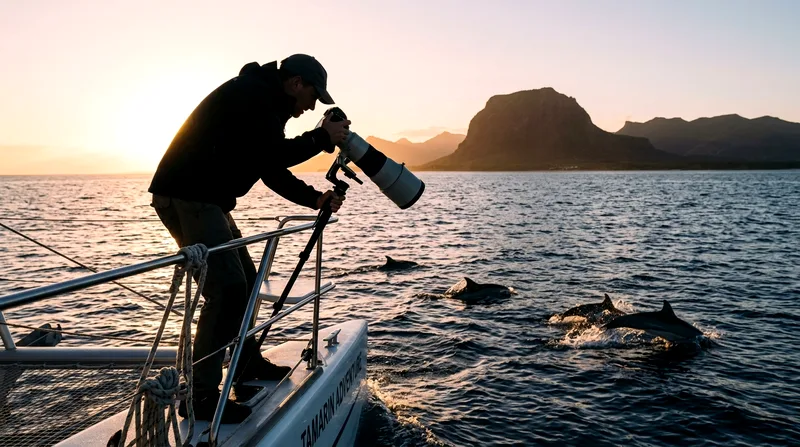
A Mauritius sunrise boat tour isn't for everyone, and it's worth being honest about that before you set an alarm for 5am on holiday. These trips typically depart between 6am and 7am, depending on the season and how far the boat needs to travel to reach dolphin grounds off the west coast near Tamarin or Rivière Noire. If you're the type who treats sunrise as something that happens to other people, a mid-morning or afternoon catamaran trip will suit you better — and there's no shame in that.
But for a specific set of travelers, the early start pays off directly. Photographers get soft, low-angle light that a midday sun simply can't produce — no harsh overhead glare bouncing off the water, no squinting subjects. Couples looking for a quieter, less crowded version of the standard catamaran cruise find sunrise slots carry noticeably smaller groups, since most tourists book the 9am or 10am departures instead. Solo travelers and serious snorkelers also benefit: the lagoon is close to glass-flat before the wind builds, which matters when you're trying to see coral detail through the surface.
Families with school-age kids can make it work, particularly on the Tamarin side where dolphin encounters are the draw — kids tend to forgive an early wake-up if there's a real chance of seeing a pod within the first 30 minutes. Toddlers and very young children are a harder sell; combine a 5:30am hotel pickup with two-plus hours on open water and you've got a recipe for a cranky afternoon.
Photography and nature enthusiasts
If you're bringing a camera beyond your phone, sunrise is the only departure time that makes sense in Mauritius. The sun rises over the lagoon side on the east and south coasts, and behind the mountains on the west coast near Tamarin, creating a backlit silhouette effect against Le Morne or the Black River gorges that's genuinely hard to replicate later in the day. Shoot in the first 20 minutes after the boat clears the reef pass — that's when the light-to-color ratio is best, before the sun climbs and flattens everything into a washed-out blue. Bring a dry bag or waterproof case; spray off the bow is common even in calm conditions, and salt water finds its way into unprotected gear faster than you'd expect.
Wildlife watchers and marine lovers
Dolphins — mostly spinner and bottlenose — feed and socialize close to the surface in the early morning off Tamarin Bay, then tend to move into deeper water and dive longer as the day warms up and boat traffic increases. Operators running sunrise trips in this area report meaningfully higher sighting rates before 8am than on afternoon runs, which is the single biggest commercial argument for booking early. It's not guaranteed — dolphins are wild animals, not scheduled performers — but the odds genuinely shift in your favor at dawn. Expect pods of anywhere from a handful to 20+ individuals; swimming with them depends on the operator's permit and house rules, so ask directly before you book if that's your priority.
Sunrise vs. daytime boat tour types
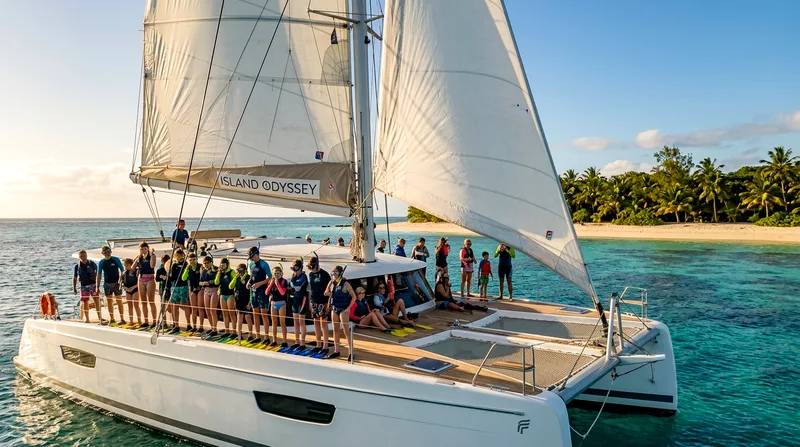
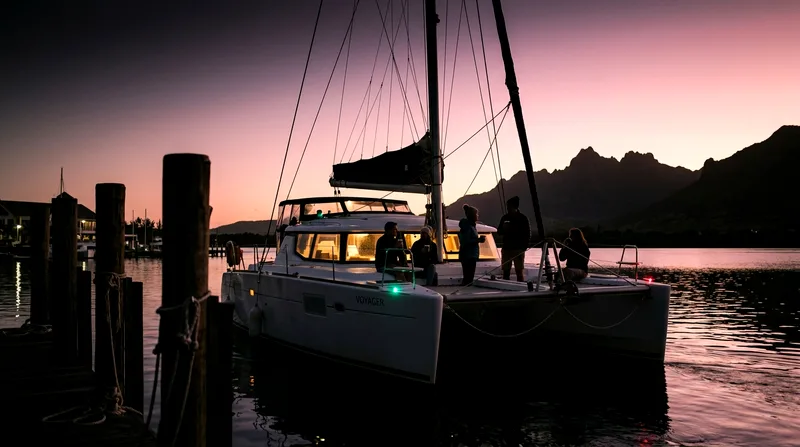
Not all sunrise departures are built the same, and the boat type changes what you'll actually experience on the water. Catamarans are the default for most lagoon and dolphin-watching sunrise trips — stable, slower, with deck space for sitting and watching the light change. Speedboats cover more ground faster, useful if the operator needs to reach dolphin grounds quickly or wants to combine the dolphin stop with a snorkeling detour over a reef further out. Neither is objectively "better" — it depends on whether you want a relaxed cruise or a brisker, more active morning.
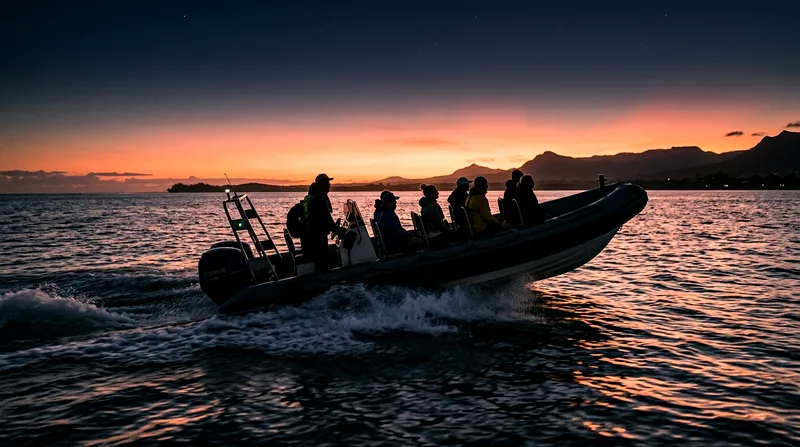
Catamarans suit comfort and photography, speedboats suit speed, and private charters suit flexibility — sea conditions and dolphin odds are best on all of them before 8am.
Mauritius sunrise boat tour types compared: sea state, wildlife odds, and group size
| Tour type | Typical sea state at sunrise | Dolphin sighting odds | Typical group size | What's usually included |
|---|---|---|---|---|
| Catamaran (group) | Calm, minimal roll | High before 8am | 10-30 passengers | Snorkeling stop, light breakfast, fruit |
| Speedboat (group) | Calm but choppier ride | High before 8am | 6-12 passengers | Faster transit, snorkeling gear, shorter duration |
| Private catamaran charter | Calm, flexible route | High, can chase pods | 2-10 passengers (your group) | Custom timing, full crew attention |
| Private speedboat charter | Calm, rougher feel | High, fastest to reach pods | 2-8 passengers | Flexible stops, shorter total trip time |
Typical figures based on common Mauritius west-coast operations; always confirm boat type, capacity, and inclusions before booking.
Catamaran and speedboat options
Catamarans typically run 3 to 4 hours for a sunrise dolphin-and-snorkel combination, with a steadier ride that suits anyone unsure about their sea legs or traveling with older relatives. Speedboats cut transit time but trade away comfort — expect more bouncing over chop once the wind starts, and less shade or seating variety. If seasickness is a concern, go catamaran; the twin-hull design reduces roll substantially compared to a single-hull speedboat, particularly once you're past the reef and into open Indian Ocean swell.
Group tours versus private charters
Standard group sunrise tours run with anywhere from 10 to 30 passengers depending on the boat, and price per person accordingly — budget-friendly but less flexible on timing or route. Private charters let you set your own departure time (useful if you want to beat the group boats to a dolphin pod) and choose your own pace, but cost several times more per person unless you're splitting it across a full family or group of friends. For anyone chasing photography or a quieter experience, a private charter is worth the premium; for a one-off bucket-list dolphin encounter on a budget, group tours are the sensible default.
What to look for when booking
The marketing photos for sunrise boat tours all look similar — glassy water, a dolphin fin, a couple holding coffee cups. What actually separates a good booking from a disappointing one is in the fine print, and most of it has nothing to do with the sunrise itself.
Inclusions, group size, and cancellation
Check exactly what's included before comparing prices — some sunrise tours bundle a light breakfast or fruit platter and snorkeling gear, others charge those as add-ons. Group size matters more at sunrise than you'd think: a boat with 25 passengers means less deck space per person for photography, and more competition for the best vantage point when dolphins appear. Ask directly how many guests are confirmed for your date if the listing shows a range.
Cancellation policy deserves real attention. Dolphin sightings aren't guaranteed, and legitimate operators are upfront that tours can be rescheduled due to rough seas or no-show pods rather than offering a blanket refund for a "disappointing" encounter. Look for clear language around weather-related cancellations — full refund or free rebooking is standard for operator-cancelled trips; guest-cancelled bookings often forfeit a deposit if cancelled within 24-48 hours of departure.
Safety gear and guide experience
Life jackets should be provided and visibly available for every passenger, not just stored below deck. Ask whether the crew includes a guide briefed on local marine protection rules — Mauritius has guidelines around minimum distance from dolphins and limits on swimmer numbers in the water at once, and operators who ignore these contribute to the pods being pushed further offshore over time. Snorkeling masks and fins should be available in multiple sizes; if you have a larger or smaller head, bringing your own mask is a reasonable backup plan rather than relying entirely on shared gear.
Best seasons and timing to book
The best time for a boat tour in Mauritius overall runs from May through December, Mauritius's dry, cooler season, when trade winds are steadier but mornings are calmer before they build through the day. This is also cyclone-free territory — the risk period for tropical storms runs roughly January through March, and operators will cancel outright in a cyclone warning, no exceptions.
Weather patterns and sea conditions
Even in good-weather months, afternoon wind picks up across the lagoon most days, which is exactly why the sunrise slot exists commercially — operators know the 6am to 9am window is the most reliable stretch of flat water on the calendar. During the hotter, wetter months of January to March, expect more short, sudden downpours and higher humidity, though mornings can still be workable. If you're traveling specifically for a dawn cruise or dolphin encounter, aim for June through October for the most consistent combination of calm seas and clear skies.
Advance booking windows
Sunrise slots are limited by nature — there's only one sunrise a day, and popular operators run just one or two early departures. Book at least 3 to 5 days ahead in shoulder season, and a full week or more during peak months (July, August, December) when hotel-based tour desks fill up fast. Private charters need more lead time — a week minimum is reasonable if you want a specific date and boat type confirmed.
Preparing for your early departure
Nothing ruins a sunrise tour faster than showing up unprepared and spending the first 30 minutes cold, hungry, or fumbling with gear you should've sorted the night before.
What to bring and wear
Mornings on the water are cooler than you'd expect in a tropical destination — bring a light layer or windbreaker even in warm season, since boat speed and sea spray drop the felt temperature noticeably before the sun is fully up. Reef-safe sunscreen, applied before boarding (not on deck, where wind spreads it everywhere), a hat with a chin strap, and a waterproof phone pouch are the essentials. Skip heavy camera bags without waterproof protection — salt spray is a real risk even on calm mornings.
Arrival and check-in logistics
Most sunrise tours include hotel pickup starting around 5am to 5:30am depending on how far you're staying from the departure jetty — Grand Baie, Black River, and Tamarin are the common launch points. Confirm pickup time the night before, and build in a 10-15 minute buffer; traffic isn't the issue at that hour, but hotel front desks occasionally mix up early pickup lists. Arrive at the jetty with ID and your booking confirmation on your phone or printed — some operators check names against a manifest before boarding.
Frequently asked questions
Why are sunrise boat tours better than afternoon departures?
Wind and chop build through the day in Mauritius, so sunrise departures catch the lagoon at its calmest — better for snorkeling visibility, photography, and comfort if you're prone to seasickness. Dolphins are also more active and surface-feeding earlier in the morning, before boat traffic increases, giving sunrise tours a genuinely better sighting rate than midday or afternoon slots.
What marine life can you see on a sunrise boat tour?
Spinner and bottlenose dolphins are the main draw, particularly off Tamarin and the west coast. Snorkeling stops over the lagoon's coral reef typically reveal parrotfish, surgeonfish, moray eels, and occasionally reef sharks in shallow water. Turtles are possible but less reliable than dolphins on most routes.
How far in advance should you book a sunrise tour?
Book 3 to 5 days ahead in shoulder season (April, May, November), and a full week or more during July, August, and December when demand peaks. Private charters need at least a week's notice to guarantee a specific boat and date.
What should you wear on an early-morning boat tour?
Layer up — a swimsuit under a light long-sleeve top or windbreaker handles the cooler pre-dawn air and the spray once the boat's moving. Add a secured hat, reef-safe sunscreen applied before boarding, and closed-toe water shoes if the jetty or reef entry is rocky.
Are sunrise boat tours suitable for children?
School-age kids generally do fine, especially if dolphins are the main attraction — the novelty outweighs the early wake-up. Toddlers and children under about 5 are harder going, given the early pickup, open water motion, and typically no dedicated child seating on smaller boats.