Fast speedboat tours to Île aux Cerfs with waterfall and river stops. Compare ticket options, timing, and what to bring before you book.
What is a Speedboat Tour to Île aux Cerfs?
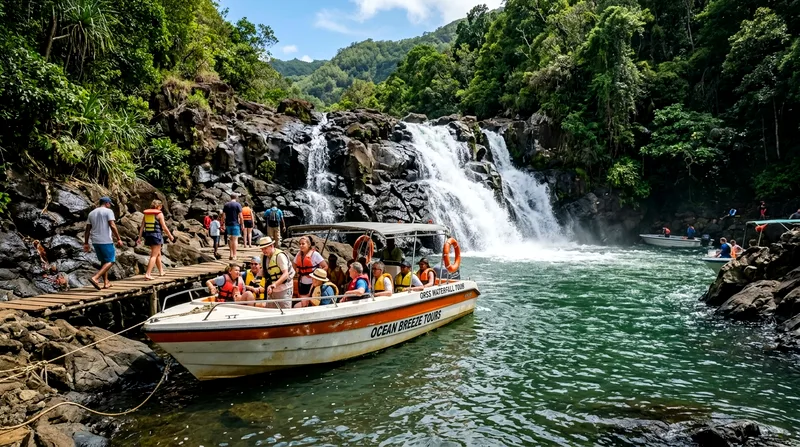
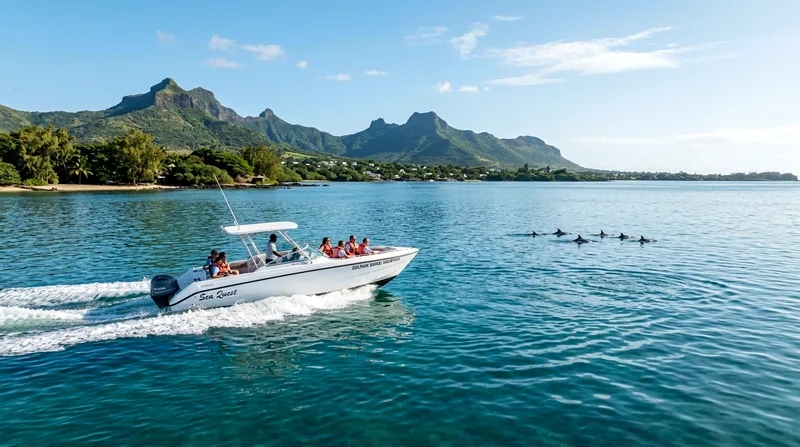
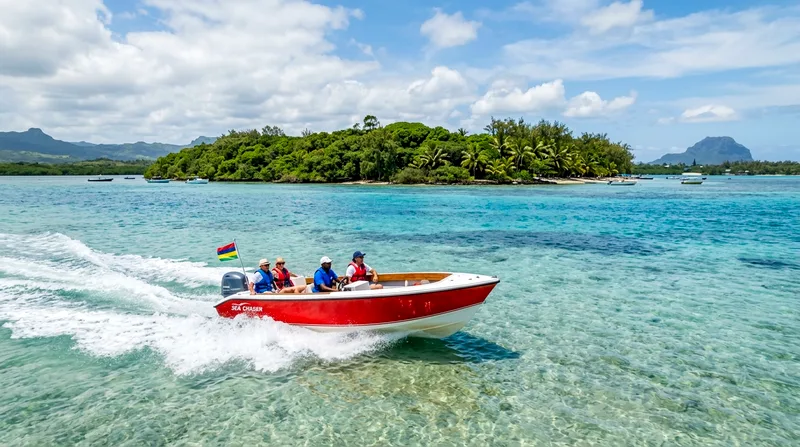
A speedboat tour to Île aux Cerfs is a half-day excursion that uses a small, fast open or semi-covered boat — usually seating 8 to 20 people — to cover the stretch of the Indian Ocean between the mainland and this island off Mauritius's east coast. Instead of taking a slower catamaran or the public pirogue ferry from Trou d'Eau Douce, you get there in a fraction of the time, with a couple of scenic stops thrown in along the way. It's the activity-tour version of the trip, built for people who want movement and a bit of adrenaline rather than a leisurely sail.
Île aux Cerfs itself sits just off Trou d'Eau Douce in eastern Mauritius, a flat, forested island with white sand beaches, a golf course, several restaurants, and a lagoon that's sheltered enough for swimming and snorkeling most of the year. It's the single most-visited day-trip island in the country, which also means it gets crowded by late morning. A speedboat gets you there early, and gets you out before the crowds peak, which I'd argue is its biggest practical advantage over gentler alternatives.
Route and journey duration
Most speedboat tours depart from Trou d'Eau Douce or nearby jetties along the east coast and reach Île aux Cerfs in roughly 15 to 25 minutes of direct running time — compare that to 45 minutes to an hour on a catamaran covering the same stretch with sails or a slower engine. The direct crossing is short enough that operators pad the itinerary with stops, which is really the point of booking a speedboat package rather than just the ferry. Expect a half-day format, typically 3 to 4 hours door to door including the detour stops, swimming time, and the return leg.
Common stops: waterfalls and GRSE river
The signature detour on most speedboat itineraries is a run up the Grand River South East (GRSE), a river mouth a short distance south of Trou d'Eau Douce where boats slow down and motor upstream toward a waterfall — not a huge cascade, but a genuinely scenic spot framed by forest, and one you simply can't reach on foot easily. This GRSE stop is the main reason to pick a speedboat tour over a plain ferry ticket: it's included in almost every packaged tour and it's the part people photograph most. Some itineraries also pause briefly at a smaller islet or sandbank for photos before continuing to Île aux Cerfs proper. Confirm the GRSE stop is included before booking, since a handful of stripped-down transfer-only tickets skip it entirely.
Why Choose a Speedboat Tour?
The honest case for a speedboat tour is time efficiency, not comfort. If you're staying in the west or north of Mauritius and Île aux Cerfs is a side trip rather than the main event, shaving 30 to 40 minutes off each leg of the journey matters. It also matters if you're trying to fit in lunch on the island, some snorkeling, and the waterfall stop within a single morning before an afternoon flight or another booking.
A speedboat is the fastest way to Île aux Cerfs, but a catamaran or public ferry may suit you better depending on comfort and budget.
Speedboat tour vs other ways to reach Île aux Cerfs in Mauritius
| Option | Crossing time | Waterfall/GRSE stop | Comfort | Typical best for |
|---|---|---|---|---|
| Speedboat tour | 15-25 min | Usually included | Bumpy, wet, open | Short, active half-day trips |
| Catamaran cruise | 45-60 min | Rarely included | Smooth, shaded, social | Full-day relaxed outings, groups |
| Public pirogue ferry | 20-30 min | Not included | Basic, no frills | Budget travelers, repeat visitors |
| Private speedboat charter | 15-25 min | Flexible/optional | Open but personalized pace | Small groups, couples, flexible timing |
Timings are typical and depend on departure point, sea conditions, and operator; confirm specifics when booking.
Speed and convenience
Speedboats plane across the water rather than cutting through it, so the ride itself is part of the appeal for some travelers — it's bouncy, a bit wet, and noticeably faster than anything with a sail. For boaties and anyone who just likes being on the water fast, this is a genuine draw rather than a marketing line. The trade-off is less deck space and no shade canopy on some models, so a 20-minute crossing in full midday sun can feel long if you burn easily. I'd rate the speedboat ahead of the public ferry for convenience, but behind a catamaran for pure comfort over a longer day.
Scenic stops and activities included
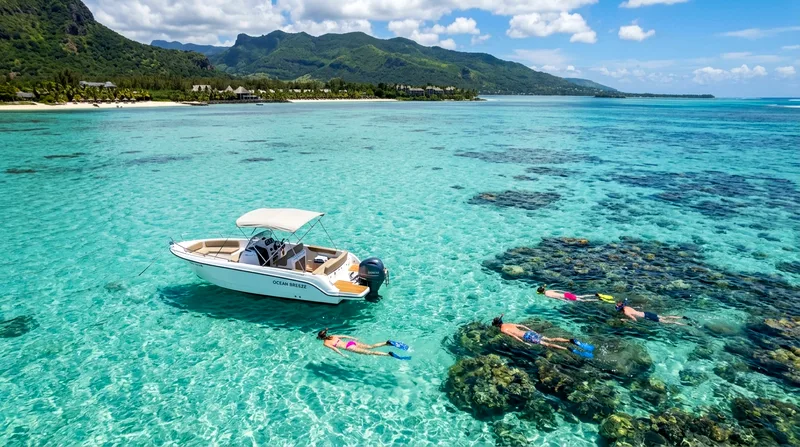
Beyond the GRSE waterfall detour, most packages build in free time on Île aux Cerfs itself — usually 1.5 to 2.5 hours — for swimming, walking the beach, or paying separately for water sports like parasailing, jet-ski rental, or a glass-bottom boat ride over the coral. Snorkeling gear is sometimes included in mid-range packages and sometimes charged as an add-on, so check the inclusions line by line rather than assuming. None of this matches the slow, all-day sailing-and-snorkel format of a catamaran cruise, which usually includes a proper buffet lunch and more swim stops — if that's what you want, a speedboat tour isn't the right product.
How to Book and Get Tickets
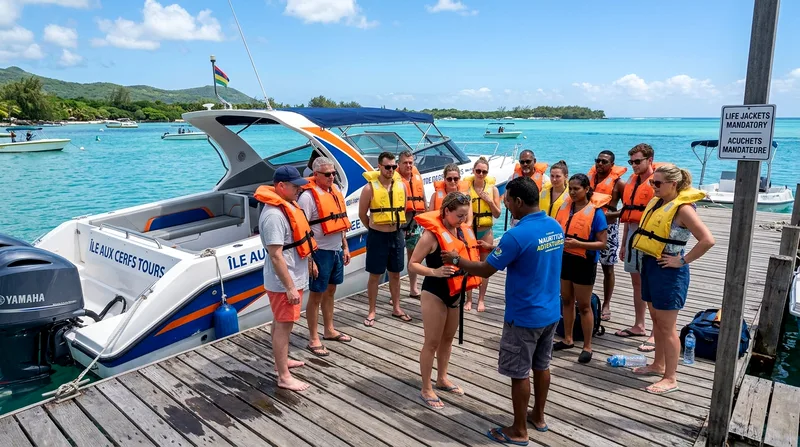
You've got three realistic routes to Île aux Cerfs by speedboat: book a packaged tour in advance online, book through your hotel's activities desk, or negotiate directly with boat operators at the Trou d'Eau Douce jetty on the day. The jetty option can be cheaper, but quality and safety standards vary a lot between operators, and you've got no recourse if the boat or crew turns out to be subpar. Booking a vetted tour in advance — even a day ahead — gets you a confirmed time slot, a life jacket guarantee, and usually a published itinerary you can hold the operator to.
Independent vs. guided tour options
Going fully independent means taking the public pirogue ferry from Trou d'Eau Douce, which is cheap and frequent but slow and offers no waterfall stop — it's a transfer, not a tour. A guided speedboat tour, by contrast, bundles the transfer with the GRSE detour, a guide or skipper narrating the route, and often a fixed window of island time before pickup. For first-time visitors, I'd recommend the guided version; the independent ferry route only makes sense if you already know Île aux Cerfs and just want cheap transport.
Ticket types and what's included
Expect three rough tiers: a basic transfer-and-waterfall combo, a mid-tier package adding snorkeling gear and a BBQ or buffet lunch on the island, and a premium or private charter version with a smaller group, flexible timing, and sometimes a stop at a second site like a sandbank. Prices vary by operator and season, so check current prices and exact inclusions when you book rather than relying on a quoted figure from a blog — compare current boat tours and prices before you book to see what's actually on offer right now.
What to Bring and Prepare
Treat a speedboat tour like a mini-adventure, not a lounge-chair cruise. You'll get splashed, you'll sit lower to the water than on a catamaran, and storage for bags is limited.
Essential items and safety gear
Pack reef-safe sunscreen, a hat that won't blow off (or accept it'll end up in a dry bag), a waterproof phone pouch, and a change of clothes if you plan to swim at the waterfall stop. Life jackets should be provided and worn during the open-water legs — if a boat doesn't offer them or the crew doesn't insist, treat that as a red flag and raise it before departure. Bring motion-sickness tablets if you're at all prone to it; the open-water crossing on choppier days is where most people feel queasy, not the river section.
Physical requirements and restrictions
Speedboats involve bouncing over wake and swell, which is genuinely uncomfortable for anyone with back, neck, or spine issues — this is worth flagging to the operator beforehand, since some will seat you accordingly or advise against the trip. Pregnant travelers are often restricted by operators on safety grounds; check this directly rather than assuming. Most operators set a minimum age — commonly around 2 to 3 years — and require adult supervision for children throughout. Non-swimmers can still go; the island lagoon is shallow and calm, but tell your guide so they can keep an eye on you during free swim time.
Best Time to Visit
Timing affects both the ride quality and how much of the island you get to yourself.
Seasonal weather and sea conditions
The eastern coast of Mauritius, facing the open Indian Ocean, catches more wind and swell than the sheltered west coast, particularly during the cyclone season from roughly December through March. Sea conditions are generally calmest and most reliable from May to November, which is also the cooler, drier season — a better bet if you want a smooth crossing rather than a rough one. Tours can be postponed or cancelled on short notice if swell picks up, more often an issue on the open-water leg than inside the GRSE river mouth, which stays relatively sheltered.
Crowd levels and booking tips
Île aux Cerfs gets busiest between about 11am and 2pm, when catamarans, ferries, and speedboats all converge at once. Booking the earliest available morning departure — often around 8:30 or 9am — gets you the waterfall stop and the main beach before the crowd arrives, and it's the single easiest way to improve the experience without spending more money. School holiday periods in Mauritius and peak European winter travel months (roughly July-August and December) see the highest demand, so book a few days ahead rather than trying to arrange something at the jetty that morning.
Nearby Add-Ons and Extensions
Île aux Cerfs isn't a one-stop island — there's enough on offer that a speedboat tour can double as the backbone of a longer day.
Island activities and water sports
Once ashore, you can usually arrange parasailing, jet-skiing, banana boat rides, or a glass-bottom boat trip over nearby coral patches, almost always paid separately from the speedboat ticket. There's also a public golf course on the island if that's your thing, though most speedboat-tour time budgets won't stretch to a round. If snorkeling is your priority, ask whether your tour stops at a dedicated reef patch rather than just the main swimming beach — the better operators build this into the itinerary rather than leaving you to find gear and a spot yourself.
Lunch and dining options
Île aux Cerfs has beachside restaurants ranging from casual grills to a sit-down seafood restaurant, so if your package doesn't include lunch, budget for it separately and expect prices pitched at tourists rather than local market rates. Some mid-tier speedboat packages include a set BBQ lunch on the island or even on a sandbank stop, which is convenient but limits you to whatever's on the set menu that day. If food matters a lot to your day, a catamaran tour with a proper buffet included might serve you better than a speedboat package with a basic lunch add-on.
Frequently asked questions
How long does a speedboat tour to Île aux Cerfs take?
The crossing itself takes about 15 to 25 minutes each way, but a full packaged tour with the GRSE waterfall stop and free time on the island usually runs 3 to 4 hours total. Private charters can be shorter or longer depending on what you negotiate.
What is included in a typical speedboat tour package?
Most packages include the return speedboat transfer, a stop at the Grand River South East waterfall, life jackets, and a window of free time on Île aux Cerfs — commonly 1.5 to 2.5 hours. Lunch, snorkeling gear, and water sports are often extra; always check inclusions before paying.
Are speedboat tours safe for children and non-swimmers?
Generally yes, with life jackets worn on the open-water legs and shallow, calm swimming conditions at the island itself. Most operators set a minimum age (often around 2-3 years) and expect adult supervision throughout; non-swimmers should tell the crew in advance so they can keep watch during free swim time.
Can I book a private speedboat tour?
Yes, private charters are widely available for couples, families, or small groups who want flexible timing or extra stops, such as a sandbank in addition to the GRSE waterfall. Expect a higher per-person cost than a shared tour, and confirm the exact stops and duration before paying a deposit.
What happens if weather cancels my speedboat tour?
Reputable operators postpone or offer a different date or refund if sea conditions are unsafe, which happens more often during the cyclone season from December to March. Ask about the cancellation policy before booking, and avoid operators who are vague about it or pressure you to go out in clearly rough swell.