Plan a Mauritius south coast private boat tour: Le Morne cliffs, dolphins, quiet reefs. Honest booking guide, timing tips, and charter vs group advice.
What to See on South Coast Boat Tours
A Mauritius south coast private boat tour covers ground the island's more famous lagoon trips simply don't reach. This stretch, running roughly from Black River past Baie du Cap, Le Morne, Riambel Beach, Souillac and toward Bel Ombre, is rawer than the north. The reef here breaks the open Indian Ocean swell rather than sitting inside a calm lagoon, which means more texture in the scenery — cliffs, blowholes, and open water that actually looks like ocean instead of a swimming pool.
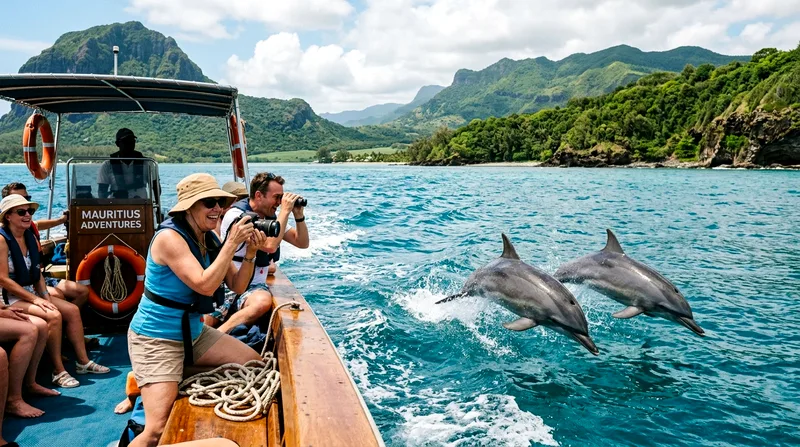
I'd rate this coastline above the north for anyone who's already done a Grand Baie catamaran trip and found it crowded. You won't get the glass-clear shallow lagoon photos as easily, but you get something the north can't offer: genuine distance from other tourists and a real chance of open-water wildlife.
The trade-off is sea state. The south coast faces the prevailing swell more directly than the sheltered northwest, so a private operator will often adjust the route or timing based on conditions that morning — something a fixed-departure group tour can't do.
Le Morne Peninsula and Iconic Cliffs
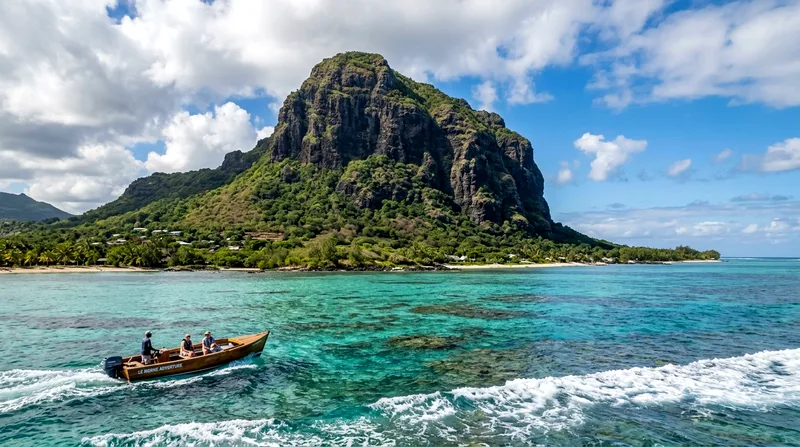
Le Morne Brabant is the visual anchor of any south coast itinerary. The basalt monolith rises 556 metres straight from the peninsula and was inscribed as a UNESCO World Heritage Site in 2008, recognized for its history as a refuge for escaped slaves in the 18th and early 19th centuries. Seen from water level on a boat, the cliff face reads very differently than from the beach — the scale only really lands once you're a few hundred metres offshore looking up at the full vertical drop.
Most Le Morne boat trips loop around the peninsula's southern tip, where the underwater drop-off creates the famous "underwater waterfall" optical illusion visible from aerial photos — from boat level you won't see the illusion itself, but the water color shift is still dramatic. Expect the captain to slow down here regardless of itinerary; it's the section every private charter treats as non-negotiable.
Dolphin and Whale Watching Zones
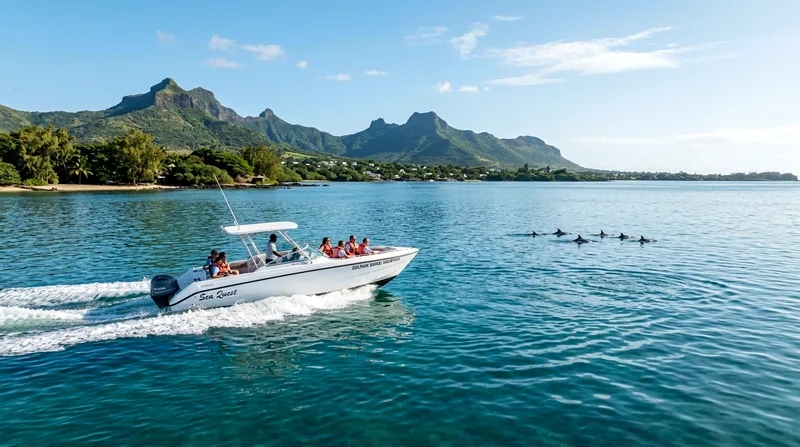
The waters off Baie du Cap and the Black River area host resident pods of spinner dolphins and, less predictably, bottlenose dolphins. Sightings aren't guaranteed on any given day — no honest operator will promise them — but early morning departures, typically 6:30am to 8am, consistently produce better results because the pods tend to rest in calmer bays before moving into open water as boat traffic picks up.
A south coast dolphin tour on a private charter has a real edge here: the captain can cut the engine and drift rather than circling with six other boats, which is standard practice around busier dolphin-watching spots elsewhere on the island. Humpback whales pass through Mauritian waters between July and September on their migration route, and some south coast charters build in a wider sweep during those months — ask specifically, since not every operator alters the route for whale season.
Private Charter vs. Group Tours
This is the real decision point, and it's worth being blunt about it. A private boat tour Mauritius operators offer typically runs as a half-day (around 4 hours) or full-day (7-8 hours) charter for a boat holding anywhere from 6 to 12 passengers, priced for the whole boat rather than per head. A shared group tour sells individual seats, usually on a larger catamaran with 20-40 people aboard, at a lower per-person rate.
If you're traveling as a couple or small family, the per-person cost gap narrows fast — split four or six ways, a private half-day charter can land close to what two seats on a premium group catamaran would cost. For a solo traveler, group tours remain the cheaper route, and there's no shame in that choice if budget is tight.
A private charter costs more per boat but delivers more flexibility, closer wildlife encounters, and quieter snorkeling than a shared group tour.
Mauritius south coast private boat tour vs group tour comparison
| Option | Typical Group Size | Duration | Flexibility | Best For |
|---|---|---|---|---|
| Private half-day charter | 6-12 people (whole boat) | Approx. 4 hours | High — custom route and timing | Couples, families, photographers, fishermen |
| Private full-day charter | 6-12 people (whole boat) | Approx. 7-8 hours | High — multiple stops, lunch option | Snorkeling fanatics, groups wanting Le Morne plus reefs |
| Shared group catamaran | 20-40 people | Approx. 4-6 hours | Low — fixed stops and schedule | Solo travelers, budget-conscious visitors |
| Small group tour (shared speedboat) | 8-15 people | Approx. 3-4 hours | Moderate | Travelers wanting lower cost with some flexibility |
Group sizes and durations are typical ranges; always confirm exact details and current prices with the operator before booking.
Advantages of Private Charters
Flexibility is the main sell. You set the departure time, choose how long to linger at Le Morne, decide whether to prioritize snorkeling over dolphin searching, and can turn back early if someone gets seasick. On a group tour, the itinerary is fixed and you move with the group whether you're ready or not.
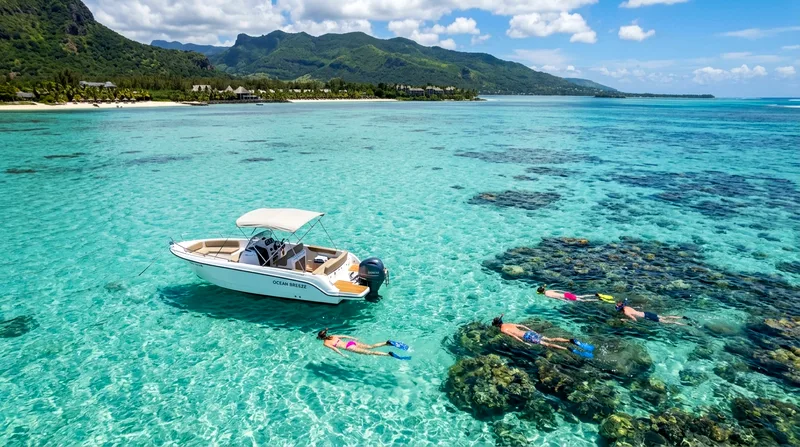
Snorkeling quality improves too — a private skipper can read the water and reroute to a quieter reef patch near Bel Ombre or off Souillac if the main sites are busy, something a scheduled group tour with a set stop can't do. The boats are also usually smaller and shallower-draft, letting them get closer to the Le Morne cliffs and into coves a 40-person catamaran would avoid.
When to Choose Group Alternatives
Group tours make sense if you're solo, traveling on a strict budget, or genuinely enjoy the social element of meeting other travelers on board. They also tend to run on fixed schedules regardless of light bookings, which suits anyone who wants a guaranteed departure rather than coordinating a private charter's logistics.
I wouldn't recommend a large group catamaran for serious snorkeling fanatics or fishermen, though — you're one of thirty people sharing two or three snorkel stops, and the boat won't adjust its route for your interests. If marine life or photography is your main reason for going out, pay the premium for private.
How to Book Your Private Boat Tour
Booking a south Mauritius boat charter is more hands-on than reserving a seat on a catamaran trip out of Grand Baie, simply because there are fewer operators working this coast and routes are more weather-dependent. Most private charters here are run by small family operations or independent skippers based around Black River, Baie du Cap, or Bel Ombre rather than large tour companies.
What to Expect from Operators
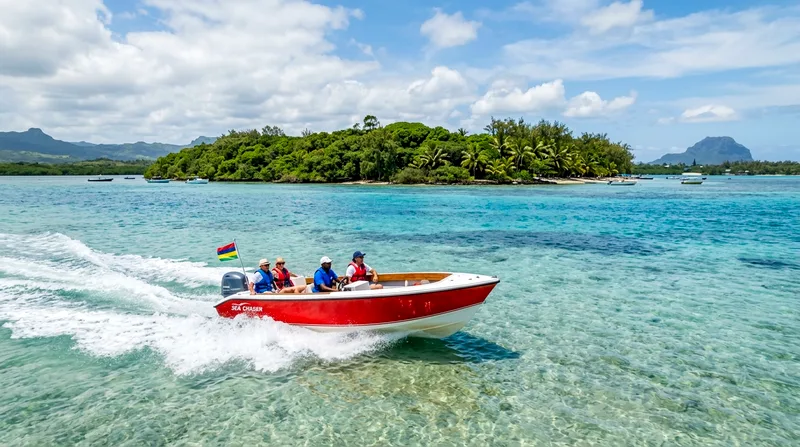
A reputable operator will ask about your group size, preferred departure time, and priorities (dolphins, snorkeling, cliffs, sunset) before confirming a route — if an operator just quotes a fixed itinerary without asking what you want to see, that's a sign you're dealing with a group-tour operation dressed up as "private." Expect the boat itself to be a speedboat or small cabin cruiser rather than a catamaran; these are more maneuverable along the cliffs but offer less shade, so sun protection matters more here than on a big boat.
Life jackets, basic snorkeling gear, and drinking water are standard inclusions on most charters. Lunch and alcoholic drinks are sometimes included on full-day bookings and sometimes charged extra — always confirm this before paying, since it's the most common source of post-trip complaints.
Essential Booking Considerations
Book at least two to three weeks ahead during peak season (July-August and December-January), and ideally a few days ahead off-season — south coast operators run fewer boats than the north coast fleet, so availability tightens faster than you'd expect for what feels like a quieter region. Confirm a weather-cancellation policy in writing before transferring any deposit; the south coast's exposure to swell means cancellations happen more often here than on sheltered north coast trips, and you want clarity on rescheduling versus refunds.
Ask directly whether the skipper speaks English or French fluently if you're not comfortable in Mauritian Creole — most do, but it's worth confirming for safety briefings. Compare current boat tours and prices before you book, since rates shift with fuel costs and season, and a quick comparison across two or three operators usually reveals meaningful differences in boat size and inclusions for similar money.
Best Time to Visit
Timing matters more on the south coast than almost anywhere else in Mauritius, because this side of the island takes the brunt of the southeast trade winds and open ocean swell. Get it wrong and you'll spend half the trip bouncing through chop instead of looking at cliffs.
Seasonal Weather and Sea Conditions
The Mauritian winter, roughly May through October, brings drier air, lower humidity, and generally calmer mornings before the trade winds pick up in the afternoon — this is the more reliable window for a south coast charter. Cyclone season runs November to April, with January and February carrying the highest risk of disruption; charters still operate in these months, but cancellations due to rough seas or storm warnings are more frequent. December can still be a good window early in the month before conditions turn.
Across the broader region, this seasonal split is similar to what you'd plan around in Réunion Island just a few hundred kilometres away, where the same trade wind and cyclone patterns apply. If you're comparing Mauritius to a Maldives atoll trip, note the Maldives lagoon settings are far more sheltered year-round — the south coast of Mauritius trades that calm for more dramatic scenery and rougher honesty about weather.
Wildlife Viewing Seasons
Dolphins are present off the south and west coasts year-round, but sightings cluster more reliably during the calmer winter months when boats can get out early and the pods aren't scattered by rough water. Humpback whale season runs roughly July to September, overlapping neatly with the best weather window — book a charter in August and you have a reasonable shot at both dolphins and whales in the same season, though never on the same guaranteed outing.
Nearby Activities and Add-Ons
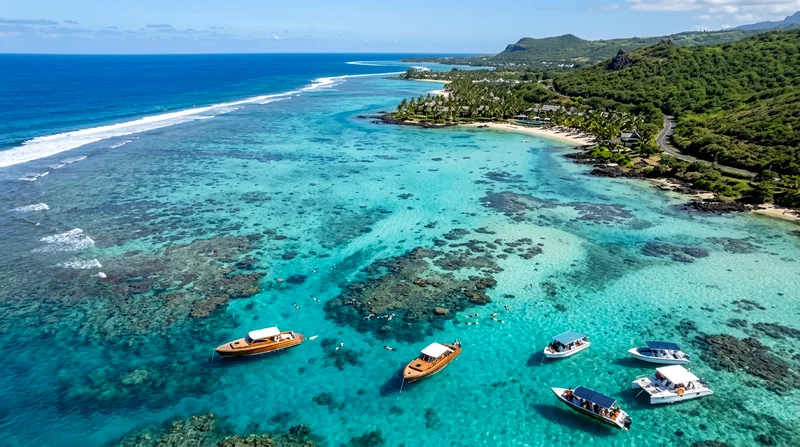
A private charter rarely needs to be a standalone activity — the geography of the south coast makes it easy to combine the boat trip with time on land before or after.
Coastal Villages and Beaches
Riambel Beach, near Souillac, is a public beach with decent sand and far fewer sunbeds than the west coast resorts — worth a stop if your charter departs from nearby. Bel Ombre anchors a cluster of higher-end resorts and is a common pickup point for charters heading toward Le Morne. Souillac itself is a working fishing town rather than a resort strip, with a small market and the Telfair Garden nearby if you want an hour on land that isn't just another beach.
Snorkeling and Diving Sites
The reef patches off Bel Ombre and around the Le Morne lagoon offer better coral cover than most of the heavily visited north coast sites, partly because fewer boats anchor here. Visibility typically runs 10-20 metres in calm conditions, dropping noticeably when swell stirs up sediment. Compared to Zanzibar's reef snorkeling or the shallow house reefs common in the Maldives, Mauritius's south coast sites are less colorful on average but far less crowded — you're trading some coral density for having the water largely to yourself.
Frequently asked questions
What marine life can you see on south coast boat tours?
Spinner and bottlenose dolphins are the most common sighting, especially early morning off Baie du Cap and Black River. Humpback whales pass through from July to September. Reef fish, occasional sea turtles, and flying fish are regular sights closer to the Le Morne lagoon and Bel Ombre reef patches, though none of these are guaranteed on any single trip.
Is a private boat tour better than a group tour?
For couples, families, snorkelers, and anyone prioritizing dolphins or photography, yes — the flexibility to adjust timing and routes matters on a coastline this exposed to weather. For solo travelers on a budget, a group catamaran tour is the more economical and still enjoyable choice.
How far in advance should you book a private charter?
Book two to three weeks ahead during July-August and December-January peak periods. Off-season, a few days' notice is often enough, since the south coast has fewer operators than the north and availability can tighten quickly even outside peak months.
What is the best season for south coast boat tours?
May through October offers the calmest seas and driest weather, with August and September also overlapping with humpback whale migration. Avoid January and February if possible — cyclone risk is highest and cancellations due to rough seas are more common then.
What should you bring on a private boat tour?
Reef-safe sunscreen, a hat, sunglasses with a strap, a light cover-up for the ride back when wind picks up, and a dry bag for your phone or camera. Most operators supply snorkeling gear and life jackets, but confirm this beforehand rather than assuming.