Discover speedboat dolphin-watching tours in Mauritius. Learn about Tamarin Bay departures, ethical operators, and realistic encounter expectations.
What Is a Mauritius Speedboat Dolphin Tour
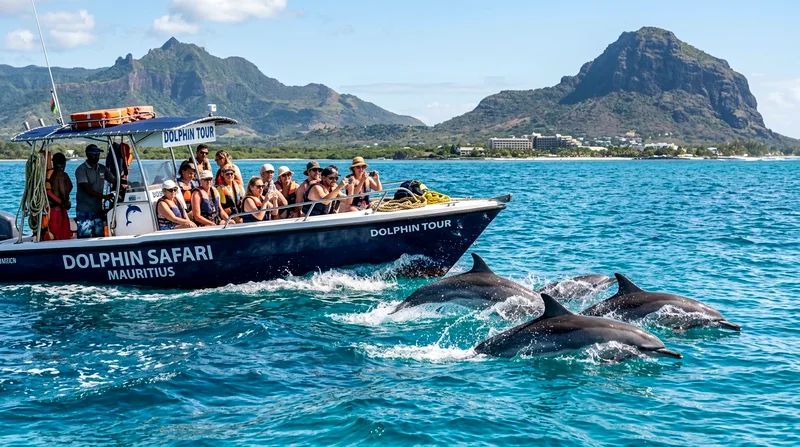
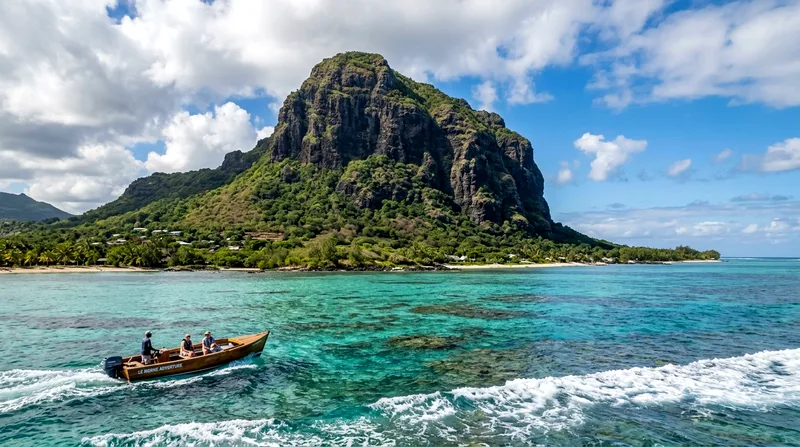
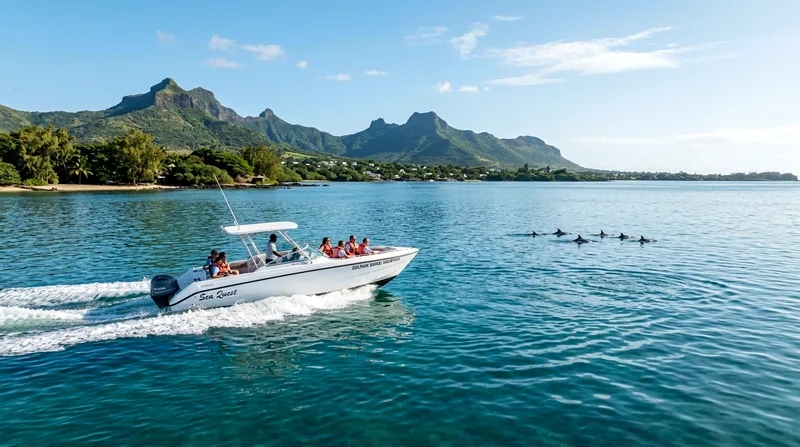
A Mauritius speedboat dolphin tour is a short coastal excursion, typically two to four hours, run out of small ports on the west coast where wild dolphin pods feed and rest in sheltered bays. Unlike the catamaran cruises sold for sunset sailing or snorkeling at the outer reef, these are quicker, more maneuverable boats built to reach dolphin grounds early, before the water traffic picks up and the pods move further offshore.
The appeal is straightforward: you're not watching dolphins in a marina pool or a marine park tank, you're on open Indian Ocean water with wild animals that have no obligation to show up. That unpredictability is part of the honest pitch — any operator promising a guaranteed close encounter is overselling it.
Tour format and typical itinerary
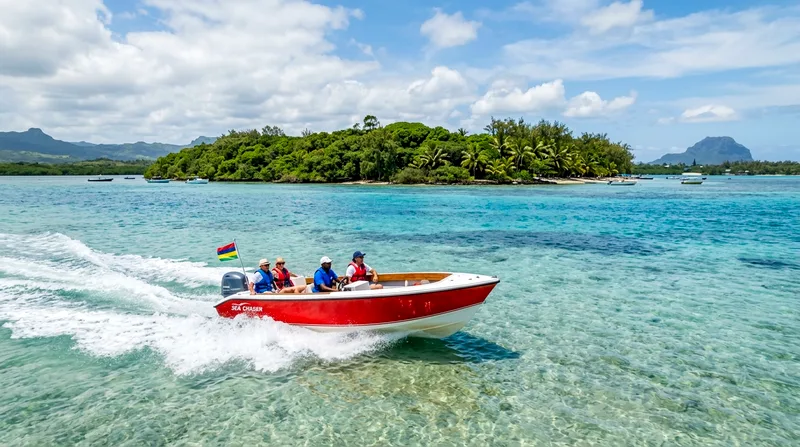
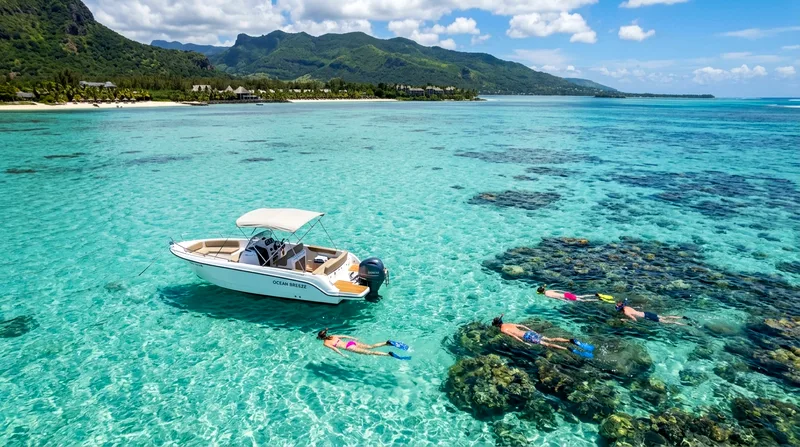
Most tours depart between 6:00 and 7:30 am, because dolphins are most active and most visible in the calmer water of early morning before wind picks up the chop. A typical itinerary runs about 15–20 minutes to reach the known dolphin zones, then 45–90 minutes of slow cruising and observation, followed by a stop for snorkeling over a nearby reef or sandbank, and a return by mid-morning. Boats usually carry 6 to 12 passengers, life jackets are mandatory, and the operator's skipper doubles as spotter. Expect the whole outing, door to door from a south or west coast hotel, to take three to four hours including transfer time.
Tamarin Bay and Black River departure points
Tamarin Bay and the nearby Black River area are the two main launch points, and for good reason — the bay here has a resident and visiting population of dolphins that use the deeper channel just offshore as a resting area during the day. Black River (Rivière Noire) has a public jetty and a cluster of small operators running similar routes, often overlapping the same stretch of water as the Tamarin boats. If you're staying in Flic en Flac or Grand Baie, expect a 20–40 minute road transfer to reach either departure point, which most operators either include or charge separately for — confirm this when booking.
Why Visit: Experience and Wildlife
The draw isn't just "seeing dolphins" — it's seeing them in a setting where the Indian Ocean floor drops away close to shore, giving pods a deep resting channel within a short boat ride of the beach. That geography is unusual; in a lot of destinations you'd need hours offshore for a comparable chance. It's one reason Mauritius gets compared favorably to Zanzibar, where dolphin tours exist but typically run longer distances with lower reliability, and less favorably to the Maldives, where encounters tend to happen more incidentally during longer liveaboard routes rather than as a dedicated short excursion.
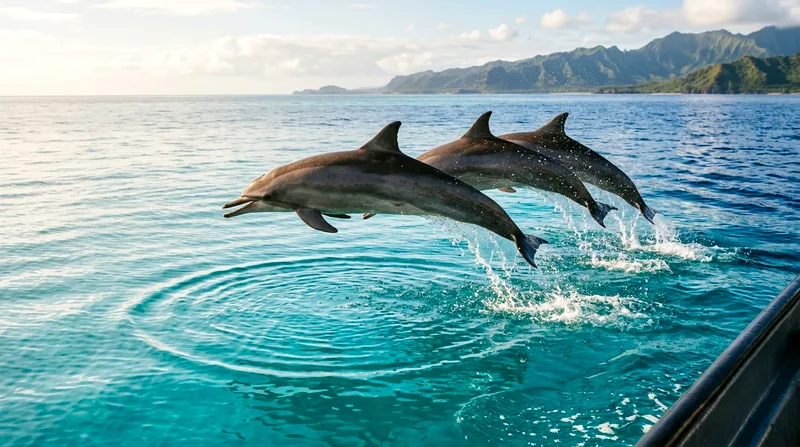
I'd still temper expectations. This isn't a wildlife safari with trained trackers — it's a cluster of small boats working a known area, and on a bad-weather day or during a period when pods have shifted feeding grounds, you can come back having seen nothing closer than a distant fin.
Dolphin species and behavior
Two species make up almost all sightings: spinner dolphins, known for the acrobatic spinning leaps that give them their name, and bottlenose dolphins, generally calmer and more likely to swim alongside a slow-moving boat out of curiosity. Spinners tend to rest in the bay during the morning and head out to deeper water to feed by afternoon, which is the main reason tours cluster around dawn departures rather than midday ones. Bottlenose dolphins are less predictable in timing but are seen more often approaching boats directly.
Adventure and marine ecosystem value
Beyond the dolphins themselves, the west coast here sits on a lagoon-and-reef system that supports the snorkeling stop most tours tack on — expect parrotfish, surgeonfish, and occasional turtles over sandy patches near the reef edge. It's a smaller-scale ecosystem than the reef systems around the Whitsunday Islands in Australia, but far more accessible: you're not flying to a remote marina, you're a short drive from your hotel.
How to Visit: Independent vs. Guided Tours
You have two real paths here: book a seat on a shared tour through an operator, or arrange a private speedboat rental with a skipper. Both work, but they suit different travelers, and the price gap is bigger than people expect.
Guided group tours suit first-time visitors wanting simplicity, while private charters suit groups wanting control over timing and route.
Mauritius speedboat dolphin tour options compared: cost, group size, and flexibility
| Option | Typical Group Size | Flexibility | Best For |
|---|---|---|---|
| Shared guided tour (Tamarin Bay) | 6-12 people | Fixed time slot | Solo travelers, couples, first-timers |
| Shared guided tour (Black River) | 6-12 people | Fixed time slot | Families, budget-conscious travelers |
| Private speedboat charter | Up to 6-8 people | High — negotiable timing | Groups, photographers, early departures |
| Combined dolphin + snorkel package | 6-12 people | Fixed, longer duration | Travelers wanting one booking for a full morning |
Group sizes and durations are typical ranges; always confirm current details and pricing directly with the operator before booking.
Self-arranged boat rental options
Private hire means negotiating directly with a boat owner at Black River jetty or through your hotel's excursion desk, typically for a group of up to 6-8 people. This gives you control over timing — you can push for the earliest possible departure, which matters because the first boats out tend to find calmer dolphins before the fleet arrives and the pod gets more cautious. The downside: pricing is less transparent, quality varies hugely between operators, and you're relying on word of mouth or on-the-spot judgment rather than reviews. If you go this route, ask directly how many other boats the skipper expects to be in the water that morning — more than four or five boats circling one pod is a sign to look elsewhere.
Guided tour advantages and logistics
A pre-booked guided tour, arranged online or through a hotel tour desk, gives you a fixed itinerary, insurance coverage, and usually hotel pickup included. Logistically this is simpler, especially for solo travelers or families who don't want to negotiate in person at a jetty at 5:45 am. The trade-off is less flexibility on timing and group size — you're one of several small groups the operator runs that morning, so if one tour is already out, you take the next slot. For most first-time visitors, especially those coming from Europe who've already done one long transfer to reach the island, the guided route removes a layer of friction that isn't worth saving on.
Booking, Tickets, and Operator Selection
Pricing for a shared speedboat dolphin tour out of Tamarin or Black River generally falls in a wide band depending on group size, inclusions, and whether snorkeling gear and refreshments are bundled in. Private charters cost more per person but less per boat if you're traveling as a group of six or more. Always check current prices when booking, since fuel costs and seasonal demand shift rates throughout the year.
Ethical operator checklist
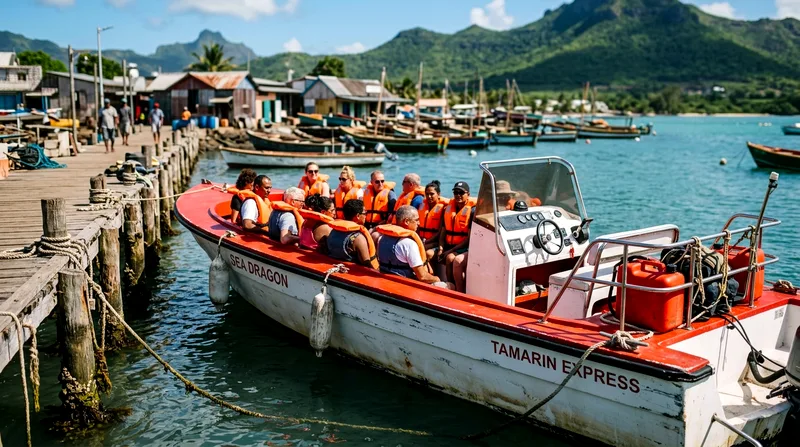
Look for operators who state a minimum approach distance — commonly cited guidance for the area is not closing within about 100 meters and never surrounding a pod with multiple boats. Ask whether they limit the number of boats on a single pod at one time, and whether they stop engines and let dolphins approach rather than chasing to keep pace with a moving pod. A responsible operator will also tell you plainly that swimming with the dolphins isn't offered, or is offered only passively — slipping into the water well away from the pod rather than jumping in alongside them. If a tour's marketing leads with "guaranteed swim with dolphins," treat that as a red flag rather than a selling point.
What to look for in tour providers
Check for a registered business with a physical office or jetty presence rather than a purely informal beach operation, since licensed operators are more likely to follow the informal industry conduct code that's developed around Tamarin Bay. Life jackets for every passenger, a working VHF radio, and a skipper who explains the plan before departure are basic signs of a properly run outfit. Group size matters too — a boat cramming in 15 people for a "budget" price usually means less individual attention and a rougher ride.
Best Time to Go and What to Expect
Timing affects this experience more than almost any other boat activity in Mauritius, because you're working around animal behavior, not just tide tables.
Seasonal patterns and encounter likelihood
The window from around November through April — Mauritius's warmer, wetter season — tends to bring calmer morning seas in sheltered bays like Tamarin, though it also carries higher cyclone risk later in the season (January–March), which can cancel tours outright with little notice. The cooler, drier months from May to October bring more consistent wind, which can mean choppier conditions on the open stretch between Black River and Tamarin, affecting both comfort and visibility. Compare this to Réunion Island nearby, where whale season (July–October) draws a different kind of marine tourism entirely — dolphins in Mauritius are a year-round resident population, not a seasonal migration, which is actually an advantage over destinations where sightings depend on a narrow migratory window.
Realistic expectations for sightings
Operators in the area generally report sightings on a large majority of morning trips, but "sighting" can mean anything from a prolonged encounter with a relaxed pod to a brief glimpse of fins before the dolphins move on. Rough seas, boat traffic, or a pod that's simply moved to a different resting area that week can mean a quiet morning. Don't book this as your only wildlife activity for the trip — treat it as a strong probability, not a certainty, the same caveat you'd apply to a whale-watching trip off Western Australia or a snorkel-with-manta trip in the Maldives.
Nearby Activities and Add-Ons
Most dolphin tours don't exist as a standalone product — they're bundled or paired with other short water activities along the same stretch of coast, partly because the boats are already out and partly because a two-hour dolphin window still leaves half the morning free.
Coastal attractions and water-sports
Tamarin Bay itself is known locally for surfing breaks that pick up with the winter swell (roughly June–August), so if you're traveling with a mixed group, some can surf while others book the dolphin boat the same morning. Black River Gorges National Park sits inland from the same departure area, giving non-boat travelers in your group a hiking alternative rather than sitting idle at the hotel. Flic en Flac, a short drive north, has calmer lagoon water better suited to casual snorkeling without a boat at all.
Combined tour packages
Many operators pair the dolphin segment with a snorkeling stop at a reef patch or a short stop at a sandbank for swimming, and some extend the outing into a half-day package including a seafood lunch on board or at a beachside spot. These combined packages cost more than a dolphin-only trip but remove the need to book two separate excursions. If you're short on time — say you're doing Mauritius as one stop on a wider Indian Ocean itinerary that also includes Seychelles or Bali — the combined half-day version is the more efficient use of a morning.
Frequently asked questions
What dolphins can you see on Mauritius speedboat tours?
The two species regularly seen off Tamarin Bay and Black River are spinner dolphins, recognizable by their acrobatic spinning leaps, and bottlenose dolphins, which are bulkier and often more curious about approaching boats. Spinners are the more frequent sighting in the early morning resting hours, while bottlenose encounters can happen at any time during the tour.
How do you choose an ethical dolphin-watching operator?
Ask directly about their approach distance policy — a reasonable standard is staying roughly 100 meters back and letting dolphins decide whether to approach the boat, rather than chasing a moving pod. Check whether they limit the number of boats circling one group of dolphins at a time, and be wary of any marketing promising a guaranteed in-water swim, since that usually signals a willingness to crowd the animals.
What are realistic chances of seeing dolphins?
Sightings are common on morning trips out of Tamarin Bay and Black River, but not certain. Weather, boat traffic, and whether pods have shifted to a different resting area that week all affect outcomes. Treat it as a high-probability wildlife encounter, not a guaranteed one, and avoid operators who claim otherwise.
Can you swim with dolphins on these tours?
Responsible operators generally discourage active in-water swimming with wild dolphin pods, since it can disturb resting or feeding behavior. Some allow a passive entry into the water at a distance, letting dolphins approach voluntarily, but a confirmed guaranteed close-contact swim is not standard practice among operators following ethical guidelines.
What is the best season for dolphin watching?
Dolphins are resident year-round in Tamarin Bay, so there's no strict migratory season to plan around. The warmer months from November to April tend to bring calmer morning seas, though later in that window cyclone risk can cause cancellations; the cooler May–October period brings steadier wind that can mean choppier rides on the open water between departure points.