Plan your Mauritius island-hopping adventure with this 3-day boat tour itinerary. Explore north, east and west clusters with daily schedules and booking tips.
Who This Itinerary Is For
This Mauritius island hopping itinerary is built for travelers spending at least 5-7 days on the mainland, with three of those days set aside purely for boat-based exploration. It suits couples wanting a mix of adventure and lounging, families with kids old enough to handle a 30-60 minute boat transfer without complaint, and snorkeling fanatics who want more than a single reef stop.
It's less suited to anyone on a 3-4 day whirlwind trip who also wants to see the Seven Coloured Earths, hike Le Morne, and shop in Port Louis. Trying to bolt this onto a packed sightseeing schedule means rushed mornings and missed boat departures. If your trip is short, pick one cluster — the northern islands near Grand Baie are the most popular and easiest to book — rather than attempting all three.
Senior travelers should know that most boat transfers involve stepping from a jetty or pontoon onto a moving vessel, sometimes without a ramp. It's manageable for most people with reasonable mobility, but it's worth asking the operator about boarding conditions when you reserve. Solo travelers will have no trouble joining group tours — most operators run shared speedboat or catamaran trips that work well alone, and the shared cost format is usually cheaper than private charters.
One opinion worth stating plainly: doing all three regions in three consecutive days is tiring. The sun, salt water and early starts add up. If you have the flexibility, insert a rest day after Day 2.
Day 1: Northern Islands Exploration
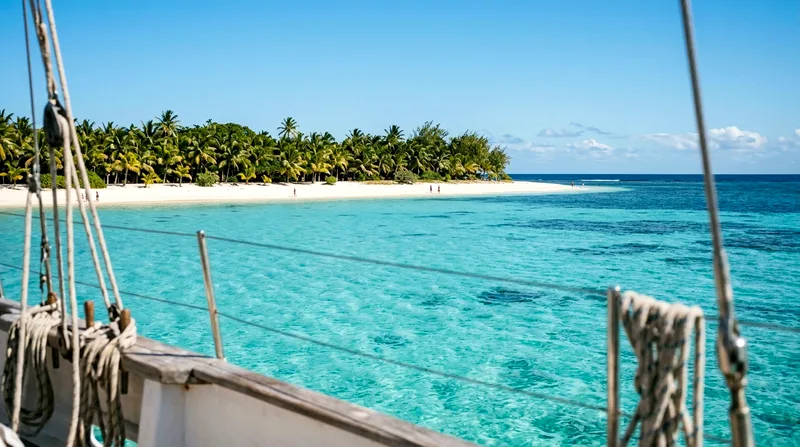
The north is where most Mauritius boat tour operators concentrate, launching from Grand Baie or nearby Trou aux Biches. This is the busiest cluster but also the most scenic, with Gunner's Quoin, Flat Island and Gabriel Island forming a loose triangle a 30-45 minute boat ride offshore.
The northern islands offer the most variety, the east is fastest to reach but busiest, and the west is best for wildlife and sunset cruises.
Mauritius island hopping itinerary: three-day boat tour comparison by region
| Region | Key Islands | Boat Crossing Time | Best For | Crowd Level |
|---|---|---|---|---|
| North (Grand Baie) | Gunner's Quoin, Flat Island, Gabriel Island | 30-40 min | Snorkeling, variety | Moderate-High |
| East (Trou d'Eau Douce) | Île aux Cerfs | 15-20 min | Beaches, families | High |
| West (Black River/Flic en Flac) | Île aux Aigrettes | 20-30 min | Dolphins, sunsets, nature | Low-Moderate |
Crossing times and crowd levels are typical patterns; actual conditions vary by season, weather and time of departure.
Morning departure and first island
Book a morning departure for 8:30-9:00am — later starts mean more boats crowding the same anchorages by midday. Most catamaran or speedboat tours head first to Gabriel Island or Flat Island, both uninhabited and ringed by sheltered lagoon. The crossing from Grand Baie takes roughly 30-40 minutes depending on sea conditions. Expect a short briefing on the boat about swimming zones before anchoring.
Afternoon water activities
After lunch (often included as a barbecue on board or on a sandbank), afternoons are for snorkeling around Gunner's Quoin or a calmer swim near Flat Island's shallow reef edges. Water visibility here is generally good, though it drops noticeably after heavy rain upstream on the mainland — something no operator will advertise but worth checking the forecast for. Glass-bottom boat add-ons are common if you're traveling with non-swimmers.
Evening return and rest
Most northern tours return to Grand Baie by 4:00-5:00pm. Use the evening to rest rather than book a second activity — sun and motion fatigue catch up fast on day one. If weather cancels the morning trip, Grand Baie's public beach and the aquarium in nearby Pointe aux Canonniers are reasonable backups, though neither replaces the open-water experience.
Day 2: Eastern Islands Adventure
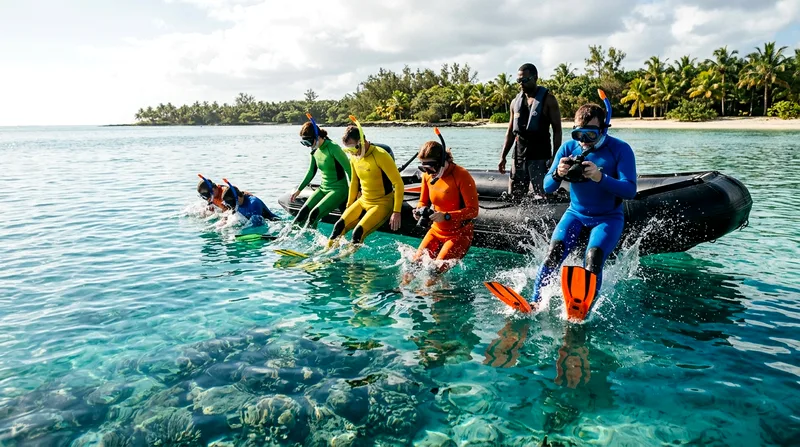
Day 2 shifts to the east coast, centered on Île aux Cerfs — Mauritius's most-visited island and, frankly, the most commercialized stop on this itinerary. It's still worth the trip for the snorkeling and the long white-sand beach, but go in knowing it draws large tour groups by late morning.
Morning snorkeling and marine life
Departures from Trou d'Eau Douce typically run 9:00-9:30am, with the boat crossing taking about 20 minutes — much shorter than the northern run. Many tours route past the GRSE waterfall viewpoint on the way, a brief photo stop rather than a landing. Snorkeling spots near Île aux Cerfs' fringing reef show decent coral coverage and reef fish, though it's not in the same league as the Seychelles' granite reefs or the Maldives' house reefs — Mauritius's east coast reefs took damage from past cyclones and bleaching events, and recovery is uneven.
Afternoon beach time
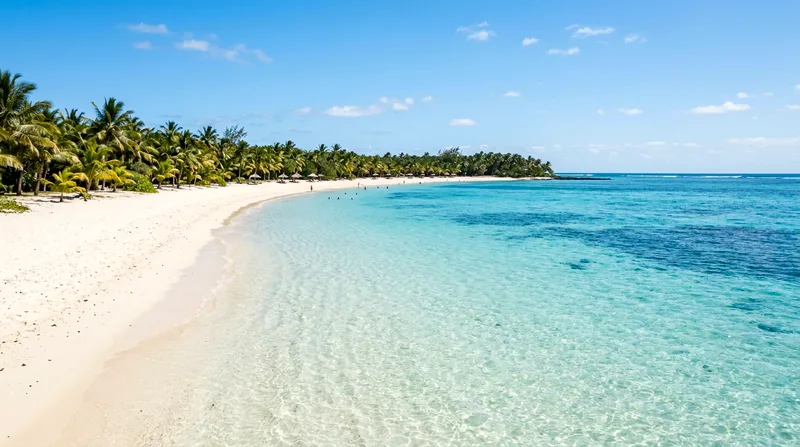
Afternoons are best spent on Île aux Cerfs' main beach, which has shade, basic food stalls and calm, shallow water suited to children. It gets crowded between noon and 3pm when multiple tour boats converge, so eat lunch early or late to avoid the queues at the island's food outlets. Kitesurfing and parasailing operators work this stretch too, though that's outside the boat-tour scope here.
Evening relaxation tips
Boats head back to Trou d'Eau Douce by around 4:30pm. Given the crowds and sun exposure, treat the evening as genuine downtime — a slow dinner near the east coast rather than another excursion. This is also the natural point to insert a rest day if your schedule allows, since Day 3's western leg tends to be the longest on the water.
Day 3: Western Islands & Lagoon
The west, anchored around Flic en Flac and the Black River area, offers the quietest lagoon of the three and the best shot at wildlife — this is where Île aux Aigrettes sits, a nature reserve islet managed for conservation rather than tourism volume.
Morning lagoon exploration
Morning boats from Black River or Tamarin often combine lagoon cruising with dolphin spotting before heading toward Île aux Aigrettes. Departures tend to be early — 7:00-7:30am — because dolphins are most reliably seen before 9am when boat traffic in the bay is lighter. Note that dolphin encounters aren't guaranteed on any given day; treat it as a bonus, not the itinerary's anchor.
Afternoon cultural stops
Île aux Aigrettes runs guided walking tours focused on native plant restoration and endangered bird species like the pink pigeon — a different pace from the previous two days' beach-and-snorkel format. It's worth the detour for travelers interested in conservation, less so if you only want water time. Budget 60-90 minutes for the guided walk, which is compulsory on this particular islet to protect the habitat.
Evening sunset experience
Close the three days with a sunset boat tour along the west coast near Flic en Flac — this coastline faces the setting sun directly, unlike the east coast, making it the obvious choice for an evening cruise. A 90-minute sunset sail with onboard drinks is the standard format. Book this one ahead specifically; west coast sunset slots fill up among both tourists and local groups celebrating occasions on the water.
Getting Around Between Islands
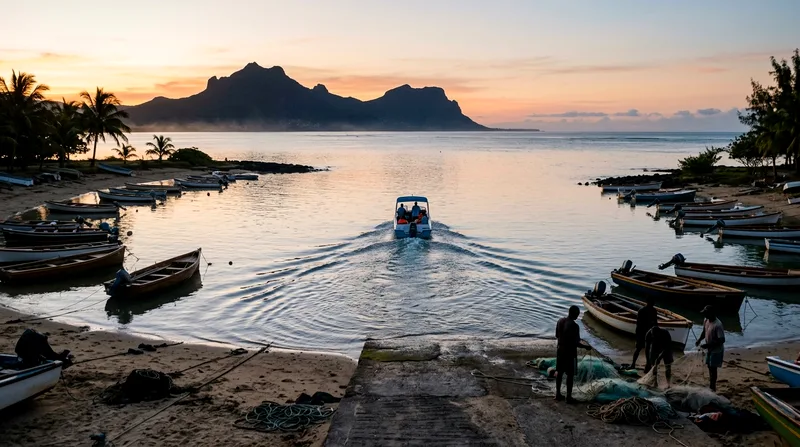
Logistics make or break a Mauritius multi-island itinerary. The three clusters — north, east, west — don't connect to each other by regular boat service, so you'll return to the mainland each evening and travel by road (taxi or rental car) to the next day's departure point.
Boat types and transfer options
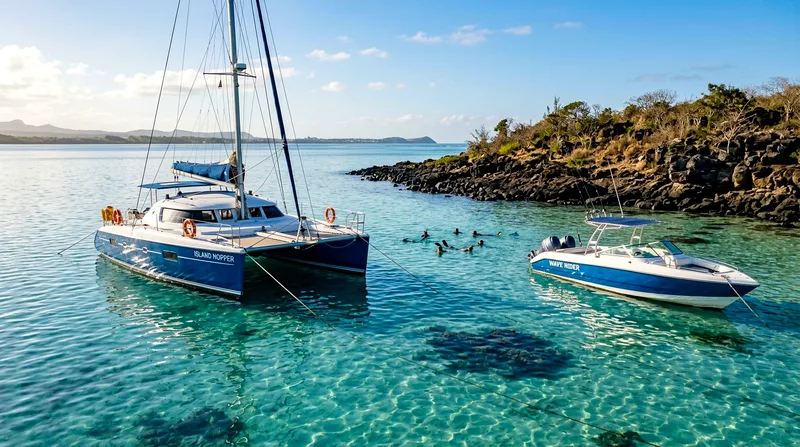
Speedboats dominate the northern and eastern routes, carrying anywhere from 6 to 20 passengers, while catamarans are common for half-day and sunset tours with bar service. Glass-bottom boats appear on shorter lagoon trips, particularly around Île aux Cerfs and Flic en Flac. None of these require any boating experience or certification — crew handle everything, and life jackets are standard issue, though not always offered unprompted, so ask.
Travel times and logistics
Road transfer times matter more than people expect. Grand Baie to Trou d'Eau Douce (north to east) runs about 45-60 minutes by car; Trou d'Eau Douce to Flic en Flac (east to west) can take over an hour depending on traffic through Beau Bassin. Build that drive time into your evening, not your morning — arriving late to a boat departure in Mauritius generally means the boat leaves without you, group tours run on fixed schedules.
Where to Base Yourself
Basing yourself in one hotel for all three days means daily road transfers; splitting your stay across two bases cuts driving time but adds the hassle of packing and moving. Neither option is clearly better — it depends on how much you value unpacked-once convenience versus shorter mornings.
Coastal accommodation hubs
Grand Baie is the most practical single base: it's close to northern departures, has the widest range of restaurants and shops for evenings off the water, and sits roughly midway for driving to both the east and west coasts compared to basing in, say, Flic en Flac alone. Trou d'Eau Douce and Flic en Flac work well as secondary bases if you're splitting the stay, each putting you a short walk from their respective jetties.
Proximity to departure points
Staying within a 10-minute drive (or walk) of your departure jetty removes the single biggest risk to this itinerary: missing an early boat because of unexpected traffic or a late taxi. Many hotels along Grand Baie, Trou d'Eau Douce and Flic en Flac offer tour pickup directly from reception — confirm this when booking rather than assuming it's included.
Optional Bookable Experiences
Beyond the core three-day structure, a handful of add-ons are worth reserving ahead rather than arranging last minute, since they run on fixed slots and fill up during peak season (roughly July-August and December-January).
Guided snorkeling tours
Dedicated snorkeling add-ons, separate from the general island tours, typically target specific reef sites with better coral cover and less boat traffic. These run 2-3 hours and include equipment. Worth it if you're a serious snorkeler disappointed by the crowded shallows near Île aux Cerfs — less necessary if you're content with casual swimming.
Dolphin watching excursions
Dolphin tours out of the west coast are genuinely popular and genuinely oversold in terms of guaranteed sightings. Spinner dolphins do frequent the bay near Tamarin, but tour boats sometimes crowd the pods — a practice marine conservation groups in Mauritius have criticized. If this bothers you, ask operators about their approach distance policy before booking, or skip this add-on entirely.
Underwater activities
Underwater walks and semi-submersible boat tours are offered mainly around Grand Baie and the northern islands, giving non-divers a reef view without snorkeling skills. These suit families with younger children or senior travelers who want to see the reef without getting in the water. They're a reasonable substitute, not a replacement, for actual snorkeling.
Frequently asked questions
What islands are included in a typical Mauritius island-hopping tour?
Most itineraries split across three clusters: the north (Gunner's Quoin, Flat Island, Gabriel Island, near Grand Baie), the east (Île aux Cerfs, near Trou d'Eau Douce), and the west (Île aux Aigrettes, near Black River). No single boat tour covers all three — they're separate half or full-day trips from different departure points, which is why spreading them across three days works better than trying to combine them.
How many days do you need for island hopping in Mauritius?
Three days is the practical minimum to properly cover the north, east and west clusters without rushing. Two days works if you drop one region — most people cut the east since Île aux Cerfs is the most crowded. Trying to do it in one day means a single rushed cluster, not real island hopping.
What is the best time to book island-hopping boat tours?
Book the northern islands tour first — it's the most popular route out of Grand Baie and fills fastest during July-August and December-January. Reserve 3-5 days ahead in peak season, though shoulder months (April-June, September-November) usually allow next-day booking. Always compare current boat tours and prices before you book, since availability shifts daily with weather.
Can you island hop in Mauritius on a budget?
Yes, by joining shared group speedboat tours instead of private charters — group trips typically run a fraction of a private boat's cost per person. Public buses can get you to Grand Baie, Trou d'Eau Douce and Flic en Flac cheaply, cutting taxi costs. Skip optional add-ons like underwater walks or private sunset cruises if budget is tight; the core island visits deliver most of the value.
What should you pack for a 3-day island-hopping itinerary?
Reef-safe sunscreen, a rash guard or light long-sleeve shirt, waterproof phone pouch, and a dry bag for each boat day. Bring motion sickness tablets if you're prone to seasickness — the northern crossing in particular can get choppy. A reusable water bottle and cash in small denominations for island food stalls round out the list; card payment isn't reliable on the islands themselves.