Compare Île aux Cerfs and Île aux Bénitiers: beach quality, crowds, snorkelling, food, and boat tour costs. Choose the perfect Mauritius island trip.
Île aux Cerfs vs Île aux Bénitiers: Two Very Different Island Days
Mauritius has built a tourism industry around getting you onto a boat and dropping you on an island for the day, and the two names that come up most are Île aux Cerfs on the east coast and Île aux Bénitiers on the west. Both involve a speedboat or catamaran ride, a few hours on sand, and usually a buffet lunch thrown in. That's where the similarities stop.
Île aux Cerfs is the bigger, busier, more photogenic option — a genuine lagoon island with a long beach, a golf course, and enough infrastructure to handle hundreds of day-trippers without it feeling makeshift. Île aux Bénitiers is smaller, quieter, and sits closer to the main reason most people actually go there: the snorkelling grounds near Crystal Rock and the chance to swim with dolphins off Tamarin in the morning before the island stop. If you're choosing between them, the decision really comes down to whether you want scenery or substance under the water.
I'd lean toward being upfront here: neither island is a "hidden" anywhere — both get full boats daily — so manage your expectations about solitude regardless of which one you pick.
Quick Comparison: At a Glance
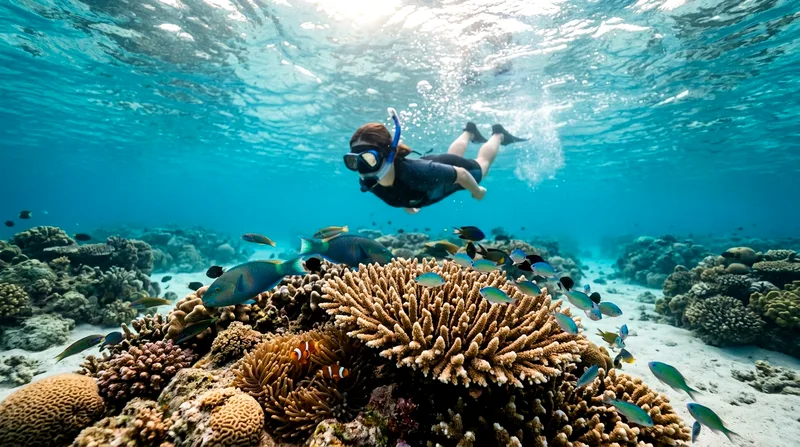
Before getting into the detail, here's how the two stack up on the factors that actually change your day — crowding, water clarity, travel time, and cost. Use this as your starting point, then read the sections below for the reasoning behind each row.
Île aux Cerfs offers the better beach and easier access, while Île aux Bénitiers generally delivers stronger snorkelling and a calmer crossing.
Île aux Cerfs vs Île aux Bénitiers: island boat tour comparison at a glance
| Factor | Île aux Cerfs | Île aux Bénitiers |
|---|---|---|
| Coast | East Coast Mauritius | West Coast Mauritius |
| Boat crossing time | Approx. 20-30 min from Trou d'Eau Douce | Approx. 30-45 min from Rivière Noire/Tamarin |
| Typical tour length | Half-day to full-day (4-8 hrs) | Full-day, often combined with dolphin swim (6-8 hrs) |
| Crowd level | High, especially mid-morning to early afternoon | Moderate, fewer large groups |
| Snorkelling quality | Good, calm lagoon, limited coral | Better, closer to reef and Crystal Rock drop-off |
| Typical cost range (per adult) | Roughly MUR 1,500-3,500 (~€30-70) | Roughly MUR 2,000-4,500 (~€40-90), higher if dolphin swim included |
| Best for | Families, first-timers, beach lovers | Snorkelers, couples, those avoiding the biggest crowds |
Figures are typical ranges based on common tour inclusions; always check current prices and exact departure points when booking.
Beach Quality and Scenery
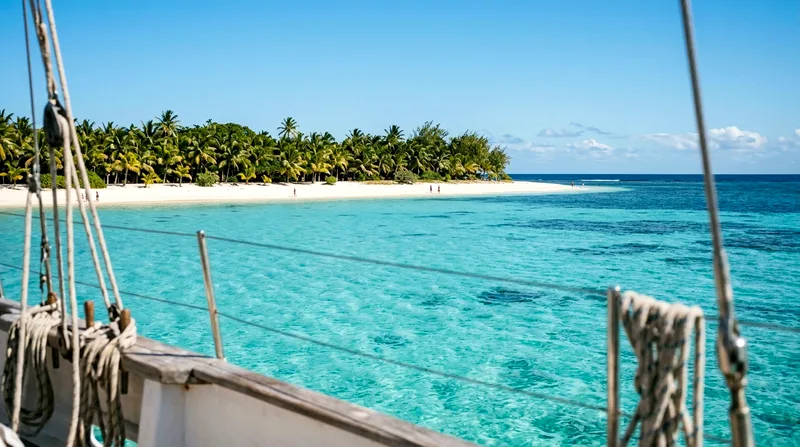
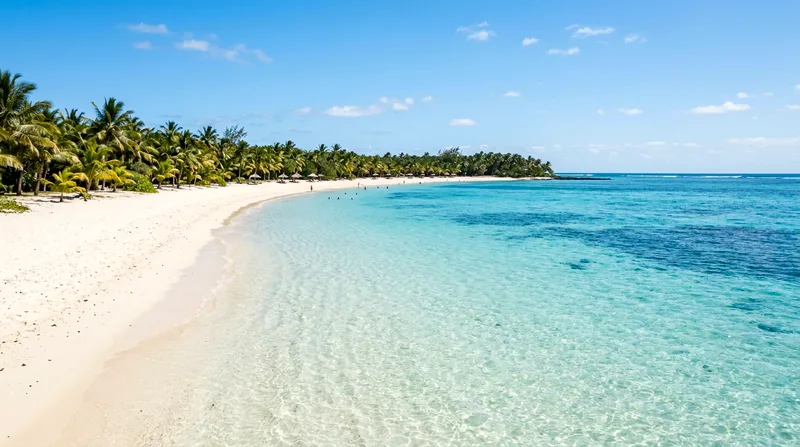
This is where Île aux Cerfs earns its reputation. The main beach runs for a few hundred metres of genuinely fine white sand, backed by casuarina trees, with the lagoon water shallow and calm enough for small children to wade out fifty metres without real risk. It's the image most people have in their head when they picture a Mauritius island — and for good reason.
Île aux Cerfs: Lagoon and Sand
The lagoon here is protected by an outer reef, which keeps the water flat and swimmable most of the year. Sand quality is consistently good across the main beach near the jetty, though it gets packed with sunloungers and umbrellas from mid-morning onward once the big tour boats arrive. If you walk 15-20 minutes away from the main landing area, you'll find quieter stretches — most day-trippers don't bother. The downside: because it's a proper island with a golf course and restaurants, parts of it feel more like a managed resort annex than a secluded spot.
Île aux Bénitiers: Reef and Calm Waters
Île aux Bénitiers is narrower and less dramatic visually — the beach is decent but shorter, and the island itself is mostly scrub rather than manicured grounds. What it has going for it is proximity to the reef drop-off near Crystal Rock, plus views across to the Le Morne Brabant peninsula, which is arguably a more striking backdrop than anything on the east coast. The water close to shore is calm, but it's less of a "swim for hours" beach and more of a base for snorkelling excursions.
Snorkelling and Marine Life
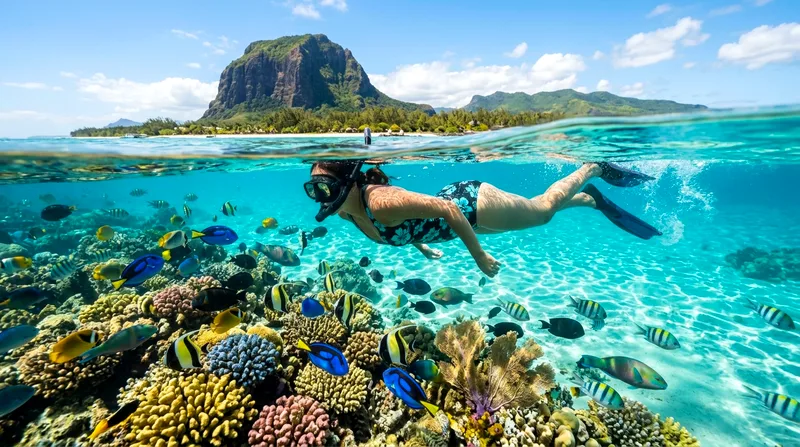
If snorkelling is your main motivation, this section should decide things for you more than the beach comparison does.
Île aux Cerfs: Coral Gardens
Snorkelling around Île aux Cerfs is fine but unremarkable. The lagoon's calm, sandy bottom isn't ideal for coral growth, and years of heavy boat traffic and anchoring haven't helped reef health in the immediate vicinity. Some tours include a stop at a small reef patch en route, with visibility that's decent but not comparable to dedicated snorkelling sites elsewhere on the island. Expect to see parrotfish, small reef fish, and sea cucumbers rather than anything spectacular.
Île aux Bénitiers: Reef Exploration
The west coast route usually includes a stop at Crystal Rock, a coral formation rising out of deeper water with noticeably better visibility and a healthier-looking reef structure than most east coast spots. Many Île aux Bénitiers tours also combine a morning dolphin-watching segment off Tamarin — wild dolphins are commonly sighted there, though sightings aren't guaranteed on any given day. For snorkelling fanatics, this combination makes the west coast the stronger choice, full stop.
Crowds and Visitor Experience
Crowding is the biggest practical difference between these two trips, and it's worth being honest about it rather than glossing over it.
Peak Season Differences
Île aux Cerfs gets hammered during European winter (roughly July-September) and around Christmas/New Year, when dozens of boats converge on the same beach between 10am and 2pm. It can feel closer to a beach club than an island escape on those days. Île aux Bénitiers sees fewer large coach-style groups, partly because the west coast departure points (Rivière Noire, Tamarin) handle lower overall volume than Trou d'Eau Douce and Belle Mare on the east.
Best Times to Visit Each
For Île aux Cerfs, aim for an early departure — before 9:30am — or book a late-afternoon tour if your operator offers one, since the crowds thin after 3pm. For Île aux Bénitiers, mid-morning works reasonably well since it's less saturated to begin with, though the dolphin-swim add-on means boats cluster off Tamarin around 7-8am regardless of season.
Food, Facilities, and Comfort
Neither island trip leaves you hungry, but the style of catering differs quite a bit.
On-Island Dining Options
Île aux Cerfs has actual restaurants and snack bars on the island itself, independent of whatever your boat tour provides, so you're not entirely dependent on a packed lunch. Île aux Bénitiers has essentially no permanent dining infrastructure — your tour's onboard or beach barbecue lunch (grilled fish, chicken, rice, salads is the typical format) is usually the only food you'll get, so check in advance what's included.
Amenities and Infrastructure
Île aux Cerfs has toilets, shaded areas, a golf course, jet-ski rental, and even a small zip-line attraction near the jetty — more than enough to fill a full day beyond the beach itself. Île aux Bénitiers has minimal built infrastructure; it's closer to the uninhabited-island experience, which some travelers will prefer and others will find lacking if they want shade, toilets, or anything beyond sand and water.
Cost and Tour Duration
Price differences between the two aren't dramatic, but duration and what's bundled in often is.
Typical Tour Pricing
Île aux Cerfs day trips, often sold as catamaran or speedboat tours with lunch and a waterfall stop at the Grand River South East (GRSE), typically run in the range of MUR 1,500-3,500 per adult (roughly €30-70), depending on boat type and inclusions. Île aux Bénitiers tours tend to sit slightly higher, MUR 2,000-4,500 (€40-90), mainly because many include the dolphin-watching segment and a Crystal Rock snorkelling stop as standard. Always compare current boat tours and prices before you book, since fuel surcharges and seasonal rates shift these figures.
Travel Time from Shore
From Trou d'Eau Douce, Île aux Cerfs is a short hop — 20 to 30 minutes by speedboat, making it one of the most accessible island trips in Mauritius. Île aux Bénitiers takes longer to reach, 30 to 45 minutes from Rivière Noire or Tamarin, partly because many tours route via Tamarin Bay for the dolphin stop first. If you get seasick easily, the west coast crossing can involve more open-water swell than the relatively sheltered east coast run.
Which Island Should You Choose?
For families with children and first-time visitors, Île aux Cerfs is the safer bet — shallow water, actual facilities, and a shorter boat ride mean less can go wrong. For snorkeling fanatics, serious couples' trips, and anyone who's already done the "classic lagoon beach" elsewhere (Zanzibar's Nakupenda sandbank and Phuket's Phi Phi islands offer a similar formula), Île aux Bénitiers' reef access and dolphin segment make it the more memorable day.
Worth noting for context: compared to Seychelles' granite-boulder islands or the Maldives' private atoll resorts, both Mauritius options are considerably more affordable and accessible for a single-day excursion — you're not paying resort-transfer prices or committing a whole trip to one island. If you want genuinely quiet water without crowds, Réunion Island's volcanic coastline or a private charter elsewhere in Mauritius will beat either of these popular day trips, but you'll pay more and lose the easy group-tour logistics.
My honest take: skip Île aux Cerfs entirely in peak season unless you book the first departure of the day, and skip Île aux Bénitiers if your priority is purely "best beach photo" — it won't deliver that the way Île aux Cerfs does.
Frequently asked questions
Which island has better snorkelling?
Île aux Bénitiers generally wins here. Its tours usually include a stop at Crystal Rock, a coral formation with better visibility and more fish activity than the shallow, sandy-bottomed lagoon around Île aux Cerfs. If snorkelling quality is your main criterion, choose the west coast trip.
Is Île aux Cerfs or Île aux Bénitiers more crowded?
Île aux Cerfs is significantly more crowded, especially between 10am and 2pm during European winter (July-September) and the Christmas period. Île aux Bénitiers sees fewer large tour groups since west coast departure points handle lower volume overall.
How much does a boat tour cost to each island?
Île aux Cerfs tours typically run MUR 1,500-3,500 per adult (roughly €30-70). Île aux Bénitiers tours run slightly higher, MUR 2,000-4,500 (€40-90), often because they bundle in a dolphin-watching stop. Check current prices when booking, as fuel surcharges and season affect rates.
Can you visit both islands in one day?
Not realistically. They're on opposite coasts — Île aux Cerfs on the east, Île aux Bénitiers on the west — and each trip typically takes 4-8 hours including transfers, lunch, and boat time. Trying to combine them means rushing both and spending most of the day in transit.
Which island is better for families?
Île aux Cerfs is the better family choice. The lagoon is shallow and calm, the crossing is short (20-30 minutes), and the island has toilets, shade, and food options independent of your tour operator — useful when traveling with young children.