Mauritius half day vs full day boat tour compared: itineraries, meals, fatigue levels, and value, so you book the right one for your trip.
Half-Day vs Full-Day: Quick Overview
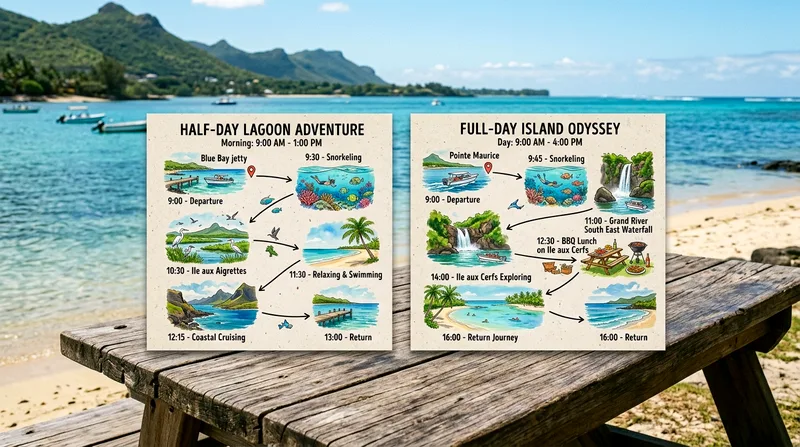
Choosing between a half-day and full-day boat tour in Mauritius comes down to four things: how much time you actually have, how much sun and motion you can tolerate, your budget, and whether you want to see one good spot well or several spots briefly. That's the whole decision, really — everything else is detail.
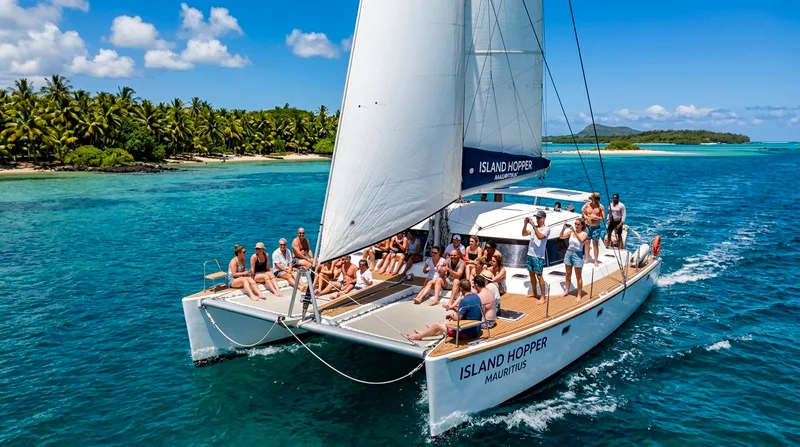
Half-day tours typically run 4 to 5 hours, departing either early morning (around 8:30-9am) or early afternoon (around 1-1:30pm). Full-day tours run 7 to 9 hours, usually 9am to 4 or 5pm, and almost always include lunch. Both formats are sold around the island — from Trou aux Biches and Grand Baie in the north to Flic en Flac in the west — and both typically use a catamaran or a speedboat, with catamarans dominating the full-day market because they have shade, a toilet, and room to move around.
My honest take: the half-day tour is underrated. Operators market the full-day trip as the "complete" experience, but a lot of that extra time is spent cruising between stops or anchored for a long buffet lunch, not actively snorkeling or exploring. If snorkeling and swimming are your priority, a half-day tour often delivers more time actually in the water per hour you've paid for.
A half-day tour buys more time in the water per hour paid, while a full-day tour buys more locations and a cooked meal.
Mauritius half day vs full day boat tour: duration, stops, meals and cost compared
| Tour Type | Duration | Typical Stops | Meals Included | Best For |
|---|---|---|---|---|
| Half-day (morning) | 4-5 hours | 1 lagoon/sandbank spot | Snacks, soft drinks | Families, calmer seas, snorkeling focus |
| Half-day (afternoon) | 4-5 hours | 1 lagoon/sandbank spot | Snacks, soft drinks | Shorter trips, flexible mornings |
| Full-day (catamaran) | 7-9 hours | 2-3 stops, incl. lunch anchor | Cooked lunch, local rum/beer | Snorkeling fanatics, boaties, couples wanting variety |
| Full-day (speedboat + islet) | 7-9 hours | 2-3 stops incl. waterfall option | Beach BBQ lunch | Active travelers, groups wanting scenery variety |
Typical figures; exact duration, stops, and inclusions vary by operator and season, so confirm details before booking.
What each tour includes
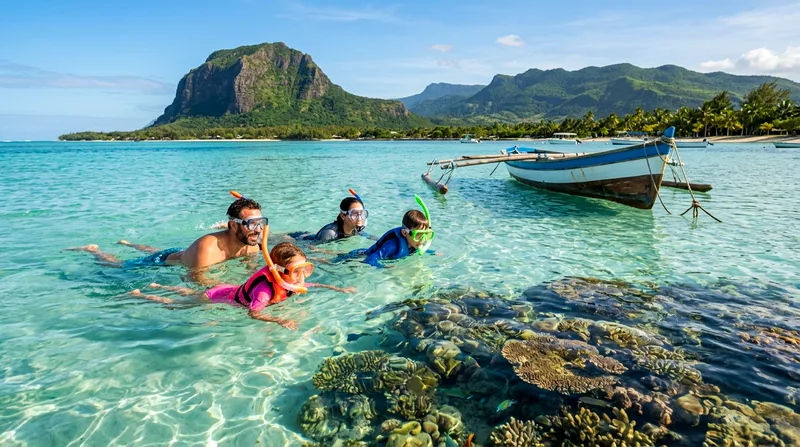
A standard half-day tour usually covers one lagoon destination — a sandbank, an islet, or a reef snorkeling spot — plus transport, snorkeling gear, and a light snack or drink (water, rum-based punch, sometimes fruit). A full-day tour adds a second or third stop, a cooked lunch (often barbecued fish or chicken grilled onboard or on an islet), and sometimes a stop at a waterfall or public garden by minibus between the boat legs. Both formats generally include snorkeling masks and fins in the price, though quality varies — bring your own mask if you're fussy about fit, since ill-fitting rental masks are the single biggest complaint I'd flag for snorkeling fanatics.
Duration and timing
Timing matters more than people expect. A morning half-day tour gets you calmer seas (wind typically picks up by early afternoon, especially June to September) and better light for snorkeling photos. A full-day tour straddles both windows, so you'll likely hit choppier conditions in the afternoon leg — worth knowing if anyone in your group gets seasick. Avoid booking a full-day tour on your first or last day of the trip; transit, check-in, and fatigue eat into it, and you'll resent paying for hours you spend half-asleep.
Itinerary Stops and Destinations
The itinerary is where the real difference shows up, not the brochure hours. A half-day tour commits to one destination and gives it proper time; a full-day tour spreads the same boat and crew across two or three stops, which sounds like better value until you realize you're getting 45 minutes at each instead of two unhurried hours at one.
Half-day route highlights
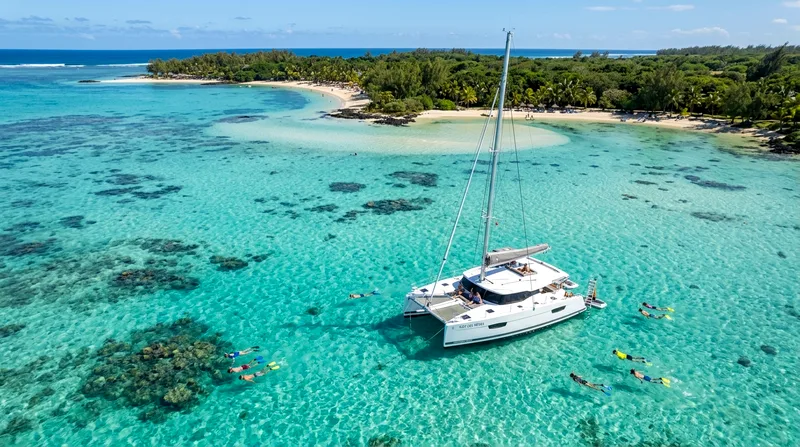
Typical half-day routes from the north (Grand Baie, Trou aux Biches) head to a sandbank or a reef patch inside the lagoon, sometimes combined with dolphin-watching near Tamarin or Flic en Flac on the west coast in the early morning (dolphins are most reliably seen between 7 and 9am, not a guarantee). You get one real anchor point, 1.5 to 2 hours in the water, and a direct return. It's a tighter, calmer experience — good for families with young kids who tire quickly, and for anyone who finds full days on a rocking boat genuinely unpleasant.
Full-day route highlights
Full-day tours commonly combine Île aux Cerfs with a stop at the Grand River South East waterfall by speedboat along the way, or pair a lagoon snorkeling stop with a sandbank and a public islet for lunch. Some east-coast operators add a GRSE waterfall detour that's genuinely worth it — it's one of the few boat-accessible waterfalls on the island. If you're set on seeing more than one distinct landscape type (reef, waterfall, sandbank) in a single outing, the full-day format earns its keep here. Compare that to Rodrigues Island, a separate 1.5-hour flight away with its own lagoon tours — don't confuse a Mauritius full-day tour with island-hopping to Rodrigues; they're unrelated bookings.
Meals, Comfort, and Amenities
Food and onboard comfort are where full-day tours justify part of their price tag, and where half-day tours sometimes disappoint people expecting more than a biscuit and a soda.
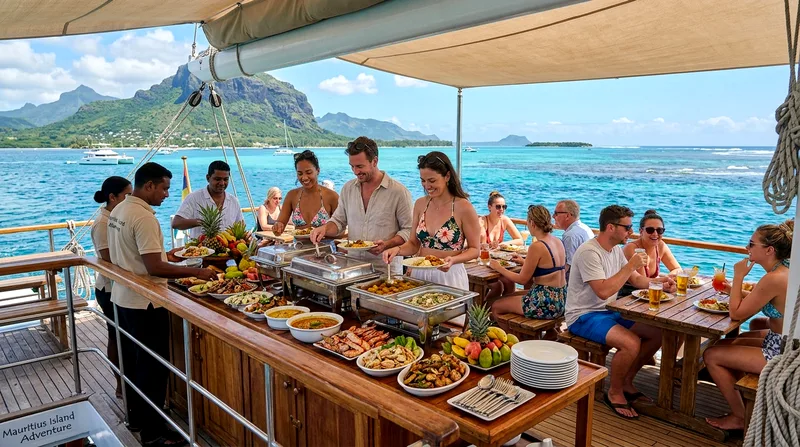
Food and beverages included
Half-day tours generally include light refreshments only — water, soft drinks, maybe local rum punch, and occasionally fresh fruit or a pastry. Full-day tours almost always include a proper lunch, often grilled fish, chicken, or a Mauritian-style barbecue with rice and salads, served either onboard or on a beach stop. Alcohol (rum, beer) is commonly included in full-day packages too, though "included" rarely means unlimited premium brands — expect local rum and beer, not imported spirits. If you have dietary restrictions, flag them when booking; buffet-style boat lunches don't always have a clearly labeled vegetarian option.
Onboard facilities and comfort
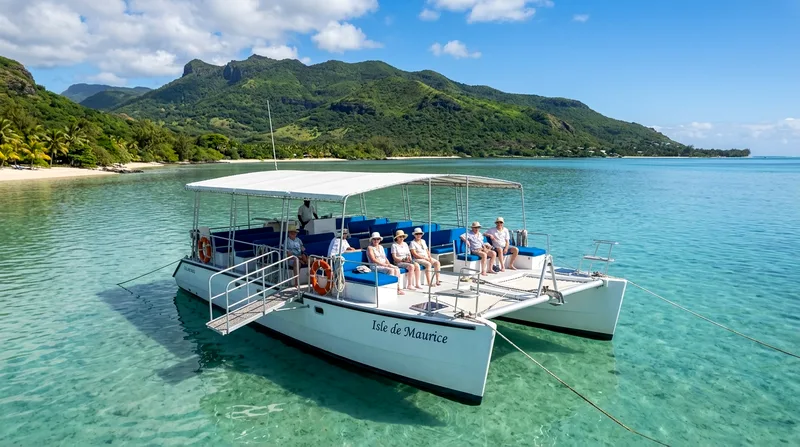
Catamarans used on full-day tours typically have a shaded saloon, a toilet, and sometimes a trampoline net at the bow — genuinely more comfortable for a long day than an open speedboat. Half-day tours often use speedboats, which are faster and more exciting but have zero shade and no toilet, a real issue for senior travellers or anyone with small children. If a half-day tour is advertised on a catamaran rather than a speedboat, that's usually the better pick for comfort, even if it costs slightly more.
Time, Fatigue, and Physical Demands
Sun exposure and boat motion add up faster than people expect in the Indian Ocean heat, and this is the section most travelers underweight when booking.
Energy and endurance required
A full-day tour means 7-9 hours of sun, saltwater, and intermittent swimming, with no real escape from the heat beyond the shaded cabin. By hour six, most people are sunburnt, salty, and ready to stop — even enthusiastic snorkelers. Half-day tours end before fatigue sets in, which is exactly why they suit families with children under 8, senior travellers, and anyone recovering from jet lag on day one or two of a trip.
Rest and pacing differences
Full-day itineraries build in a lunch stop that doubles as rest time, which helps pacing, but the afternoon leg is when seasickness complaints spike — rougher water, fuller stomachs, more sun. If seasickness is a concern, take medication (like ginger tablets or over-the-counter dimenhydrinate) 30-60 minutes before departure regardless of tour length, and ask whether the boat is a catamaran — the dual-hull design is noticeably more stable than a single-hull speedboat in choppy conditions.
Cost and Value for Money
Cost is rarely the deciding factor on its own — it's cost relative to what you actually use.
Price comparison
As a rough guide, half-day tours in Mauritius tend to run cheaper per person than full-day equivalents, reflecting shorter fuel use, no cooked lunch, and less crew time. Full-day tours cost more largely because of the lunch, additional stops, and longer crew hours. Exact pricing varies by operator, season, and group size, and changes often enough that quoting a fixed number here would mislead you — compare current boat tours and prices before you book to see what's actually on offer for your dates.
What you get per dollar
Per hour of actual water time, half-day tours usually win — you're not paying for transit between three stops or a 90-minute lunch anchor. Per experience breadth, full-day tours win — more scenery, a cooked meal, sometimes a waterfall. If you're traveling with a tight budget or you've already paid for other excursions that week, the half-day option keeps your spend proportional to the time you'll actually enjoy. I'd skip the full-day tour if your main goal is snorkeling and nothing else — you're paying extra for food and transit, not fish.
Who Should Choose Which Option
Solo travelers and couples with limited time — say, a week split between Mauritius and Réunion Island or a stopover en route to the Seychelles — generally do better with a half-day tour, freeing the rest of the day for another activity. Families with children under 10 should default to half-day too; a 5-hour outing with sun and swimming is already a full day for a six-year-old, and full-day tours often run long past nap time with no real way to cut the trip short once you're anchored offshore.
Boaties and fishermen who actually want to spend meaningful time on the water, plus snorkeling fanatics chasing multiple reef sites, are the clearest case for a full-day tour — you'll reach spots a half-day itinerary skips entirely, including farther reef patches near Île aux Cerfs that short tours don't have time to reach. Senior travellers should weigh their own heat and motion tolerance honestly; a shaded catamaran half-day tour is often the safer middle ground rather than defaulting to either extreme.
Worth comparing mentally to other Indian Ocean and Southeast Asian options: a half-day Mauritius lagoon tour is a reasonable stand-in for a Phuket island-hopping speedboat day, while a full-day Mauritius catamaran trip is closer in pacing to a Whitsunday Islands overnight sail minus the overnight part — less exploration than a multi-day Whitsundays trip, but far less commitment too. If you've done Zanzibar's Mnemba Island snorkeling trips or a Bali fast boat to the Gili Islands, the Mauritius full-day format will feel familiar — same trade-off between breadth and fatigue.
Frequently asked questions
How long is a half-day boat tour in Mauritius?
Most half-day boat tours run 4 to 5 hours, either a morning departure around 8:30-9am or an early afternoon departure around 1-1:30pm. That includes transit time to and from the lagoon or islet, so actual time snorkeling or swimming is usually closer to 1.5-2 hours.
What's included in a full-day boat tour?
Full-day tours typically include transport by catamaran or speedboat, snorkeling gear, two or three stops (often a lagoon, a sandbank, and sometimes a waterfall), a cooked lunch, and soft drinks plus local rum or beer. Confirm inclusions when booking, since some operators charge extra for equipment upgrades like fins or underwater cameras.
Is a full-day boat tour worth the extra cost?
It depends on what you value. If you want to see multiple locations — reef, sandbank, waterfall — and don't mind a longer day in the sun, yes. If your main goal is snorkeling time and you're on a budget, a half-day tour usually gives better value per hour, since you skip the lunch stop and extra transit.
Which tour is better for families with young children?
Half-day tours generally suit families with kids under 10 better. Five hours of sun and swimming is already tiring for young children, and a catamaran half-day tour with shade is a safer bet than a 7-9 hour full-day trip that runs past nap time with no easy way to leave early.
Can I snorkel on both half-day and full-day tours?
Yes, nearly all Mauritius boat tours — half-day or full-day — include a snorkeling stop with mask and fins provided. Full-day tours sometimes add a second snorkeling site at a different reef, while half-day tours concentrate all the water time at one location.