Mauritius boat tours solo travellers can book without single supplements. Compare catamaran, snorkeling and sunset trips with honest pros and cons.
Who Mauritius boat tours suit
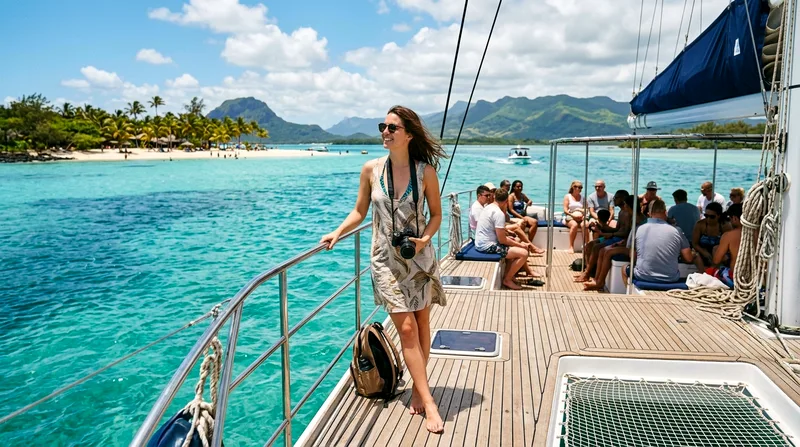
Mauritius boat tours solo travellers book most often fall into one category: shared-day catamaran trips departing from the east or south coast, usually heading toward Île aux Cerfs, the islet off Trou d'Eau Douce, or the reef patches near Blue Bay. These aren't exclusive experiences — you'll share the deck with anywhere from 15 to 50 other people, depending on the boat — and that's exactly why they work well for someone traveling alone.
Compare this to somewhere like the Maldives, where boat excursions are frequently bundled into resort stays and priced per villa, or Santorini, where catamaran sunset cruises lean heavily toward couples and charge a premium for two-person minimums. Mauritius doesn't really have that pricing culture. Day tours are sold per seat, which means a solo traveller pays the same per-person rate as someone traveling in a pair.
I'd say the main caveat is this: if you're after quiet, you won't find it on the popular Île aux Cerfs routes during midweek high season. Boats queue up at the same lagoon entry points, music plays on deck, and lunch service at the sega-dance-and-rum-tasting stops can feel more like a party bus than a nature excursion. If that sounds appealing, great — if you want solitude, look at smaller operators running toward Black River Gorges' coastal access points or the quieter southwest, where boat traffic is noticeably thinner.
Solo travellers seeking social experiences
Group boat tours are one of the few activities in Mauritius where solo travellers naturally end up talking to strangers. Shared tables at the onboard lunch stop, communal snorkeling gear hand-outs, and the inevitable wait for the speedboat transfer all create small pockets of conversation. European travellers on gap-year routes and retirees on multi-stop Indian Ocean trips — often coming from or heading to Réunion Island — tend to mix on these boats more than on, say, a private tour in Zanzibar where groups are usually pre-formed families or couples. If meeting people matters to you, choose a full-day tour over a half-day: the extra hours at anchor near Île aux Cerfs or a sandbank give people time to actually talk, rather than just snorkel and leave.
Budget-conscious independent explorers
Affordable catamaran tours Mauritius operators run are generally cheaper per person than equivalent experiences in Phuket or Bali, where tourist pricing has pushed boat day-trips higher over the past decade. A shared half-day snorkeling catamaran in Mauritius typically sits in a lower-to-mid price bracket compared with a private speedboat charter of the same length, and there's rarely a solo traveler penalty — unlike some Seychelles operators who quote per-boat rather than per-head for smaller excursions, which can double the effective cost for one person. Watch out for "transport included" claims, though — some tours charge extra for hotel pickup outside a specific coastal zone, which matters if you're staying inland near Curepipe or Port Louis.
Main boat tour categories compared
Boat tours in Mauritius split into a few clear categories, and knowing the difference saves you from booking the wrong one. There are shared catamaran day tours (the most common and most solo-friendly), speedboat snorkeling trips, private charters, and specialist fishing or sunset cruises. Each has a different rhythm, crowd, and price logic.
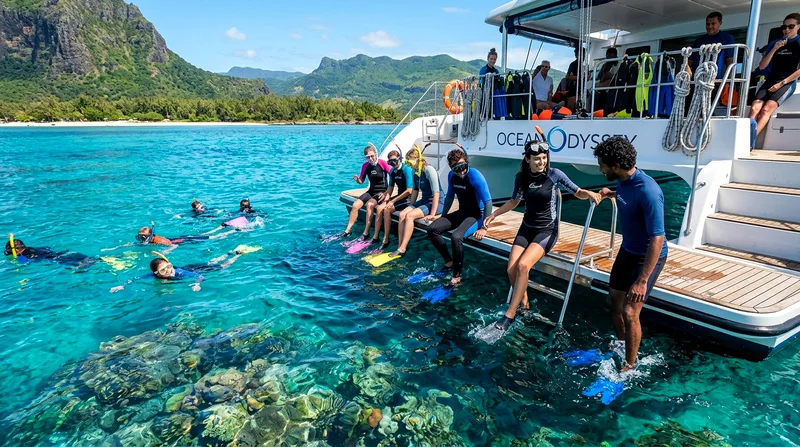
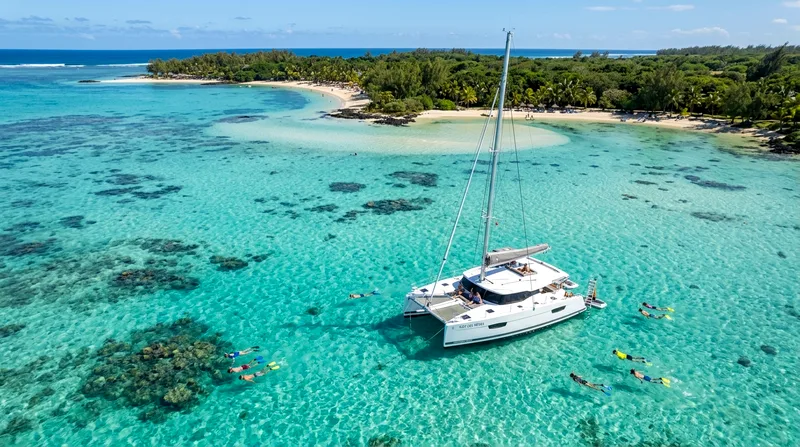
Shared catamarans dominate the east coast routes toward Île aux Cerfs and the south toward Blue Bay's coral reef areas. Speedboats cover similar ground faster but with less shade and rougher rides — fine for a two-hour reef stop, less fine for a six-hour day. Private charters, often the same catamarans rented exclusively, make sense only if you can split the cost with a group you've already met; as a lone traveler paying full freight, it's usually poor value next to a shared tour costing a fraction as much per head.
Shared full-day catamaran tours generally offer solo travellers the best balance of cost, safety and social contact in Mauritius.
Mauritius boat tour categories compared for solo travellers
| Tour type | Typical duration | Group size | Best for | Single supplement |
|---|---|---|---|---|
| Shared catamaran (full-day) | 6-8 hours | 20-40 people | Social solo travellers, snorkelers | Rare |
| Shared catamaran (half-day) | 3-4 hours | 15-30 people | Time-limited itineraries | Rare |
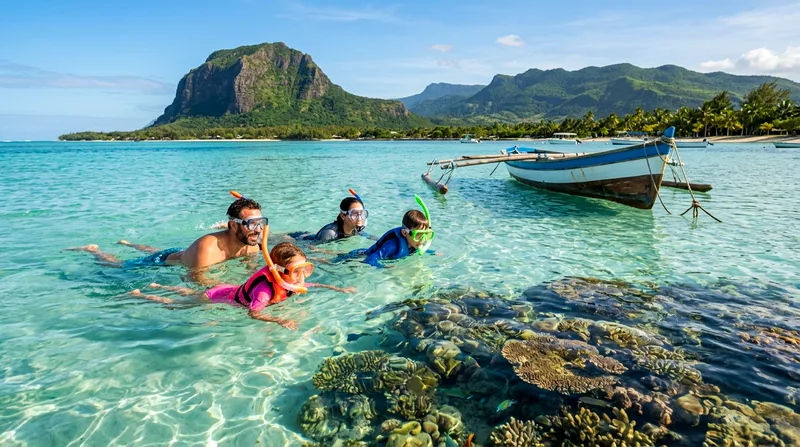
| Speedboat snorkeling trip | 2-4 hours | 8-15 people | Budget snorkeling, reef access | Occasionally for 1-person bookings |
| Private charter | 4-8 hours | Exclusive (your group only) | Privacy, families, couples | N/A — priced per boat |
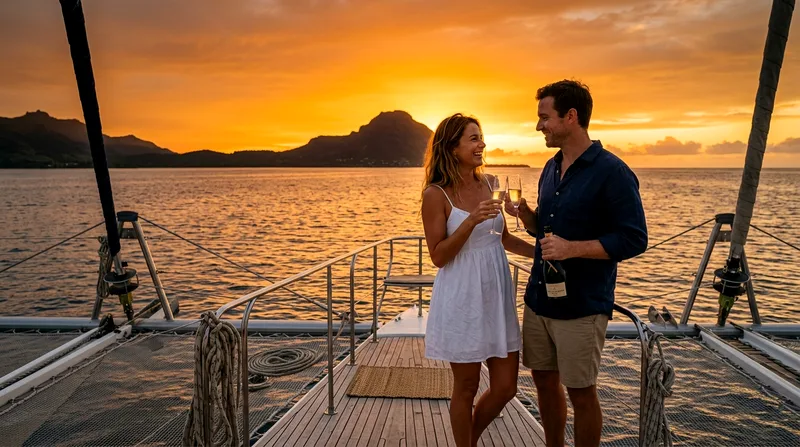
| Sunset cruise | 2-3 hours | 20-35 people | Couples, relaxed solo evenings | Rare |
| Fishing charter | 4-6 hours | 4-8 people | Fishermen, small groups | Sometimes applies |
Typical figures based on common Mauritius itineraries; group sizes, inclusions and supplement policies vary by operator, so confirm details when booking.
Group catamaran vs private charters
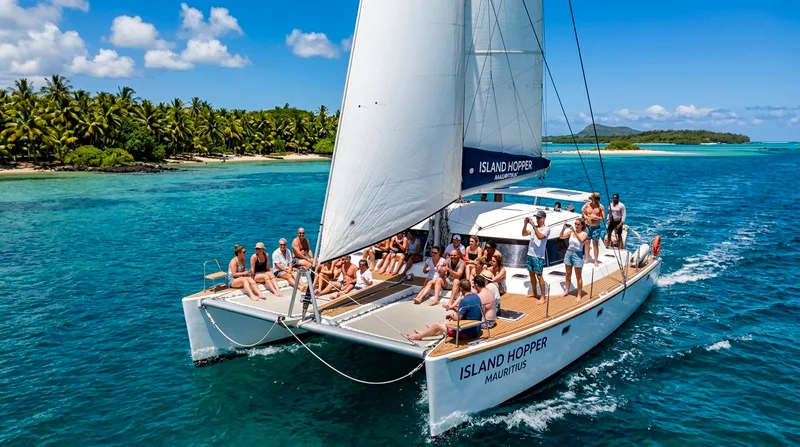
A group catamaran tour Mauritius solo travellers join typically holds 20 to 40 passengers, includes a skipper and one or two crew who double as guides, and follows a fixed route with two or three stops — a reef snorkel spot, a sandbank or islet, and sometimes a waterfall-adjacent river mouth near Grand River South East. Lunch, soft drinks, and snorkeling gear are usually included in the base price. Private charters flip all of this: you set the route, the boat is yours alone, and prices are quoted per boat rather than per person, which only becomes reasonable once you've got four or more people splitting it. For one traveler, a private half-day charter can cost several times what a shared full-day tour costs — not a trade I'd recommend unless privacy matters more than budget.
Half-day vs full-day departures
Half-day tours run roughly three to four hours and usually cover one main stop plus a short snorkel session — a good fit if you're also trying to fit in Black River Gorges hiking or a Port Louis market visit the same day. Full-day tours run six to eight hours, include lunch (often a barbecue on a sandbank or islet), and hit two to three locations. For solo travellers specifically, full-day tours are the better social bet: there's simply more downtime at anchor to talk to other passengers, whereas half-day trips move fast and leave less room for conversation. The trade-off is fatigue — a full day in the sun on open water adds up, so bring more water and reef-safe sunscreen than you think you'll need.
What to look for when booking
Not all boat tours advertise their terms clearly, and the gap between "included" and "available for extra" is where solo travellers get caught out. Read the fine print on pickup zones, cancellation windows, and what "lunch included" actually means — sometimes it's a full barbecue, sometimes it's a sandwich and a soft drink.
Inclusions and meal options
Most shared catamaran tours include snorkeling gear, a guide, soft drinks, and at least a light lunch — commonly grilled fish or chicken served on a sandbank or at an islet stop near Île aux Cerfs. Alcohol is sometimes included on the more party-oriented routes and sometimes charged separately; if you don't drink, check whether the price adjusts, because it rarely does. Vegetarian options exist on most boats but need to be requested at booking, not on the day. Compare this to Whitsunday Islands tours in Australia, where meal inclusions are more standardized and itemized — Mauritius operators are looser about specifying exactly what's on the lunch table, so if it matters to you, message the operator directly before paying.
Group size and cancellation policies
Group size affects both atmosphere and safety. A boat carrying 40 people on a vessel rated for 45 feels different from one with 20 on a similar-sized catamaran — more room to move, shorter queues for snorkeling gear, less jostling at the lunch stop. Ask directly how many passengers are booked for your date if the listing doesn't specify a cap. On cancellations, weather-related refunds are standard in Mauritius during cyclone season (roughly November to April) — most operators rebook or refund fully if they cancel, but read whether you get the same guarantee if you cancel. Many listings only offer partial refunds inside 48 hours of departure, which matters if your travel dates are tight.
Best time to book your tour
Timing affects both price and comfort more than most first-time visitors expect. Mauritius boat tours solo travellers want to join for snorkeling and calm seas are best booked with the island's dry season in mind, not just flight availability.
Seasonal weather considerations
The dry season, roughly May to November, brings calmer seas, better underwater visibility, and lower humidity — ideal for snorkeling trips toward the coral reef areas near Blue Bay or Île aux Cerfs. December to April is hotter, wetter, and carries cyclone risk, which can mean last-minute cancellations. That said, the warm season has cheaper accommodation and thinner crowds on the water, so if you're flexible and don't mind the occasional rescheduled trip, it's not a bad trade for solo travellers on a budget. Just build a buffer day into your itinerary in case a tour gets pushed.
Advance booking advantages
Booking two to four weeks ahead generally secures a spot on the more social, higher-capacity catamaran tours before they fill with pre-booked groups from package resorts. Walk-up bookings still work in Mauritius — unlike, say, peak-season Santorini cruises that sell out weeks in advance — but you'll have less choice of departure time and boat type. If a specific small-group or specialist tour (fishing charters, quieter southwest routes) is your priority, book further ahead since capacity is lower. Always compare current boat tours and prices before you book, since availability and seasonal pricing shift throughout the year.
Frequently asked questions
Do Mauritius boat tours charge single supplements?
Rarely, for shared catamaran and speedboat tours — these are priced per seat, so solo travellers pay the same rate as anyone else. Single supplements mostly appear on private charters, which are priced per boat regardless of passenger count, or occasionally on small fishing charters with a minimum group fee.
Are group boat tours safe for solo travellers?
Generally yes. Reputable operators carry life jackets for all passengers, operate within protected lagoon waters for most of the route, and have a licensed skipper aboard. Solo travellers should still confirm the boat has a working radio and check recent reviews mentioning safety gear — and avoid unlicensed boats touted directly on the beach without any paperwork or visible safety equipment.
What's included in a typical boat tour?
Most full-day catamaran tours include snorkeling gear, a guide, soft drinks, and lunch — often grilled fish or chicken at a sandbank stop. Transport to and from the departure point is sometimes included only within a specific coastal zone. Always check whether alcohol, towels, and hotel transfers are included or extra before booking.
How far in advance should I book?
Two to four weeks ahead is a safe window for the popular shared catamaran routes, especially during the May-to-November dry season when demand is highest. Walk-up booking is possible in quieter months, but you'll have fewer departure times and less choice of boat size.
Which boat tours are best for meeting other travellers?
Full-day shared catamaran tours toward Île aux Cerfs or Blue Bay tend to be the most social — longer anchor time, communal lunch, and larger groups mean more chances to talk. Half-day speedboat trips move too fast for much conversation, and private charters obviously remove the social element entirely.