Mauritius boat tours seniors can trust: stable catamarans, easy boarding, shaded decks and gentle lagoon routes. A practical guide to booking well.
Which Boat Tours Suit Senior Travellers
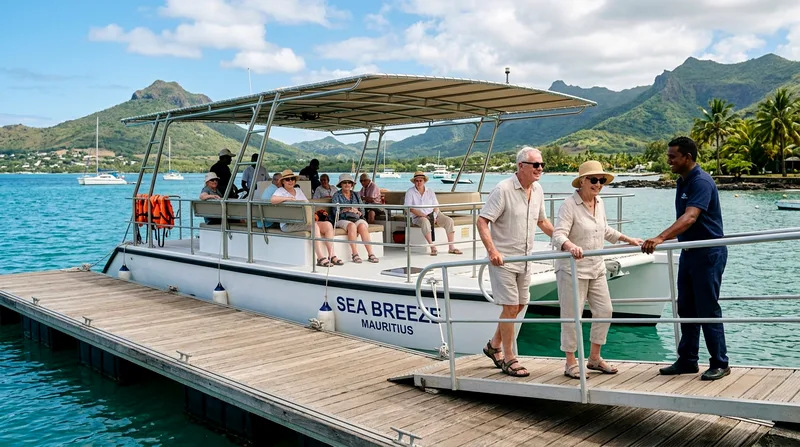
Mauritius boat tours for seniors work best when they stay inside the lagoon, keep the group pace unhurried, and avoid long open-water transits. The island's barrier reef creates a wide band of sheltered, shallow water around most of the coast — this is the water you want to be on, not the open Indian Ocean beyond the reef pass, where swells build quickly even on a calm day. A good senior-friendly tour operator will say explicitly that the route runs inside the lagoon; if the description only says "ocean tour" without mentioning the reef, ask before booking.
Not every popular tour suits older travellers automatically. Half-day catamaran trips to Île aux Cerfs, for instance, often include a fast transfer by speedboat from the mainland jetty before switching to the sailing catamaran — that first leg can be bouncy. Ask whether the whole journey is on the catamaran or whether a speedboat segment is involved, because that detail changes the comfort level considerably.
Calm-water lagoon tours
Lagoon-only tours — common along the east coast near Trou d'Eau Douce and the west coast near Black River — are the safest bet for seniors. These stay in water rarely deeper than four or five metres, protected from ocean swell by the reef. Expect a cruising speed under 10 knots on most of these routes, gentle enough that passengers can move around the deck without gripping rails constantly. Avoid tours advertised as "reef pass crossings" or that mention speed-boat thrills in the Black River Gorges area by name — that's a national park on land, not a boat route, and confusingly some tour listings bundle a land excursion there with a coastal boat trip, adding a long bus transfer seniors may not want.
Sunset and wildlife cruises
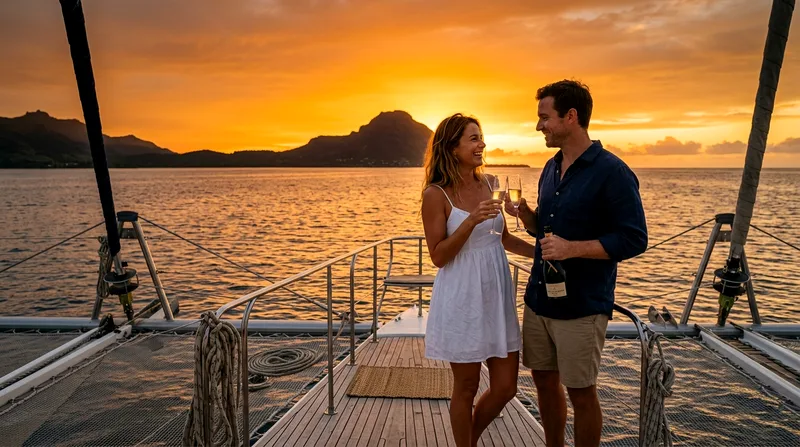
Sunset cruises and dolphin-watching trips out of Tamarin or Port Louis tend to run on larger, slower boats with fixed seating, which suits seniors who want scenery without exertion. Dolphin trips usually depart early, around 6:30–7:00am, to catch pods before boat traffic disperses them — worth knowing if early starts are difficult for you. Sunset cruises run calmer and later, typically 90 minutes to two hours, with minimal swimming or snorkeling expected, making them one of the gentlest options on this list. The trade-off: wildlife sightings aren't guaranteed, and some operators pack more passengers on these larger boats, so ask about typical group size.
Catamaran vs Speedboat vs Cruise Tours
The boat type matters more than the itinerary name. Three categories dominate the Mauritius market, and they differ enormously in how they handle motion, boarding, and pace.
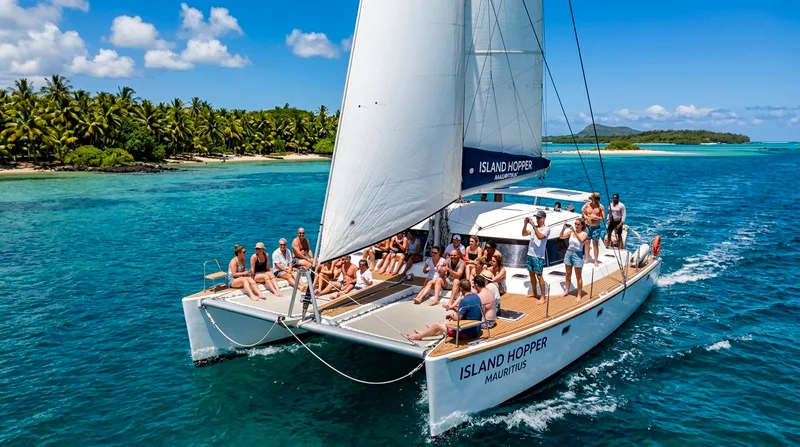
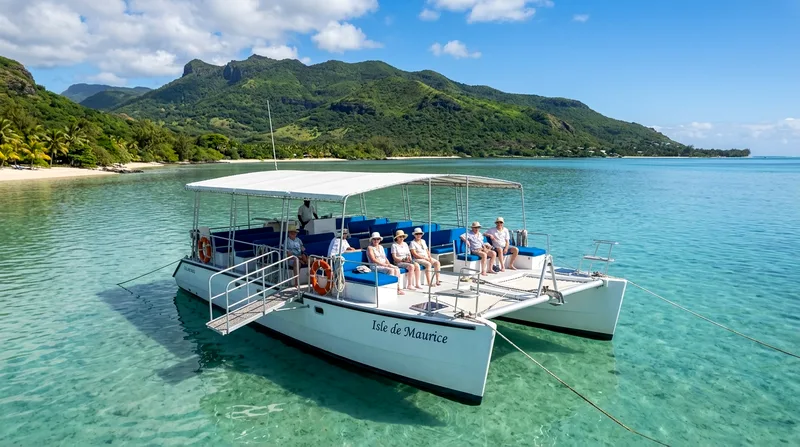
For most senior travellers, a lagoon catamaran tour offers the best balance of stability, shade and easy boarding.
Mauritius boat tours seniors compared: catamaran, speedboat and cruise options
| Boat Type | Stability | Typical Duration | Boarding Ease | Shade/Seating | Best For |
|---|---|---|---|---|---|
| Catamaran (lagoon) | High | 5-7 hours | Easy, low deck | Canopy + benches | Seniors, families, snorkelers |
| Speedboat transfer/tour | Low-moderate | 2-4 hours | Moderate, can require a step up | Minimal, open | Fitter travellers, short hops |
| Sunset/dinner cruise | Moderate-high | 2-3 hours | Easy, fixed pier boarding | Covered deck, fixed tables | Couples, relaxed evenings |
| Glass-bottom/reef viewing boat | High | 1-2 hours | Easy | Covered, bench seating | Non-swimmers, very limited mobility |
Durations and stability are typical ranges; actual conditions depend on weather and specific route, so confirm with the operator before booking.
Stability and comfort comparison
A catamaran's twin-hull design resists the side-to-side rocking that single-hull speedboats and monohull cruise boats produce, which makes a real difference for anyone unsteady on their feet or prone to seasickness. Speedboats are fastest but also the bumpiest — fine for a fit traveller wanting an adrenaline hop to Île aux Cerfs, less fine for someone with a hip replacement or balance issues. Larger monohull "booze cruise" style boats sit between the two: stable at anchor, less stable underway in any wind over 15 knots. If you've been on a catamaran in Zanzibar or the Whitsundays, the Mauritius lagoon experience will feel familiar and similarly calm — generally calmer, in fact, than open-water catamaran sailing in Santorini, where the Aegean crossings involve real swell.
Duration and itinerary options
Catamaran day tours typically run five to seven hours, including a lunch stop and one or two swim/snorkel breaks — long, but with plenty of sitting time between activities. Speedboat tours are shorter, often three to four hours, which sounds appealing for stamina reasons but concentrates all the motion into less time with fewer breaks. Sunset or dinner cruises run two to three hours and involve almost no activity beyond sitting and eating. For seniors, a mid-length catamaran tour (five hours) with a relaxed lunch stop generally beats both a short, jarring speedboat trip and a long seven-hour catamaran marathon that overtaxes stamina in tropical heat.
Key Features to Look for When Booking
Marketing copy says "family-friendly" and "relaxing" on almost every listing — it means little. What actually matters for accessible catamaran tours in Mauritius is boarding method, deck shade, and toilet access, and these are rarely in the headline description.
Accessibility and boarding facilities
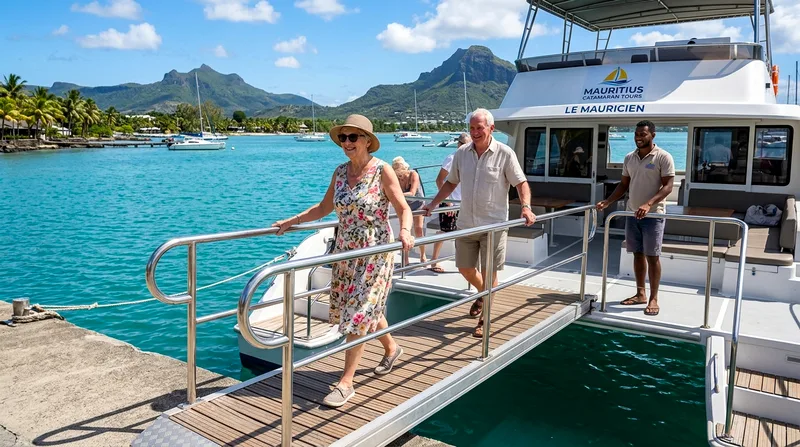
Ask specifically whether boarding happens from a jetty with a ramp, or by wading from the beach. Many east-coast catamaran departures from Trou d'Eau Douce use a floating pontoon with a short ramp and handrail — manageable for most seniors with a cane. Some west-coast and smaller operators board directly from the sand, which means wading knee-deep and climbing a ladder onto the boat — a genuine problem for anyone with knee or hip limitations. Also check whether the vessel has a rear boarding platform at near-water level, common on modern catamarans, rather than a high side entry that requires climbing. If you use a wheelchair or walker, email the operator directly before booking rather than relying on the listing — accessibility details are inconsistently documented.
Shade, seating and onboard amenities
Mauritius sits in the tropics, and midday sun on an open deck is harder on older skin and circulation than most travellers expect. Look for boats with a full canopy or hard-top shade over the main seating area, not just a small bimini over the helm. Cushioned bench seating with backrests beats trampoline netting between hulls — netting is popular with younger travellers but awkward and low for anyone with limited mobility to get into or out of. A functioning onboard toilet matters on anything over three hours; smaller speedboats often don't have one. Fresh water for rinsing, a small shaded lunch area, and life jackets sized for a range of body types are all worth confirming.
Best Times to Book Senior-Friendly Tours
Timing affects comfort on the water as much as boat choice does, and this is where European travellers in particular often miscalculate — booking during the cyclone-season shoulder months expecting Mediterranean-style stability.
Seasonal weather considerations
The Mauritius dry season, roughly May to November, brings steadier trade winds and the calmest average lagoon conditions, making it the best general window for gentle boat excursions. December to March is cyclone season; lagoon water can still be calm on a given day, but tours get cancelled or rerouted with little notice when systems pass nearby, which is disruptive if you're on a short visit. Compared with the Maldives, where atoll lagoons are sheltered year-round, or the Seychelles, which sees less cyclone activity than Mauritius, the island's wet season carries slightly more schedule risk for boat-based plans. If your trip falls in that window, build a buffer day into your itinerary rather than booking your only boat tour on the final afternoon.
Advance booking advantages
Booking two to three days ahead, rather than the morning of, gives you time to ask boarding and shade questions by email and get a specific answer rather than a generic reply. It also gives you room to request a smaller group departure if the operator offers one — smaller boats with fewer passengers mean less jostling at boarding and more flexibility in seating choice. Always check the operator's cancellation and weather-reschedule policy before paying; reputable ones offer a free date change or refund if they cancel for weather, but some budget operators only offer credit. Compare current boat tours and prices before you book, and read the most recent reviews specifically for mentions of boarding ease — that detail surfaces more often in reviews than in listings.
What to Expect on the Water
Knowing the rhythm of a typical tour in advance helps you decide whether it suits your stamina and comfort needs — and helps you ask sharper questions before booking.
Typical itinerary and pace
A standard lagoon catamaran day includes a morning departure, a cruise of 30-60 minutes to a snorkeling spot over coral reef, an hour or so of swimming or glass-bottom viewing for non-swimmers, a buffet or barbecue lunch either onboard or on an islet such as Île aux Cerfs, and a slower return leg. Total time in open activity is usually under two hours; the rest is transit and sitting, which suits seniors better than a tour packed with back-to-back stops. Compare this to a Phuket island-hopping speedboat day, which often crams in four or five stops with constant re-boarding — Mauritius's single-destination lagoon format is gentler by design.
Safety measures and crew support
Crew on established catamaran tours generally assist passengers physically at boarding and during any ladder use for swimming, and most carry a basic first-aid kit and radio contact with shore. Life jackets are mandatory on speedboat transfers and strongly recommended on catamarans even for non-swimmers. Ask whether crew are trained in basic first aid — not all small operators require it, and this is a reasonable thing to confirm by email beforehand. One genuine caution: a few of the livelier catamaran "party cruise" tours mix loud music and younger crowds with constant movement around the deck, which is a poor match for seniors wanting a calm day — read the description carefully, since these are sometimes marketed alongside the quieter family trips with similar photos.
Frequently asked questions
Are catamaran tours safer for seniors than speedboats?
Generally yes. Catamarans' twin-hull design resists rocking far better than a speedboat's single hull, and their lower cruising speed means less jarring impact over waves. Speedboats are quicker but bumpier, with higher side entry points that are harder to climb for anyone with limited mobility — fine for an able-bodied traveller wanting a short thrill, less suitable for someone with balance or joint issues.
What accessibility features should I look for in a boat tour?
Prioritise a pontoon or jetty boarding point with a ramp and handrail over beach wading, a rear boarding platform near water level rather than a high side ladder, a full shade canopy over seating, cushioned bench seats with backrests, and an onboard toilet for trips over three hours. None of these are guaranteed by default — confirm by email before paying.
Can seniors with mobility issues board easily?
It depends entirely on the specific boat and departure point, not the tour category. Some east-coast catamaran departures use a stable pontoon ramp that's manageable with a cane or walking frame; other operators board from open beach with wading and a ladder, which is difficult for anyone with hip or knee limitations. Always ask the operator directly rather than assuming from the listing photos.
What is the best season for senior boat tours in Mauritius?
May through November is the dry season, with steadier winds and more predictable calm lagoon conditions — the most reliable window for gentle boat excursions. December to March is cyclone season; days can still be calm, but cancellations and reroutes happen with short notice, so build flexibility into your schedule if travelling then.
How far in advance should seniors book boat tours?
Two to three days ahead is a practical minimum — enough time to email the operator about boarding, shade and group size, and to check the weather-cancellation policy. Popular east-coast catamaran tours to Île aux Cerfs can fill up in high season (July-August, December), so booking a week ahead is safer if your travel dates are fixed.