A clear guide to the Mauritius boat tour cancellation policy, refund windows, weather rebooking rules, and how to protect your money before you book.
Mauritius Boat Tour Cancellation Policy: What to Know Before You Book
Understanding the Mauritius boat tour cancellation policy before you pay a deposit protects your money and saves you an argument on a dock in Grand Baie or Black River. Boat trips here aren't run by a single national operator — they're a mix of small family-run outfits, larger catamaran companies based near Port Louis, and independent skippers working out of Trou d'Eau Douce for Île aux Cerfs trips. That means cancellation terms differ from one booking to the next, sometimes significantly.
Here's the blunt version: most operators offer a full refund if you cancel far enough in advance — commonly 48 to 72 hours before departure — and a partial refund or credit note if you cancel closer to the day. Weather cancellations are treated differently and far more generously, because the operator is the one pulling the plug, not you. If you only remember one thing from this guide, make it this: read the cancellation clause on your confirmation email before you pay, not after you need it.
Standard Cancellation Windows by Operator
There's no government-mandated cancellation standard for boat tours in Mauritius, so each operator sets its own terms, usually buried in the booking confirmation or the terms-and-conditions link you skipped past. That said, a pattern holds across most catamaran cruises, speedboat transfers to Île aux Cerfs, and deep-sea fishing charters: the earlier you cancel, the more of your money comes back.
Expect tiered policies rather than all-or-nothing ones. A typical structure gives you a full refund if you cancel a few days out, a partial refund (often half) if you cancel within 24 to 48 hours, and no refund — or a credit only — if you cancel on the day or simply don't show up. Charters booked for groups, like a full-boat private fishing trip out of Black River, tend to have stricter terms than a shared seat on a scheduled catamaran run, because the operator can't easily resell a block booking at short notice.
The earlier you cancel and the more weather is involved, the better your refund outcome tends to be.
Mauritius boat tour cancellation policy compared by timing and refund type
| Cancellation Timing | Typical Refund | Refund Type | Who Controls the Outcome |
|---|---|---|---|
| 5-7+ days before departure | Full refund | Cash or original payment method | You |
| 48-72 hours before | Full or near-full refund | Cash, sometimes credit | You |
| 24-48 hours before | Partial refund | Often credit note | You |
| Under 24 hours / no-show | No refund (typically) | None | You |
| Operator cancels for weather | Full refund or free rebooking | Cash or new date | Operator |
| Operator cancels, no replacement offered | Full refund expected | Cash | Operator |
These are general industry patterns, not fixed rules — always check the specific operator's written policy before booking.
Full Refund Periods
Most reputable operators will refund you in full if you cancel 48 to 72 hours before the scheduled departure — some smaller family-run outfits extend this to a more generous 5-7 days, especially for private charters that need lead time to fill. This window exists because the operator still has a realistic chance of reselling your spot. If you're booking a popular route like Île aux Cerfs during peak season (July to September, and December to January), cancel as early as you can — spots fill fast and operators are less lenient when demand is high, since they know they'll resell your seat anyway, so don't expect sympathy for late changes.
Partial Refund Tiers
Cancel inside the 24-to-48-hour window and you'll typically see a partial refund — often in the 50% range, though this varies and some operators offer none at all this close to departure. A few will offer the remainder as a tour credit valid for a future booking within a set period, commonly 6 to 12 months, rather than cash back. If you cancel on the morning of departure or simply don't turn up, assume you've lost the full amount unless the reason is weather-related and outside your control. This tiered structure isn't unique to Mauritius — you'll find near-identical terms on catamaran operators in the Whitsunday Islands and diving charters in Zanzibar, so it's industry-standard rather than a local quirk.
Weather Cancellations and Rebooking Rules
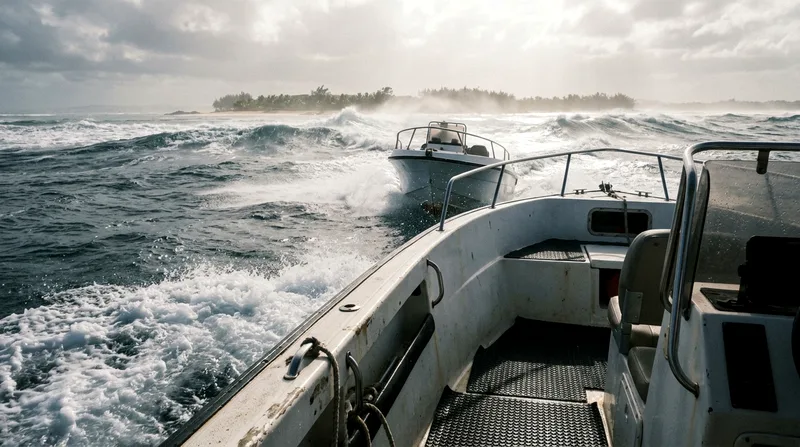
Mauritius sits in a cyclone belt, and the Indian Ocean doesn't always cooperate with your itinerary. Between January and March especially, operators do cancel trips — sometimes the night before, sometimes the morning of — when swell, wind, or a cyclone warning from the Mauritius Meteorological Services makes the crossing to Île aux Cerfs or a deep-sea fishing run unsafe. This is the one scenario where the Mauritius boat tour cancellation policy tends to work heavily in your favor.
Operator Rebooking Policies
When an operator cancels for weather, not you, standard practice is to offer a full refund or a free rebooking on another date — your choice, in most cases. Some operators push rebooking over refunds because it's less admin for them, so if you specifically want cash back, say so clearly and in writing. Catamaran operators running the Black River coastline toward the dolphin-watching grounds are often quickest to cancel preemptively, since that stretch gets rougher swell than the sheltered east coast near Île aux Cerfs. If you're traveling during cyclone season, build at least one buffer day into your trip before a boat excursion — it gives the operator room to rebook you without you losing the day entirely.
Your Rights During Bad Weather
Legally, you're not entitled to compensation beyond what the operator's own policy states — Mauritius doesn't have consumer protection law specific to marine tourism cancellations. In practice, though, reputable operators refund in full for weather cancellations because the alternative is bad reviews and lost repeat business. Be wary of any operator that tries to charge a "rebooking fee" for a cancellation that was entirely their call — that's not standard practice and worth pushing back on. If conditions look marginal but the operator still plans to sail, you can usually request a refund if you personally don't feel safe, though this is handled case-by-case and isn't guaranteed.
Refund vs. Credit and Payment Protection
Not every refund looks like money back in your account. Many operators, particularly smaller ones booking through WhatsApp or direct bank transfer, default to offering a credit note rather than cash — partly because processing a real refund costs them a transaction fee, partly because it locks you into booking with them again.
Cash Refunds vs. Tour Credits
If cash flow matters to you — say you're not returning to Mauritius anytime soon — ask for a refund explicitly rather than accepting a credit by default. Credits are fine if you're staying longer or plan to return within the validity window, typically 6 to 12 months, but they're worthless if your travel dates don't line up again. When comparing this to other boat-tour markets — Zanzibar's spice-island operators and Bali's Gili-hopping boats both lean toward credit-first refund models too — Mauritius isn't unusual here, but it's still worth negotiating for cash if the cancellation was the operator's fault.
Chargeback and Dispute Options
If you paid by credit card through a booking platform and the operator refuses a refund you believe you're owed, a chargeback through your card issuer is your strongest fallback — most card networks give you 120 days from the transaction date to file a dispute. This works best when you have a paper trail: the original confirmation showing the cancellation policy, your cancellation request, and the operator's response. PayPal offers similar buyer protection if that's how you paid. Bank transfers and cash payments, common with smaller independent skippers, offer essentially no dispute protection — factor that into which operator you choose if cancellation flexibility matters to you.
How to Cancel Your Boat Tour Booking
Cancelling should be simple, but the process differs depending on whether you booked direct, through a hotel concierge, or via an online platform. Acting quickly matters more than almost anything else here — the moment you know you need to cancel, start the process, because every hour closer to departure moves you into a worse refund tier.
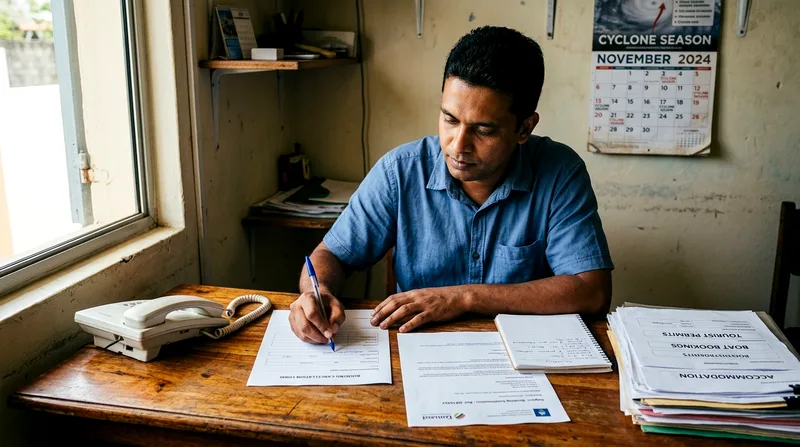
Steps to Request Cancellation
Start by checking your original confirmation for a specific cancellation email address or phone number — many operators route this separately from general booking inquiries. Send your cancellation request in writing (email or WhatsApp message, not just a phone call) so there's a timestamp. Include your booking reference, the date and route booked, and whether you're requesting a refund or a date change. If you booked through a third-party platform rather than the operator directly, cancel through that platform's dashboard — cancelling directly with the operator alone may not register the cancellation in the system that controls your refund.
Documentation and Confirmation
Always get written confirmation that your cancellation was received and processed — don't assume silence means it went through. Screenshot the request and any reply, and note the date and time. If a refund is due, ask for an expected processing timeline; most operators take 5 to 14 business days to return funds to a card, longer around the December–January peak season when admin teams are stretched. If you hear nothing after two weeks, follow up with the original written request attached rather than starting a new inquiry from scratch.
Travel Insurance and Money-Back Guarantees
Boat tours are a small line item compared to flights and hotels, but they're exactly the kind of booking that falls through the cracks when plans change. Travel insurance that covers trip interruption or cancellation can make these small losses a non-issue, though the coverage details matter more than the headline price of the policy.
Coverage for Cancellations
Standard travel insurance policies typically cover cancellations due to illness, injury, or a documented family emergency — not simply changing your mind. Weather-related cancellations are usually not something you claim on, since the operator should already be refunding or rebooking you directly. Where insurance earns its cost is when an operator's own refund policy is thin — for instance, if you booked a non-refundable private charter and then couldn't travel due to a medical issue. Check your policy's specific wording around "pre-paid, non-refundable excursions" before assuming you're covered.
Optional Protection Plans
Some booking platforms offer an add-on "free cancellation" or "flexible booking" option at checkout for a few extra dollars, which effectively buys you a longer full-refund window. This is worth it if your plans are genuinely uncertain — a shifting flight connection through Réunion Island, for example, or a cruise itinerary that might skip the Mauritius port call. If your schedule is locked in, skip the add-on; you're paying for flexibility you won't use. Compare this to how Maldives resort-based boat excursions are often bundled into non-refundable packages — Mauritius's independent operator market actually gives you more room to shop for flexible terms, since you're not locked into one resort's in-house tour desk.
Frequently asked questions
Can I cancel a Mauritius boat tour and get a full refund?
Usually yes, if you cancel early enough — most operators offer a full refund when you cancel 48 to 72 hours or more before departure. Cancel closer to the date and you'll typically get a partial refund or a credit instead. Always check the specific window stated on your booking confirmation, since it varies operator to operator.
What happens if a boat tour is cancelled due to bad weather?
When the operator cancels because of unsafe conditions — common during cyclone season from January to March — you're typically offered a full refund or a free rebooking on another date, your choice. This is handled far more generously than personal cancellations because it's the operator's decision, not yours.
How long does it take to receive a refund?
Most operators process refunds within 5 to 14 business days once your cancellation is confirmed in writing. Peak season (December–January) can push this toward the longer end. If you paid by credit card through a platform, the refund may take a few extra days to appear depending on your bank.
Is travel insurance worth buying for a boat tour?
It's worth it if your plans are uncertain or you've booked a non-refundable private charter — insurance typically covers cancellations from illness or documented emergencies, not simple changes of mind. Weather cancellations are usually handled by the operator directly, so insurance isn't the safety net there.
Can I change my boat tour date instead of cancelling?
Often, yes — many operators prefer rebooking over refunding and will shift your date for free or a small admin fee, especially if you ask more than 48 hours out. This is usually easier to negotiate than a cash refund, so ask about a date change first if you're not set on cancelling outright.